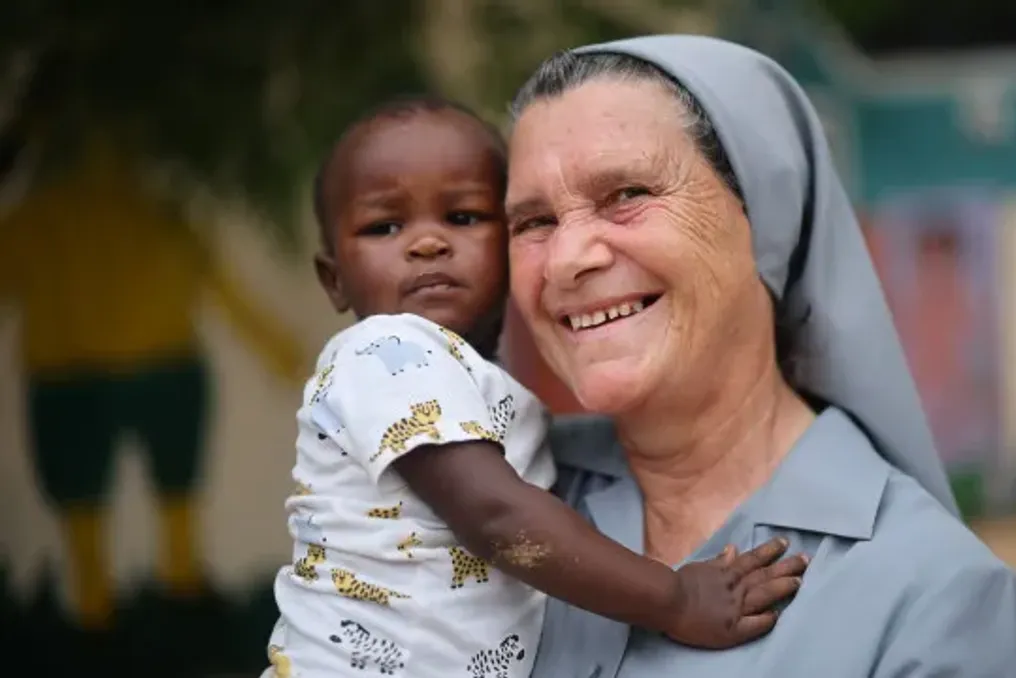
A Portuguese nun settled in São Tomé and Príncipe at the end of the last century. At that time, many children lived isolated near the coast or in the bush, without access to school, as it was common for girls to be excluded from studies because they felt they did not need education, and many young people received only one meal at the end of the day.
Currently, there are still children who depend on just one meal, provided by the Lembá Integrated Development Project. This project is led by the missionary, originally from Leiria, and provides direct assistance to more than three thousand community members.
The missionary details the care provided, stating that some receive only lunch before going home, while babies receive up to six meals, leaving the facility already bathed and nearly having eaten dinner, in addition to having their diapers changed.
She also laments the persistence of elderly abandonment, mentioning that they are often left alone under the belief that their lives have already been fully lived.
However, positive signs are emerging. The missionary observes that mothers have begun finding ways to feed their children, even in rural areas, and have started worrying about children's snacks. Furthermore, parents residing in coastal areas are being proactive in enrolling their children in the various schools that serve children from six months to thirteen years old.
Sister Lúcia's students have progressed and become teachers, revitalizing and strengthening the project. This space offers cafeterias, a sewing room, a medical and dental clinic, services that also benefit the community. Additionally, the location hosts a university pole and offers vocational training, which has been growing in demand.
The demand for carpentry and woodworking courses has increased, driven by the desire of young people to migrate to Portugal. Business owners are requiring certificates and diplomas to allow this emigration, which exacerbates the record outflow of young people from the country in the last five years.
The exodus is considered a serious problem, but the missionary states that there is no alternative. She points to the situation of a country where 75% of the population is young and where teachers earn only one hundred euros monthly, spending two hundred on food. She expresses sadness over the São Tomé dilemma, noting that the best students in her school are those who have emigrated, despite the great hopes placed in them to develop the local project.
Maintaining pragmatism, she advocates that the country should focus on the youth who remain, instead of just observing the emigration, emphasizing that everything starts with education. It is crucial to properly train the young people who are in the country so that they do not lose heart and feel valued.
The missionary, who is 65 years old and from the parish of Caranguejeira, received the decoration of Grand Officer of the Order of Merit from the Portuguese State in 2015. She expresses willingness to go anywhere there is a need, as long as it is useful. She places her trust in the work done by laypeople in the project and in divine providence.
In December 2024, the UN officially removed São Tomé and Príncipe from the list of Least Developed Countries, recognizing consistent progress. However, about 13% of the population still lives below the extreme poverty line, and more than two-thirds face socioeconomic vulnerabilities.