
Tea stall opened on the third-floor rooftop in Bihar, video goes viral
Read more
Aaj Tak
www.aajtak.in

Tea stall opened on the third-floor rooftop in Bihar, video goes viral

In Bihar, known for its ingenuity, people find solutions even for the smallest problems, drawing admiration from those around them. A recent photograph attracted the attention of social media users: a tea stall is located on the roof of the third floor of a house.

This stall has been named 'Rooftop Tea Stall,' which immediately catches the eye. Usually, tea kiosks are located by the roadside, in a market, or on a street corner, but the situation here is different. The picture shows that there is a residential building underneath, and a full-fledged tea point has been equipped on the very top roof, complete with a sign.

Looking at the image raises the question of how the idea to open a tea shop in such a high place came about. From the ground, it does not look like an ordinary establishment. However, if you look up, you can notice a small stall on the roof of the house where visitors sit and drink tea. It is likely that the owner decided to use the upper space because there were no suitable places on the lower levels. As a result, a tent canopy was installed on the roof, and the process of making tea was organized.

The sign indicates 'Rooftop Tea Stall,' as well as information about the availability of coffee, masala tea, and milk tea. Thus, besides the unusual name, many drink options are available here. The advantage of such an establishment is that it can attract people's attention from afar. When a passerby notices this tea point on the third-floor roof, they inevitably wonder how it got there.

The photograph also shows people inside the stall: on one side are tea preparation supplies, and on the other are visitors chatting while standing. It gives the impression that this place serves not only to sell tea but also as a small spot for relaxation and socializing. This scene once again highlights the ingenuity of Bihar. When Bihar is mentioned, local inventions and the ability to work with limited resources are often discussed. Although not every invention is specifically related to Bihar, the method shown in this photograph is so unique that it evokes associations with local inventiveness.

Such images and videos quickly gain popularity on social media because they demonstrate something rarely seen in daily life. You have seen tea stalls by the roadside hundreds of times, but seeing a tea stall on the third-floor roof daily is highly unlikely.
Similar stories

HEYTEA Craft and say architects promote deceleration by exposing the artisanal tea process
Read more
archdaily.com.br

HEYTEA Craft and say architects promote deceleration by exposing the artisanal tea process

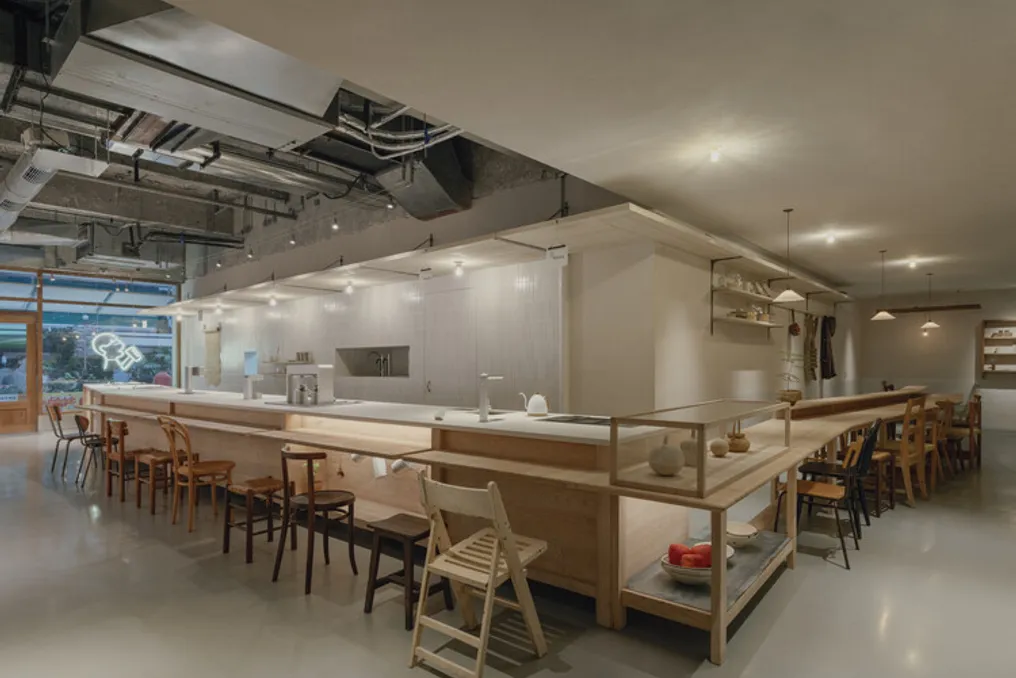
The design team described that, in a scenario where no one wants to wait for a cup of tea, the traditional model involves scanning, paying, waiting for a number, and collecting the product, without the tea preparation process being visible. Recent innovations in the tea sector have accelerated everything—from faster launches to the rapid replication of new units—making success quickly obsolete.

The HEYTEA Craft Store seeks to break with this trend by proposing a deceleration approach. Tea preparation, historically conceived to be slow—requiring copper kettles to boil in batches, tea to be extracted gradually, and leaves to rotate in the kettle several times—has been hidden by the new industry, transforming into an automated system and an on-demand distribution channel, disconnecting the consumer from the production method.

To connect the public with the artisanal aspect of tea, many brands prioritize efficiency, configuring stores as mere fast distribution points, where the customer acts as a terminal on an assembly line. The say office adopts a different perspective: the space should be a place to stay, not just a beverage service area. The HEYTEA Craft Store's strategy consists of relocating the tea preparation from the hidden service area to the front, allowing the artisanal process to be observed again. Thus, those in a hurry can leave quickly, while those who choose to decelerate can sit and watch the making of a cup.

This philosophy begins as soon as the customer enters the establishment. The entrance is subtly recessed, giving way to a small porch. The door handle is made of cast iron and covered with hand-stitched leather, introducing the warmth of artisanal work even before ordering. Upon entering the hall, a carpentry table is discreetly positioned on one side, while a tea roasting machine slowly heats the leaves at a low temperature, releasing a warm aroma that reaches the olfactory senses before sight.

Looking inside, the focal point of the environment is an L-shaped counter that crosses the space diagonally. Walls, ceiling, and carpentry frame this counter on three sides, directing all attention to the tea itself. The stools face the preparer, allowing the copper kettles, strainers, and spouts to be seen in action, revealing the stages of the drink's creation.

The exposed ceiling displays traces of demolition, exposing the original structure with complete transparency. There was no rush to fully modernize it; instead, the space incorporates these features, transforming into a true step-by-step workshop. The maturity of a cup lies in its flavor, just as the longevity of a store lies in its roots. The manual touch and time are incorporated into every detail, using traditional Chinese dovetail and mortise joints that join furniture without the use of nails.

Materials such as aged galvanized metal, woven straw, and rustic ceramics are chosen because they do not fear wear but rather embrace the marks of time. HEYTEA is dedicated to offering slow tea, and the say architecture team commits to creating an environment that does not fear aging, sharing the same language of patient craftsmanship.

This location was closely monitored from the beginning of construction. During the six months of construction, people visited daily to follow the transformation of the new store, as if watching a television series. Consumers showed a willingness to stop and observe the preparer slowly infusing the tea, which represents an acknowledgment of the importance of dedicating time to good artisanal work. Although a cup of tea can go viral, being truly seen is an uncommon feat. The proposal of the HEYTEA Craft Store is precisely to decelerate, bringing the tea manufacturing process, which was hidden, back to the center of the experience, because good craftsmanship only gains value when witnessed.

Popular