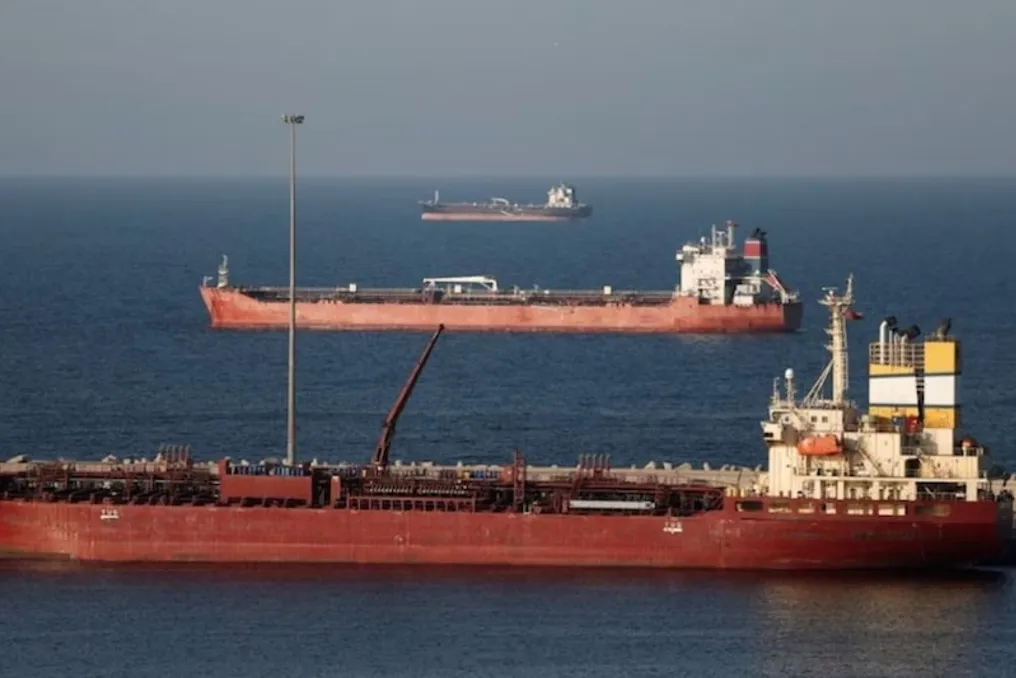
US ready to expand energy cooperation with India, increasing oil and LNG supplies
Read more
Aaj Tak
www.aajtak.in

US ready to expand energy cooperation with India, increasing oil and LNG supplies

India shows high awareness of its energy needs, and the government has repeatedly stated the priority of meeting these needs. In light of India's position, the US has put forward a significant proposal. An official from the US Department of State reported that America is making efforts to meet these demands.

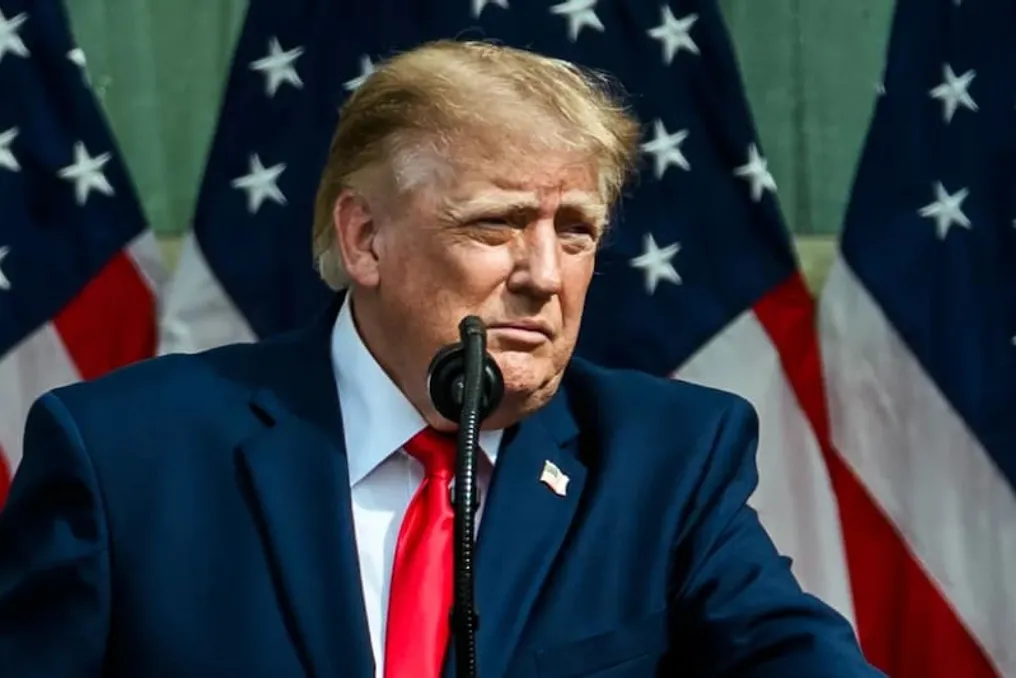
Recently, US President Donald Trump signed the 'Lindsey O. Graham Sanctioning Russia and Iran Act of 2026,' which grants the right to impose tariffs of up to 100% on countries, including China and India, that purchase oil and gas from Russia. In response to the question about the impact of this bill on bilateral relations, the official noted that the US Congress has taken a very firm stance.

India has long sought to diversify its energy sources as it is a country with very high energy demands. The official emphasized that, like America, India has its own national interests, and there is no hostility between the two sides. However, regarding India's concerns about this bill, it was stated that the US Congress adopted a legislative act that provided President Trump with a new tool in his arsenal.

He added that this does not mean immediate use of this tool, although the possibility exists. Trump's main focus is on ending the war, which was a topic he raised during the elections and on which he is resolute. Hope was expressed that friendly countries, such as India, would assist in these efforts, although the implementation of this bill also remains questionable. Furthermore, the law provides for broad exceptions related to national security.

Unfortunately, supplies from Venezuela and Iran have been suspended for a long time, limiting options. The official noted that after Trump's successful operation in Venezuela, the situation is improving, and now countries like India will be able to access this market. Although India previously had refineries in Venezuela, restoring these facilities is extremely difficult due to the damage inflicted on the industry by the Maduro government.

The official stated America's desire to become a major source to meet India's energy needs by increasing hydrocarbon exports. Currently, America is the largest exporter of LPG and the second-largest exporter of LNG.
Similar stories

S&P Global raises India's economic growth forecast to 7% for 2026-27
Read more
www.aajtak.in

S&P Global raises India's economic growth forecast to 7% for 2026-27

The confidence of major global agencies in the pace of India's economic growth continues to rise. The rating agency Standard & Poor's Global (S&P Global) has raised its forecast for India's growth, despite the complex global situation, high oil prices, and geopolitical tensions.

The agency increased the forecast for India's real GDP for the fiscal year 2026-27 from 6.6% to 7%. This increase came after economic indicators in the June quarter were better than expected. According to S&P, strong industrial activity, domestic consumption, goods exports, and government investments helped the economy, with consumption growth in India proving particularly resilient.

Investment activity in India also remains the strongest among leading economies in the Asia-Pacific region, allowing India to be considered one of the main growth drivers in the region.

Nevertheless, S&P warns of some future challenges. The agency forecasts a slight slowdown in growth rates in the second half of the current fiscal year. The additional momentum given to the economy through GST rationalization and income tax reduction is gradually weakening. Furthermore, weather will play an important role; up to September 9, the total rainfall in the country was about 15% below normal, which could significantly affect agriculture and rural consumer demand.

S&P forecasts that average consumer inflation in India in the current fiscal year will be around 5.1%. Consequently, attention will be paid to inflation and food prices. The agency expects the Reserve Bank of India (RBI) may raise its policy rate by 25 basis points during the current fiscal year. Thus, despite strong growth, there is pressure from the need to tighten policy due to rising inflation.

The most serious external challenges for India are the cost of crude oil and the dynamics of the rupee. If oil prices remain high amid Middle East conflicts, this could affect import bills, inflation, and the Indian rupee exchange rate. India imports over 80% of its required fuel. According to S&P, by mid-September, the Indian rupee had weakened by more than 5% against the US dollar. Despite this external pressure, the resilience of domestic consumption and investment remains, making the domestic economy India's main strength.

The rating agency adjusted the forecast for India's real GDP for 2026 by 0.4 percentage points, while the forecast for 2027 remained unchanged. According to S&P estimates, the next three fiscal years may look like this: 2025 – 7.8%; 2026 – 7.0%; 2027 – 7.2%; 2028 – 7.0%; 2029 – 6.8%.

India surpasses China and Japan in GDP growth rates according to S&P forecasts. China is projected to grow at 5.0% in 2025, 4.3% in 2026, 4.3% in 2027, 4.4% in 2028, and 4.2% in 2029. Forecasts for Japan are 1.2% in 2025, 0.8% in 2026, 0.9% in 2027, 0.9% in 2028, and 0.7% in 2029. South Korea is projected to show figures of 1.1%, 3.5%, 2.7%, 2.4%, and 1.9%. Although Taiwan's forecast for 2026 is 10.9%, higher than India's, this is attributed to strong activity in technology and artificial intelligence.

S&P is not the only one positive about India's growth. On September 18, Moody's Ratings also raised India's GDP forecast for the fiscal year 2026-27 from 6% to 7%. The agency attributed this to strong private consumption, investment, public infrastructure spending, and the strengthening of the services sector. Thus, there has recently been an improvement in growth forecasts for India from global rating agencies.

India's strong growth means that the foundation of demand and investment in the domestic economy currently remains solid. However, another side of the coin is important for investors: the inflation forecast of 5.1%, a possible 25 basis point rate hike, expensive oil prices, pressure on the rupee, and the risk of growth slowdown in the second half of the year cannot be ignored. In the coming months, key indicators for India's growth rate will be agricultural production, food inflation, crude oil prices, and the next RBI decision.

India strongly reacts to US bill on 100% tariffs, emphasizing energy security priority
Read more
www.aajtak.in

India strongly reacts to US bill on 100% tariffs, emphasizing energy security priority

The Indian government issued a statement regarding the law passed by the US Congress, which imposes sanctions against Russia and Iran. The government stated that it is closely monitoring the further developments in this area.

India also confirmed that ensuring energy security for more than one and a half billion of its citizens remains its top priority. To achieve this goal, the country will continue to purchase oil and gas from various nations, making decisions in accordance with changing market conditions. This clearly demonstrates that India will not change its energy policy under external pressure.

The statement noted that this issue has been discussed at a high level with several senior officials and representatives of the United States over the past few months. India clearly conveyed to the American side that such restrictions could affect not only bilateral relations between India and the US but also the global energy market. Thus, India warned the US about the potential global impact of this decision.

Furthermore, India fully defined its position: it will take all necessary steps to protect its trade and economic interests. The government also announced that it will cooperate with Indian trade and industrial organizations to overcome the possible consequences of adopting this law.

Popular