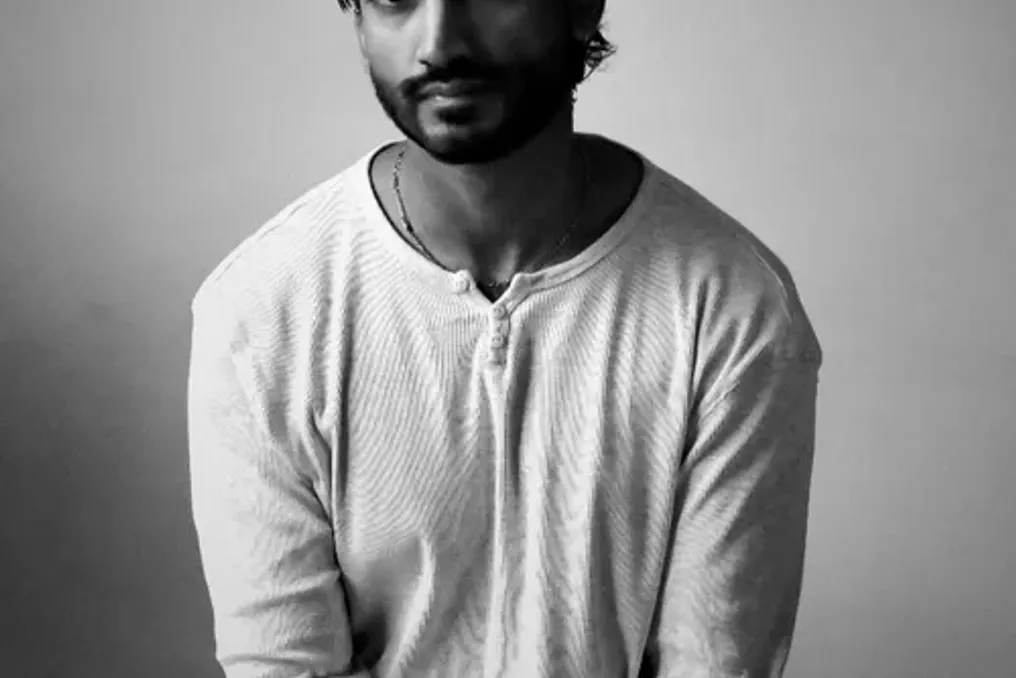
Tashin Singh's latest film, born in South Africa, titled 'Sugarcane, Burning,' will screen at the International South Asian Film Festival (iSAFF) 2026 in Canada on Friday as part of the 'Second Chances' short film program. This film, written and directed by the London-based filmmaker, is based on Singh's family history and explores themes of migration, heritage, and the experience of Indians from South Africa during colonial rule.
'Sugarcane, Burning' is set in the late 19th century when thousands of Indians crossed the ocean to colonial Natal in South Africa under the indenture system, bringing with them fragments of language, memory, and home. At the center of the story is a young woman named Mira, standing on the threshold of motherhood, balancing what she has inherited against what she will pass on.
Through matrilineal memory, she returns to the image of her own mother, feeling her touch, language, and breath, and confronting the quiet ruptures left by migration and the passage of time. As the past converges with the present, Mira reflects on what endures: the names given to us, the words that are hard to hold onto, and the invisible burden passed down through generations. Like fields that must be burned before planting, loss and heritage exist side by side.
The film was shot in KwaZulu-Natal last October as a graduation project for the London Film School, with Katishka Kiara Chandralal and Sivani Chinanpan in the lead roles. The South African film 'Sugarcane, Burning' will be screened at the International South Asian Film Festival (iSAFF) 2026 in Canada.
Indentured Labour
Singh, who is 30 years old, was born and raised in Pietermaritzburg and stated that the film originated from a fragment of his own family history. His great-grandfather traveled from India to Natal decades ago as a smuggler aboard a ship. He shared: 'This story began long before I realized it could become a film. Decades ago, my great-grandfather boarded a ship from India to Natal, hiding as a smuggler. That is almost all I know about my family's arrival in South Africa. However, from this fragment grew generations of movement, silence, resilience, and longing—a story familiar to many descendants of migrants.'
Continuing, Singh noted: 'Studying the lives of Indians from South Africa, I realized the depth of what was carried during colonial rule and apartheid: the emotional, physical, financial, and cultural oppression rooted in families, bodies, and land. These stories are not distant from me. They live in questions of who we are, what we have inherited, what has been taken, and what remains. This film is my attempt to look at that heritage.'
According to Singh, 'Sugarcane, Burning' is a meditation on ancestry, absence, and the ceaseless act of preserving what remains. Singh began researching the film in late 2024, and scriptwriting started in early 2025 with co-writer and producer Nicole Magabo Kgugundu. The film was completed in February.
The world premiere took place in Pune, India, in June, followed a month later by a screening at the London Indian Film Festival. The film will also return to South Africa to be shown at the FAME Short Film Festival in Cape Town at the end of October, marking its South African premiere. There, it was nominated for awards for Best Student Work, Best Costume Design, and Best Makeup and Styling.
Prior to this, Singh worked as a journalist and then transitioned to documentary filmmaking in Cape Town. Later, he earned a Master's degree in Film Production from the London Film School. His works span fiction, documentary, and essayistic films, often examining personal experience against broader historical and social landscapes. He concludes: 'My cinema is dedicated to what is difficult to see: inherited silence, the private life of migration, the emotional architecture of families, identity confusion, and the ways in which history survives in gesture, landscape, and memory.'
Rooted in the South African experience and shaped by questions of diaspora, masculinity, and belonging, Singh works on projects across South Africa, the UK, and India. He adds: 'My films strive for a poetic, formally attentive language for intimate stories marked by historical heritage.'