
RBI introduces changes to urgent deposit rules; new norms effective from October 1st
Read more
Aaj Tak
www.aajtak.in

RBI introduces changes to urgent deposit rules; new norms effective from October 1st

The Reserve Bank of India (RBI) plans to make adjustments to the structure regulating interest rates on large fixed deposits (FDs). These new rules will come into effect on October 1, 2026. The RBI's goal is to enhance transparency and improve the system.

Furthermore, the central bank aims to provide banks with some flexibility regarding liquidity requirements, which necessitates these changes.

Under the revised rules, banks are required to disclose information about large fixed deposits daily by 10 AM. Banks will be given 10 minutes to update rates. When paying interest on deposits, including large sums, banks must adhere to the rates displayed on their websites, regardless of the amount deposited.

These changes will increase depositor confidence and ensure greater transparency. A large deposit is defined as a fixed deposit of ₹30 million or more. Interest rates applied to such deposits may differ from those offered on regular savings accounts.

Another significant change is the prohibition of setting different rates for the same amounts. Previously, banks could apply varying rates across their different branches, but now all branches must offer the same rate for large deposits received on the same day.

However, this structure allows banks to differentiate rates under certain circumstances related to liquidity requirements. Banks may offer different interest rates on large deposits depending on the withdrawal rate applicable within the Liquidity Coverage Ratio (LCR) framework.

Similar stories

US ready to expand energy cooperation with India, increasing oil and LNG supplies
Read more
www.aajtak.in

US ready to expand energy cooperation with India, increasing oil and LNG supplies

India shows high awareness of its energy needs, and the government has repeatedly stated the priority of meeting these needs. In light of India's position, the US has put forward a significant proposal. An official from the US Department of State reported that America is making efforts to meet these demands.

Recently, US President Donald Trump signed the 'Lindsey O. Graham Sanctioning Russia and Iran Act of 2026,' which grants the right to impose tariffs of up to 100% on countries, including China and India, that purchase oil and gas from Russia. In response to the question about the impact of this bill on bilateral relations, the official noted that the US Congress has taken a very firm stance.

India has long sought to diversify its energy sources as it is a country with very high energy demands. The official emphasized that, like America, India has its own national interests, and there is no hostility between the two sides. However, regarding India's concerns about this bill, it was stated that the US Congress adopted a legislative act that provided President Trump with a new tool in his arsenal.

He added that this does not mean immediate use of this tool, although the possibility exists. Trump's main focus is on ending the war, which was a topic he raised during the elections and on which he is resolute. Hope was expressed that friendly countries, such as India, would assist in these efforts, although the implementation of this bill also remains questionable. Furthermore, the law provides for broad exceptions related to national security.

Unfortunately, supplies from Venezuela and Iran have been suspended for a long time, limiting options. The official noted that after Trump's successful operation in Venezuela, the situation is improving, and now countries like India will be able to access this market. Although India previously had refineries in Venezuela, restoring these facilities is extremely difficult due to the damage inflicted on the industry by the Maduro government.

The official stated America's desire to become a major source to meet India's energy needs by increasing hydrocarbon exports. Currently, America is the largest exporter of LPG and the second-largest exporter of LNG.

Moto G Max Review: Smartphone with 7000 mAh Battery, 50 MP and 32 MP Cameras
Read more
www.aajtak.in

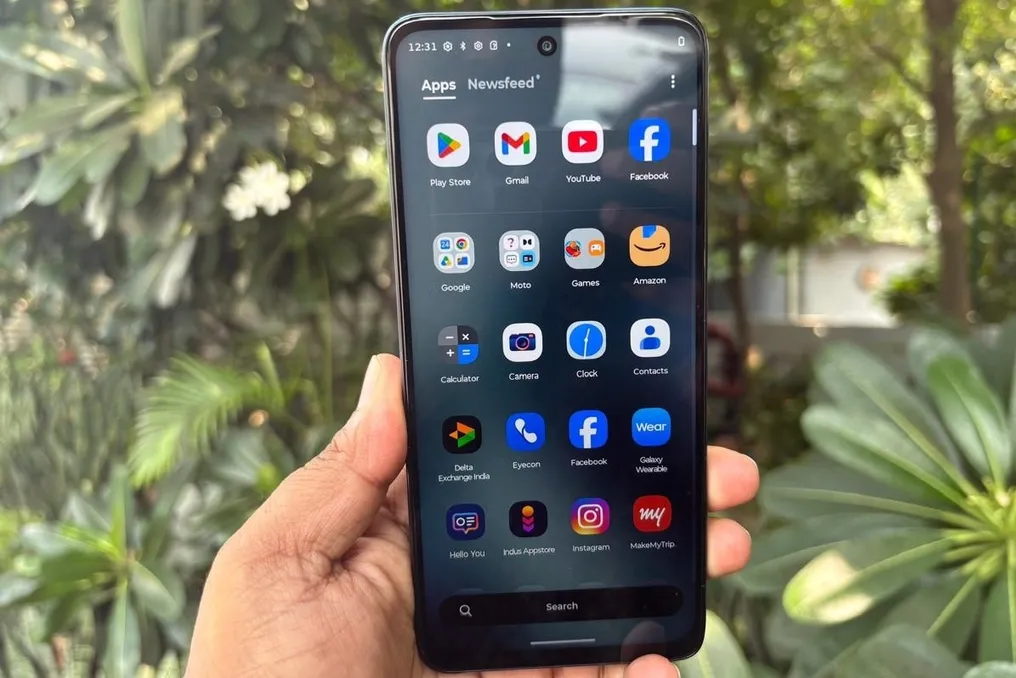
Moto G Max Review: Smartphone with 7000 mAh Battery, 50 MP and 32 MP Cameras

Motorola has released its latest smartphone, the Moto G Max, in the Indian market. The reviewer used the device for approximately fifteen days to assess its performance, camera quality, and battery life.

The Moto G Max is equipped with a 6.7-inch FHD+ LCD display, which offers superior performance compared to other smartphones in its price segment. The screen features a punch-hole design, a 120Hz refresh rate, and a peak brightness of up to 1050 nits. The company ensured screen protection by using a layer of Corning Gorilla Glass 7i.

The Moto G Max 5G model is available in one variant at a starting price of 27,999 rupees, with various promotions and offers available across different e-commerce platforms.

Moto G Max Camera

The back panel of the Moto G Max features a main 50-megapixel module with EIS support, an 8-megapixel ultra-wide-angle lens, and a macro shooting option. The front camera has a resolution of 32 MP. Both the front and rear cameras are capable of recording video in 2K format at 30 frames per second. Testing showed that the phone takes high-quality photos in daylight and provides good results even in low-light conditions.

Moto G Max Battery

The Moto G Max smartphone is equipped with a 7000 mAh battery and supports 30W fast charging, although the box includes a 33W Turbo charger. With a single charge, the device easily lasts throughout the day. Despite its large battery capacity, the phone's thickness is 8.6 mm. The 30W fast charging provided good charging speed, and after a full charge, the battery maintained its charge all day, even with intensive use.

Moto G Max Performance

The Moto G Max uses the Snapdragon 6s Gen 4 (4 nm) chipset combined with 6 GB of LPDDR5x RAM and 128 GB of UFS 3.1 storage. The device runs on Android 16 with the Hello UI skin. During use, Motorola experienced some delays, but it performed better when handling daily tasks. No issues arose while watching YouTube and similar applications.

In conclusion, the rear panel of the Moto G Max 5G looks quite premium, although the side bezels on the front panel might be slightly disappointing. The battery and charging speed of this Motorola smartphone are very good, as are both the rear and front cameras. Nevertheless, the performance in some aspects seemed insufficient. The device received a rating of 7/10.

Popular