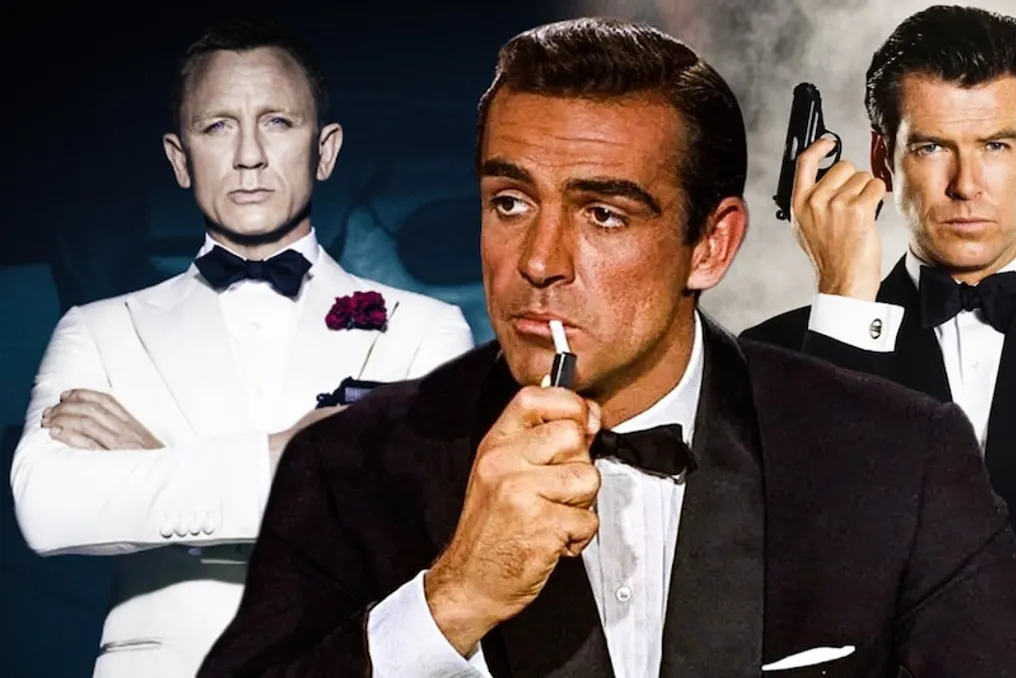
The image of James Bond in Hollywood has evolved over more than six decades, transforming from a simple intelligence agent into an entire cinematic universe. This universe includes firearms, fast cars, expensive watches, stylish suits, martinis, and a fearless, passionate agent capable of reaching any point in the world. Bond's identity is shaped as much by his masculinity as by his missions.
Although Bond is loyal to Britain, his attraction to women has been a long-standing part of his persona. He is often perceived as the embodiment of the 'universal man'—007 has become a symbol of a certain type of male ideal, lifestyle, and cinematic masculinity.
A discussion arises about whether the next James Bond could be a woman. However, the real question is whether his core identity will change if the gender of a character so deeply associated with the male sex for six decades is altered. Will audiences accept a woman in the role of 007, or will she have to create an entirely new image?
The debate has been going on globally: should James Bond be played by a woman? Among generations raised on the image of a lighthearted man, there is discussion about whether the new Bond should be Black or if it should be played by a woman. In this discussion, an interview with Charlie Higgins, Bond's screenwriter, was analyzed, in which he stated that playing a Black character would cause no problems, but making Bond a woman would be meaningless because Bond completely embodies masculinity.
To understand Higgins' words, one must look at the origins. James Bond is the creation of British writer Ian Fleming. Bond is an agent of British intelligence MI6. In his 1953 novel 'Casino Royale,' Fleming created this character. James Bond is not just an agent armed with weapons; Fleming portrayed him as a handsome, confident man who loves expensive clothing, alcohol, and gambling, preferring fast drives. He always looks cool even in life-threatening situations, and his attraction to women is part of his personality.
The film industry has repeatedly amplified this image. The author recalls seeing Sean Connery in the role of James Bond for the first time and considering him nothing less than a Greek god—tall, blond, a beautiful man with a romantic stride, whose face is impossible to look away from. Sean Connery became the first actor to play James Bond. After him, actors such as Roger Moore, Timothy Dalton, Pierce Brosnan, and Daniel Craig took on the role. Each actor slightly transformed Bond according to their time: some added humor, others romance, and Daniel Craig elevated him to a new level.
The most interesting aspect of Bond is that his masculinity is not limited to demonstrating strength. Higgins explained this aspect by saying that Bond is a kind of men's fantasy. He stays in luxury hotels, travels the world, and drives fast cars, even though his profession is killing. But there is another side to the masculine nature in Bond's history: he constantly immerses himself in some activity, mission, or goal to avoid internal problems.
For a man like Bond, constant engagement in missions can serve as a way to evade the emotional world. This is where the discussion about whether Bond should be made a woman becomes complicated. Will not only the gender, but the entire history associated with this male character change? Today, women in cinema can act, spy, save the world, and defeat enemies—this is no longer news, and technically it is absolutely possible.
However, if a female actress were to take on the role of Bond, she could carry out the mission with the same dedication and drive the same car, but the social foundation of her experience would change. The behavior that meant freedom to travel, live alone, and build relationships with many women for a male agent might not be perceived the same way in the case of a female character. What was part of the old cinema of the male hero could take on a completely different meaning in the image of a woman.
Higgins sets no restrictions regarding race or skin color for Bond. He clearly stated that Bond can be Black, and there is no problem with that. The issue is not skin color, but the fundamental component of the character's nature—his masculinity.