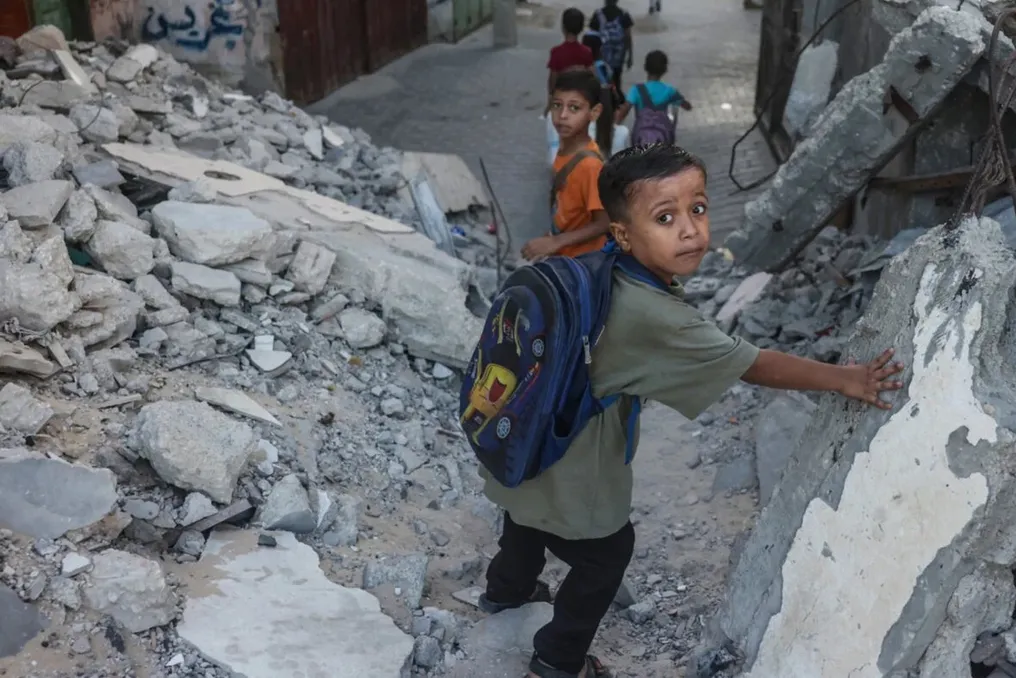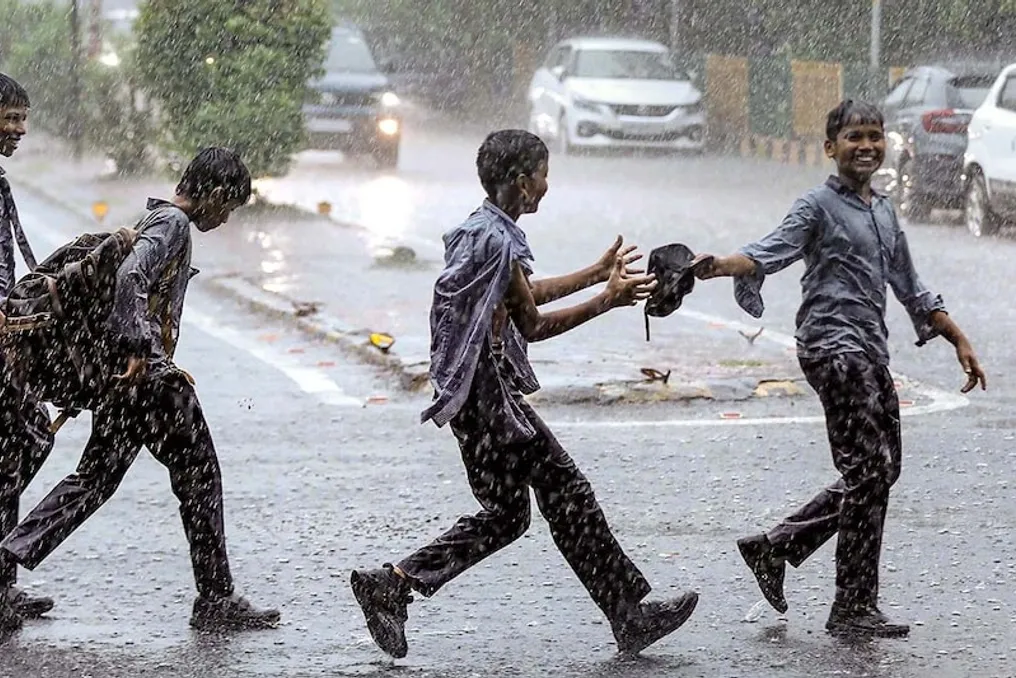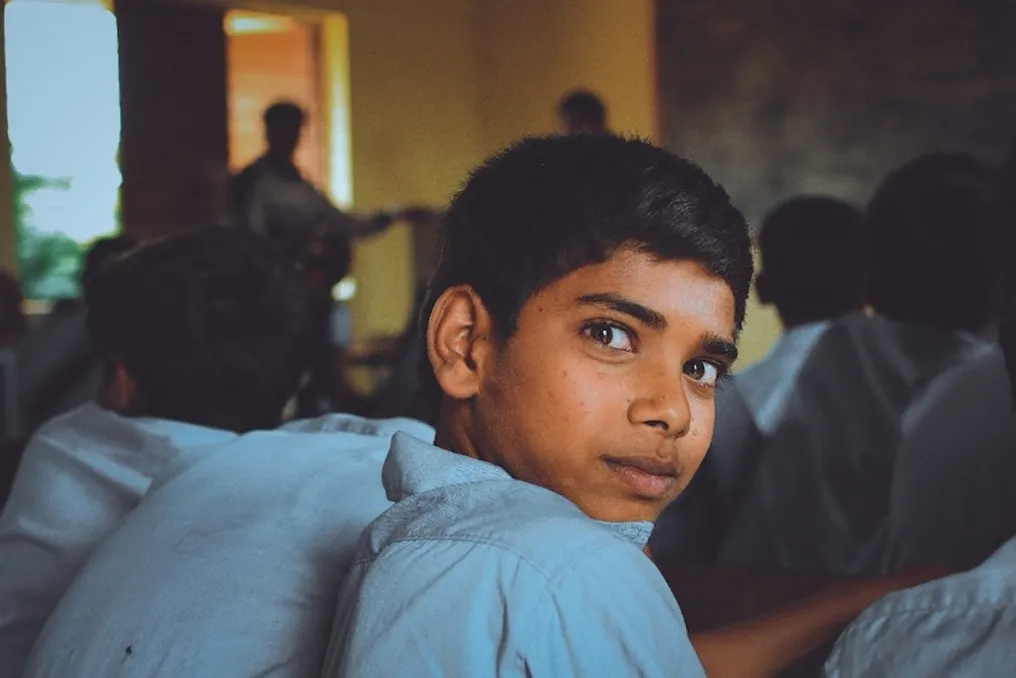
More than 500 million children around the world face extremely difficult conditions to receive an education, including in Gaza, Sudan, and Nepal. Wars, population displacement, and climate change negatively affect children's learning in many parts of the planet. In addition to the need for massive funding to ensure access to education, the world faces the task of getting these children into schools.
The situation in the conflict zone in Sudan was demonstrated in one of the schools. In a small and very hot sixth-grade classroom, one teacher taught 120 students, including an 18-year-old girl. She had to leave home three years ago due to fighting, after which she married young and became a mother, but she still strives to complete her education.
Mesa Jalbout, director of the organization Education Cannot Wait, shared this experience during her visit to the school. She reported that the temperature in the classroom reached 44 degrees Celsius, and there was no water supply or electricity. Despite this, the girl approached her with a request to ensure educational opportunities for her brothers, sisters, cousins, and orphaned friends.
According to Jalbout, the school was so small that hundreds of waiting children outside could not find space inside. The children asked her and other visitors to pass on a message about the need to build more schools. Jalbout stated that she would raise this issue before world leaders at the annual United Nations meeting this week.
The problem of education for more than 500 million needy children has become one of the key issues discussed at the UN meeting, alongside other topics. Some progress has been made in calls for fundraising for these children's education.
Gordon Brown, former Prime Minister of the UK and UN Special Envoy for Global Education, stated on Thursday that 273 million children are out of school. Furthermore, another 270 million children attend school but do not achieve sufficient literacy in reading, writing, or mathematics by age 11. He noted that many of these children are in areas affected by conflict or climate change.
Brown emphasized that the world should not limit the development potential of children in some countries but must be committed to developing the potential of all children in all countries at all times. He reminded governments of countries whose children are not in school of their pledge to spend 20 percent of their budget on education. He also reminded donor countries of their adoption of the UN Sustainable Development Goals in 2015, aimed at ensuring quality education for all children by 2030, noting that the world is still far from achieving this goal.
Brown expressed disappointment that the number of children out of school is not decreasing. He added that depriving a child of the basic right to education affects their entire life and the lives of their family.
Nevertheless, some results were achieved regarding education financing at the world leaders' meeting. On Wednesday, at the Global Partnership for Education event, it was announced that $3.5 billion would be raised from partners and donors to transform the education system and provide quality education in more than 90 least developed countries. Of this amount, $2.1 billion came from or is expected from governments and private philanthropists, and $1.4 billion was raised through co-financing. The latter includes $1 billion from development institutions and $400 million from the growing alliance of philanthropists and the private sector.
Nigerian President Bola Tinubu, who is a co-organizer of the campaign, stated that this funding helps dynamic and young countries like Nigeria overcome barriers preventing children, especially girls, from attending school and receiving an education. Education Cannot Wait focuses on 258 million school-age children affected by crises. Jalbout noted that this number significantly exceeds the number of children the organization can help.
As part of its activities, she announced the allocation of an emergency investment fund of $3 million for children in Gaza and the West Bank. These funds will help up to 13,000 of the most vulnerable children and adolescents. Priority will be given to children affected by conflict, as well as children with disabilities, who have lost parents or are left without family.
Jalbout pointed out that Gaza has the highest rate of limb loss among children per capita in the world. She stressed that for these children, survival is only the beginning. Children who have survived war, lost limbs, and possibly family, should not lose their future due to the inability to meet their needs. However, the funds are insufficient compared to the needs. Jalbout reported that for the third consecutive year, 660,000 children in Gaza are out of school, and about 70,000 young children lack access to preschool education.
In Nepal, the organization also provided 10 million...