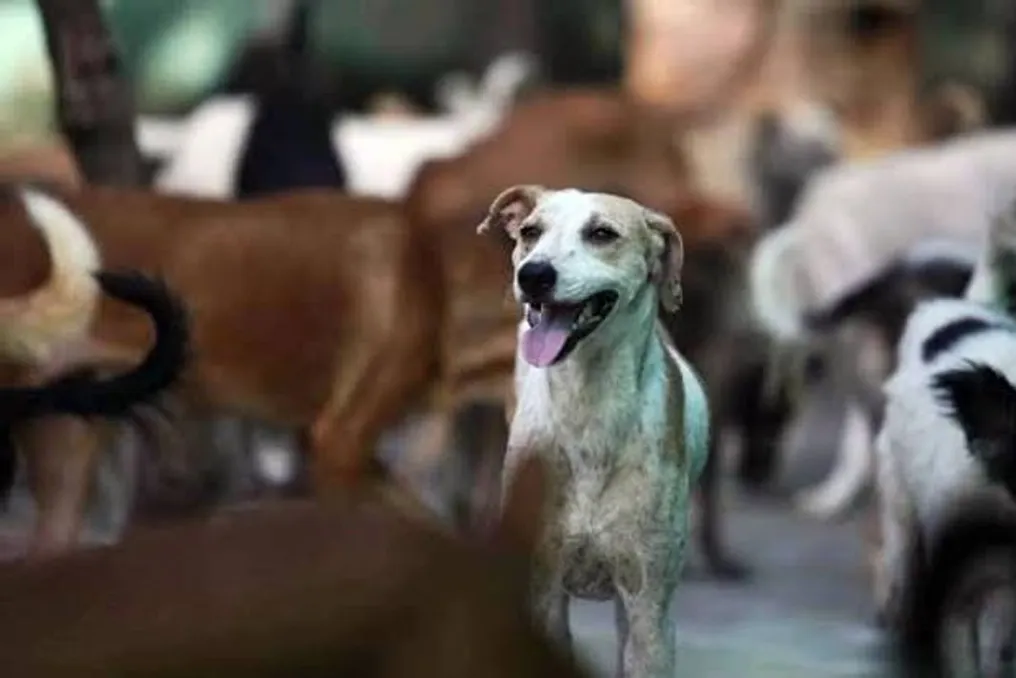
In India, a dog bite can happen at any time, and what is done in the next fifteen minutes and over the following five years is crucial. Only one Indian state has managed to completely eradicate rabies, and its experience provides a step-by-step plan that other states can implement.
The Goa model is built on simultaneous action against two issues: the person who has already been bitten, and the dog that has not yet bitten, and it includes a third component aimed at reducing the frequency of these incidents.
First Level of Response
This module is designed to assist a person who has already been bitten before panic leads to incorrect actions. Since March 2014, a single 24-hour hotline has been operational for bite incidents. This call serves a dual function: directing the caller to a hospital and initiating a field investigation into the dog while the evidence is fresh.
In hospitals, the treatment protocol remains unchanged: wound treatment, a full course of post-exposure prophylaxis, and the administration of immunoglobulin if necessary are provided. All procedures are free and standardized, regardless of whether the hospital is in a city or a village.
Replicating this level only requires a telephone line, staff schedules, and a document with the protocol that all government institutions commit to following without exception. No new infrastructure or technology is needed here, but rather discipline to ensure uniformity everywhere.
However, this module alone does not solve the problem: the dog that bit is still in the population, as are potentially dangerous animals in the future.
Source of Infection
This second level aims to reduce the population causing bites until the disease can no longer sustain itself. A critical indicator is achieving vaccination coverage of at least seven out of ten free-roaming dogs. At this transmission level, the infection collapses because there are too few susceptible hosts left to spread the virus.
Achieving seventy percent in a population that was never formally counted is the most difficult task in this scheme, even more so than securing funding or personnel. Success in Goa was due not to an increase in vaccine supply, but to improved information: tracking coverage so meticulously, block by block, that the statement 'we vaccinated many dogs' transformed into 'we vaccinated 70% of dogs in this specific taluka, and this is verified.' This level of accuracy turns the vaccination campaign into a complete system.
To replicate this module, what is needed is not a large budget allocation for vaccines, but tracking discipline—the constant knowledge of which areas have crossed the threshold and which have not, so efforts can be directed precisely where the gap exists. This module does not address the issue of public panic, which has never been educated in the first fifteen minutes after a bite; that is the task of the third module.
Prevention
The third level is intended to ensure that the next generation needs the first module less often and knows how to act during an incident. Starting in 2014, rabies education staff conducted classes in Goa schools before every vaccination cycle. They taught four key ideas, adapted to the students' age: the seriousness of rabies, ways to avoid provoking a bite, actions in the first minutes after a bite, and, fundamentally, the idea that none of this is inevitable.
By 2020, this ceased to be an auxiliary program; the information was integrated into the state curriculum for 11th and 12th-grade students, and community events annually reached over 150,000 people outside the classroom. A child who learns the fifteen-minute rule at eleven will not panic at twenty-five.
Implementing this module requires space in the curriculum and the willingness of the state council to provide it. It is the cheapest module in this scheme, but it provides long-term returns.
Results of Full System Implementation
When all three modules were launched simultaneously over a long period, significant results were achieved: the number of human rabies deaths in Goa dropped from 17 in 2014 to zero by 2018. Over the same period, canine rabies cases decreased by 92%. In 2018, Goa became the first state in India to control rabies—the first territory in the country to achieve such status for any zoonotic disease.
An independent cost analysis estimated the entire three-module system at approximately $526 USD per averted disability-adjusted life year, which falls within the WHO threshold for a 'very cost-effective' public health intervention. It proved to be not an expensive solution, but a well-structured one.
Implementation Order for a State Starting from Scratch
Firstly, Module 1 should be launched. It is the fastest to implement and immediately saves lives—the hotline and the free, standardized PEP protocol do not require new infrastructure, only political will and staff scheduling.
Before scaling up Module 2, a tracking system must be implemented. Vaccinating dogs without knowing which areas have reached the 70% threshold is a futile effort. The measurement system should be built parallel to the vaccination campaign, not after it.
Module 3 should be integrated into the curriculum early, even though its return comes last. The five-year lag is the price of waiting; a state that starts the school program in the first year will see the fruits of that labor in the sixth year, not the first.
It is important not to view any module as optional. Goa's results were achieved through the simultaneous and continuous launch of all three components over many years. A state implementing only Module 1 will continue to save bite victims, but the dog population and the disease itself will remain unchanged.
India's national rabies control program has begun moving toward a similar structure: a special tracking platform was launched in March 2024, and the 'Rabies-Free Cities' initiative started in 15 cities across six states, aiming for the same standard—a robust Module 1 infrastructure working in parallel with systematic, tracked Module 2 vaccination campaigns.
None of the three modules require unique elements specific to Goa. This is what makes this experience a blueprint for action, not just a story about a lucky state.
}, 2.