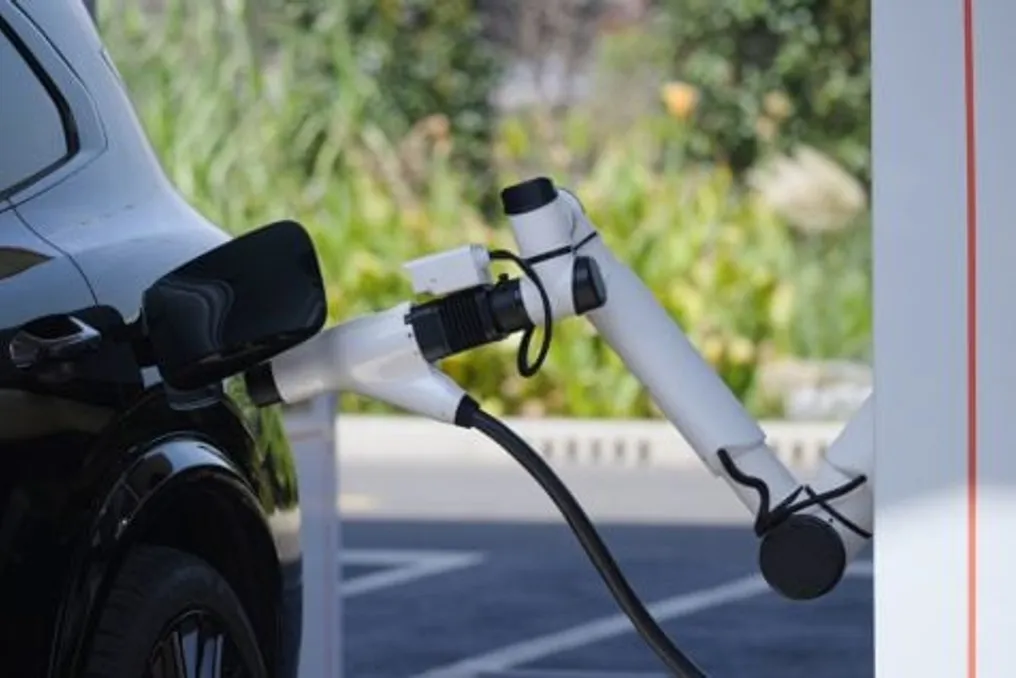
Geely launches 2.2 MW ultra-fast charger, surpassing BYD's system power
Read more
AutoPapo
autopapo.com.br

Geely launches 2.2 MW ultra-fast charger, surpassing BYD's system power

Geely unveiled a new ultra-fast charging system in China on Wednesday (23). According to the manufacturer, this system can charge an electric vehicle battery from 10% to 70% in just 4 minutes and 30 seconds. Under normal temperature conditions, the process from 10% to 97% takes 8 minutes and 40 seconds.

This innovation comes as a direct response to BYD, which is considered the main competitor in the Chinese market. To achieve these charging times, the system requires a 2.2 MW infrastructure, with a peak of 2,250 kW, in addition to batteries designed to accept high charging rates.

The power of this new system exceeds the capacity of BYD's Flash Charging 2.0 by approximately 50%, which operates at 1.5 MW and takes nine minutes to go from 10% to 97%. Despite this notable difference in energy delivery, the charging times practiced by both companies end up being quite similar.

This announcement occurs amid intense technological competition in the Chinese market, where electric vehicle sales have registered an 11-month consecutive decline until August. Manufacturers are competing for consumers by offering advancements in autonomous driving, greater range, and ultra-fast charging capabilities.

Regarding infrastructure, BYD plans to establish 90,000 stations by 2028, according to information cited by Deutsche Bank after a meeting with the company's board of directors.

To ensure the battery withstands this high charge without damage, Geely employs artificial intelligence both in the cloud and within the vehicle itself. Deep learning models and virtual simulations continuously monitor cell health, manage thermal control, and prevent potential risks.

The system, named Xingrui PowerMind, was developed in collaboration with the Chinese company StepFun. It aims to keep the average battery temperature around 55°C, with a maximum limit set at 65°C.

Zhang Dewang, a Geely executive, told Reuters that current charging speeds are already close to physical limits, indicating that the benefits of even faster charging tend to decrease progressively.

The complete technology, which uses a 12C rate battery, is already implemented in the Lynk & Co 10 and Zeekr 001 models, belonging to the group's premium line. For more accessible models, Geely is developing a 6C version of this new battery, which will be introduced in the updated Galaxy E5 electric SUV, promising to go from 10% to 70% in about 8 minutes and 25 seconds.

This technical scalability demonstrates an inherent limit: the charging point power can only be fully utilized if the vehicle is capable of supporting the electrical current. Compact vehicles, focused on high sales volume, generally have less robust electrical architectures and components, limiting their maximum charge absorption, regardless of the charger used. Real performance is also influenced by temperature and charge level.

In the Brazilian market, Geely operates in partnership with Renault, from which it acquired a stake in the local operation, marketing the EX2 and EX5 electric SUVs (which also have hybrid versions). Zeekr, the group's premium brand, also has a sales presence in the country.

Similar stories

Investment potential of the pharmaceutical sector was discussed
Read more
uza.uz

Investment potential of the pharmaceutical sector was discussed

Abdulla Azizov, Director of the Agency for Medical and Pharmaceutical Development, took part in an event dedicated to the presentation of the Country Private Sector Diagnostic (CPSD) study conducted by the World Bank group, which is aimed at developing the private sector of Uzbekistan.

Aneel defines green tariff flag for October, ending additional charge on electricity bill
Read more
olhardigital.com.br

Aneel defines green tariff flag for October, ending additional charge on electricity bill

The National Electric Energy Agency (Aneel) announced this Friday, the 25th, that the tariff flag applicable in October will be green. This determination implies that there will be no extra cost added to the electricity bill next month.

This change follows a five-month period under the yellow flag. During this time, the yellow modality was adding R$ 1.885 for every 100 kWh consumed. In September, Aneel maintained the yellow flag due to a scenario considered less favorable for energy production.

According to the agency, the transition to the green flag is linked to the shift between dry and wet periods in various Brazilian river basins. The increase in precipitation volume in the South and Southeast regions helped keep the reservoir levels of hydroelectric plants stable.

With the improvement in generation conditions, it becomes feasible to decrease the use of more expensive energy sources, such as thermal power plants. Consequently, the extra costs that were passed on to consumers through the tariff flags become unnecessary.

In practice, the consumer will not pay the additional amount related to the yellow flag during the month of October. The green flag signals favorable conditions for energy generation and does not impose surcharges on the tariff. The flag system was established by Aneel to inform consumers monthly about the costs and conditions of electricity generation.

When generation conditions deteriorate, the yellow and red flags may be activated. The logic of this system takes into account, among other elements, the need to operate thermal power plants, which have higher generation costs.

Despite the change in the tariff flag, this does not guarantee that the electricity bill will automatically be cheaper in all situations, as the final amount paid by the consumer still depends on the tariffs stipulated by the local distributor.

Recently, Aneel adjusted the projection of the average impact of energy tariffs in the country for 2026, raising it to 9.4%. This index considers variables such as inflation, energy costs, and financial components. The 9.4% projection refers to the average tariff effect for Brazil in 2026 and already incorporates resources related to the renegotiation of Public Asset Use (UBP) obligations. Aneel reported that this index exceeded the inflation estimates presented in the bulletin, which were 4.4% for IGP-M and 5.0% for IPCA.

Therefore, although October has a green flag and does not have an additional charge linked to the flag system, this does not negate other elements that make up the total energy bill value.

Popular