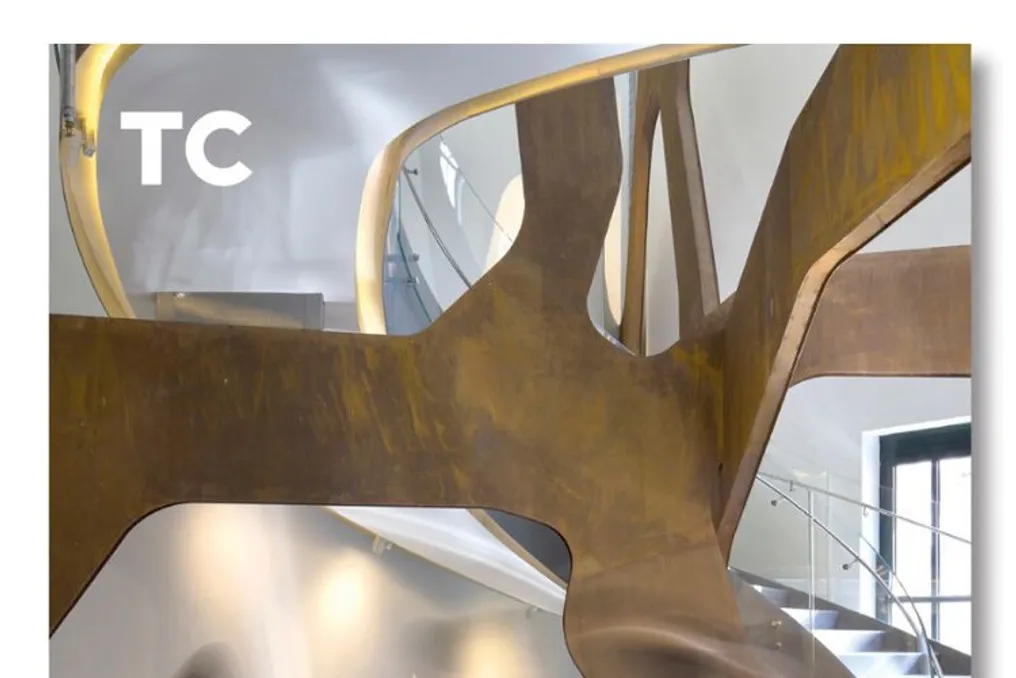
Issue TC 175 highlights nearly two decades of activity by the international bureau Moneo Brock. The bureau was founded in New York in 1993 by Belen Moneo and Jeff Brock, and has been based in Madrid since 2002.
The 320-page publication features a collection of projects created between 2007 and 2026. These projects cover a wide range of areas: from urban infrastructure and educational institutions to recreational areas, residential architecture, and object design. The works were implemented in Spain, Mexico, Colombia, and the Dominican Republic.
The book's structure includes three critical essays. Stan Allen examines the bureau's commitment to public space and the collective dimension of architecture, emphasizing how each building interacts with the ground and its environment. Manuel Blanco analyzes the evolution of Moneo Brock through Vitruvian concepts of utilitas, firmitas, and venustas, adding sustainability as a unifying thread to their practice.
Marisa Santamaría focuses on the bureau's object design and the cultural space '2B', which serves as a natural extension of the office and has functioned as a laboratory for interdisciplinary exchange for over ten years.
Moneo Brock's architecture is characterized by a constant attention to materiality, light, and landscape. Their buildings utilize lattice structures, coral stone walls, translucent glass blocks, and exposed concrete. These elements shape the space and regulate the connection between interior and exterior, between the man-made and the natural.
Their structures are firmly rooted in the land and account for the local climate—whether it is the intense light of Mallorca or the tropical breeze of the Caribbean Sea. The result is an architecture that harmoniously combines formal abstraction with sensory richness and a strong social orientation.