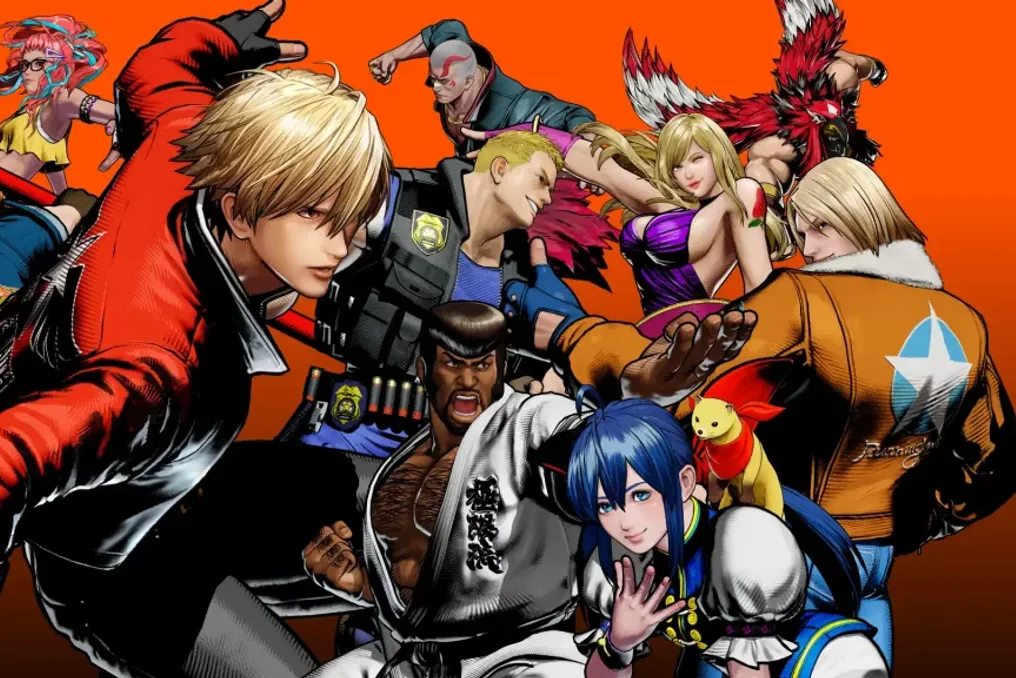
Fatal Fury: City of the Wolves is a 2D fighting game and marks the first new project in the Fatal Fury series in over 25 years. It serves as a direct continuation of the 1999 game Garou: Mark of the Wolves. Developed by SNK, the game concludes the storyline of fighter Rock Howard and features a roster that initially included 17 characters, blending franchise veterans with guest appearances.
The game was released on April 24, 2025, for PS4, PS5, and Xbox Series X|S. The PC version on Steam followed on January 22, 2026, and the release for Nintendo Switch 2 is scheduled for October 22, 2026. The standard version costs 59.99 reals. The game relies on two main elements: the new REV system, which deepens the combat mechanics, and two control modes suitable for both experienced and novice players. Additionally, an offline RPG mode called Episodes of South Town is available.
Those who remember the golden age of fighting games in the 90s will feel a strong sense of nostalgia. However, City of the Wolves does not limit itself to the past; it aims to modernize the classic SNK formula to compete with giants like Street Fighter 6 and Tekken 8, and in most cases, it succeeds.
The first thing that catches the eye is the art direction. City of the Wolves employs a bold, comic book-inspired visual style, featuring vibrant colors, thick lines, and high contrast. This results in a visual identity reminiscent of 90s arcade cabinets, yet rendered in a completely modern way. Every special move is accompanied by a burst of color and dynamic lines, as if the screen is turning into a moving comic page.
This style is not merely decoration. It gives the game a unique identity in a genre where many competitors lean towards realism. While Tekken 8 strives for photorealistic textures, City of the Wolves chooses its own artistic path, making it recognizable at a glance. For those who started playing SNK, it feels like the right reunion.
The central element of the gameplay is the REV System—a set of new mechanics developed by SNK for this release. This system functions as a strategic indicator: the player spends this resource to enhance both offensive and defensive actions, but must manage its usage wisely to avoid overheating the indicator and becoming vulnerable.
It must be acknowledged that the system is complex and can be confusing initially, especially for those unfamiliar with fighting games. A significant part of this complexity stems from the nature of the genre itself, which has always required study. REV vaguely resembles the Drive system from Street Fighter 6 but possesses its own uniqueness and rewards those who take the time to understand it. Once mastered, it unlocks a strategic layer that distinguishes a random button press from a deliberate strike.
SNK understood the need to lower the barrier to entry, so the game includes two control styles. Arcade Style is the traditional method based on precise technical inputs, intended for purists seeking the full challenge. Smart Style allows combos and special moves with simplified commands, making it ideal for beginners or casual play with friends.
This is an elegant solution to an old genre problem. Someone who could never memorize button sequences can immediately join the fight and enjoy themselves, while the dedicated player retains access to the full depth of the system. Both styles coexist without negating each other.
It is not enough to have a great fighting game if the online mode is a failure—and this is where many titles stumble. City of the Wolves handles this brilliantly: the netcode uses rollback technology (technology that smooths connection lag between players) and works well and quickly in practice. Online matches run smoothly, and finding opponents is prompt.
Add crossplay between platforms, and you have a healthy online environment with a unified player base. For a genre that lives on competition with others, reliable online play is almost half the battle.
The character roster is one of the main strengths. The characters are appealing, especially the famous guests Ken and Chun-Li, brought in directly from Street Fighter, who delight fighting game fans alongside classic SNK heroes like Terry Bogard. The game launched with 17 fighters, and with three seasons of DLC, it now boasts 31 characters as of September 2026, with the number expected to reach 34 by the end of the year according to the announced calendar.
There is also the most unexpected element: Cristiano Ronaldo. The footballer is a fully playable character with his own set of moves built around the ball and kicks—he is not just a fantasy fighter. Alongside him, DJ Salvatore Ganacci was added to the base roster. This pairing surprised some fans and critics who questioned the relevance of the guests to the game's universe. Whether out of curiosity or not, the mere presence of one of the world's most famous athletes is a gamble that puts the franchise on the map for people who have never heard of Fatal Fury.
The game is not limited to online battles. Episodes of South Town (EOST) is an enjoyable single-player RPG mode. In it, the player explores a map, completes missions, and develops their fighters throughout the journey, gaining experience and growing stronger.
This is a long-awaited respite for those who do not want to constantly fight other players. This mode provides context to the roster, offers progression goals, and serves as a gameplay school: by progressing, the player absorbs mechanics without feeling like they are training. For those who buy fighting games and usually ignore online play, this is a compelling reason to purchase the game.
Not everything is perfect. The weakest point lies in how the game tells its story. The story mode and interaction suffer from a static format: dialogues appear in simple text boxes, lacking more complex animated cutscenes. While direct competitors heavily invest in cinematic presentation, City of the Wolves seems stuck in a previous generation in this aspect.
However, the narrative content maintains the interest of fans eager to see the conclusion of Rock Howard's arc. But the packaging is disappointing. There is a lack of production polish that the rest of the game demonstrates with such confidence, as if the care invested in the art and combat was not fully applied to the storytelling.
The second drawback is the interface. Despite the stylish visuals, some menus are confusing, featuring small text and unintuitive navigation. This is a strange contrast: the fights look flawless, but the screen organization doesn't always match that level.
On PC, the problem is exacerbated. The mouse simply does not work for navigation; everything must be done with the keyboard, which spoils the experience for players on this platform. One can understand that City of the Wolves was primarily conceived for consoles and controllers, and that is where it feels best. But PC players deserved better interface support.
Fatal Fury: City of the Wolves is a light recommendation for fighting game enthusiasts and those who appreciate SNK. The combat is deep, the comic-book-style visuals are unique in the genre, the online mode works properly, and the roster, from the classic Terry to the unusual Cristiano Ronaldo, possesses immense charm. The two control styles ensure that both veteran and novice find their place, and the Episodes of South Town mode provides something for those who prefer solo play.
Caveats are real, but they do not overturn the entire package. The outdated story presentation and confusing interface (especially on PC, without mouse support) are irritating, and the REV System can be intimidating in the first few hours. However, none of these points jeopardize the most important thing in a fighting game: the combat itself is magnificent. For those who come for the fighting and competition, the return of the arcade legend is worth it.
The action takes place in the brutal South Town, and City of the Wolves continues the saga begun in Garou: Mark of the Wolves, concluding the arc of Rock Howard, son of villain Guy Howard and protégé of hero Terry Bogard. Divided between two legacies, the city's fighters compete in a new tournament as old rivalries and new threats surface. It is a story made to reward those who have followed the franchise for decades, tying together loose ends left by the 1999 classic.