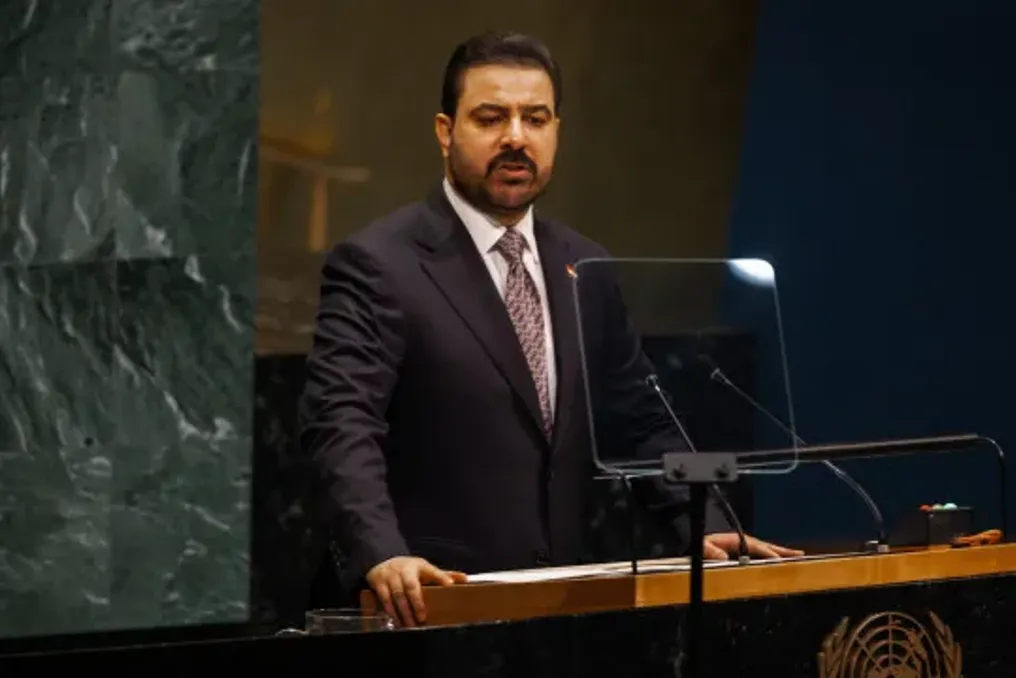
Ali al-Zaidi stated during his speech at the 81st United Nations General Assembly in New York that Iraq has the potential to establish itself as a world center for energy generation. He called on the international community to invest in the country, highlighting its resources, favorable market, good location, and national determination to build a new economy.
Al-Zaidi also mentioned that the Iraqi government is actively combating widespread corruption in the territory. Currently, Iraq ranks as the second-largest oil producer within the Organization of the Petroleum Exporting Countries (OPEC).
The former businessman recalled that the country overcame decades marked by conflict and instability, which resulted in the depletion of its resources. In this scenario, Iraq is focused on boosting its industry to foster investment opportunities, offering facilities to the private sector, and improving its energy infrastructure.
The Iraqi leader reinforced the goal of transforming Iraq into a global energy hub. He expressed great concern about issues related to maritime navigation freedom, specifically citing the closure of the Strait of Hormuz by Iran, which has caused serious damage to the Iraqi economy, highly dependent on oil sales.
In response to this crisis, it was announced that the government is working to diversify oil and gas export points. Furthermore, there are plans to develop energy routes and corridors connecting Iraq with Turkey, Jordan, and Syria, aiming to access global markets and contribute to global energy security.
Iraqi authorities have also implemented a program to consistently increase crude oil production in line with its proven reserves, while seeking to expand both its refining capacities and petroleum derivative production.
Al-Zaidi presented the ambitious Development Route project, which aims to connect East to West, starting from the port of Al Faw in southern Iraq to Europe via Turkey. Through this, he requested cooperation from neighboring countries to generate prosperity based on shared economic interests.
He argued that when nations in the region are interconnected through means such as ports, railways, power grids, trade, and investments, they show a greater interest in maintaining stability. This was a new appeal made by Al-Zaidi to support efforts aimed at increasing trade flow through Iraq.
In his address, the Iraqi Prime Minister reiterated the country's commitment to ensuring the disarmament of militias operating in its territory and strengthening partnerships with allied nations, especially after the end of the international coalition mission dedicated to combating terrorism in the area.
Al-Zaidi emphasized the effort to ensure that the state holds the final decision on peace and war issues, keeping weapons and instruments of power under the control of its constitutional institutions. The Iraqi government will begin a process on the 30th to disarm factions outside state control, although this initiative faces resistance from certain pro-Iranian militias.
These militias have been responsible for attacks against American troops in the Middle East and against Gulf nations during the current conflict. Simultaneously, the state is conducting operations to seize more than six million weapons held by citizens and armed groups. However, Al-Zaidi guaranteed that government actions are progressing well, and that the outcome of this process will help create the necessary environment for development and investment in the country, which suffers from decades of conflict, instability, and terrorism.