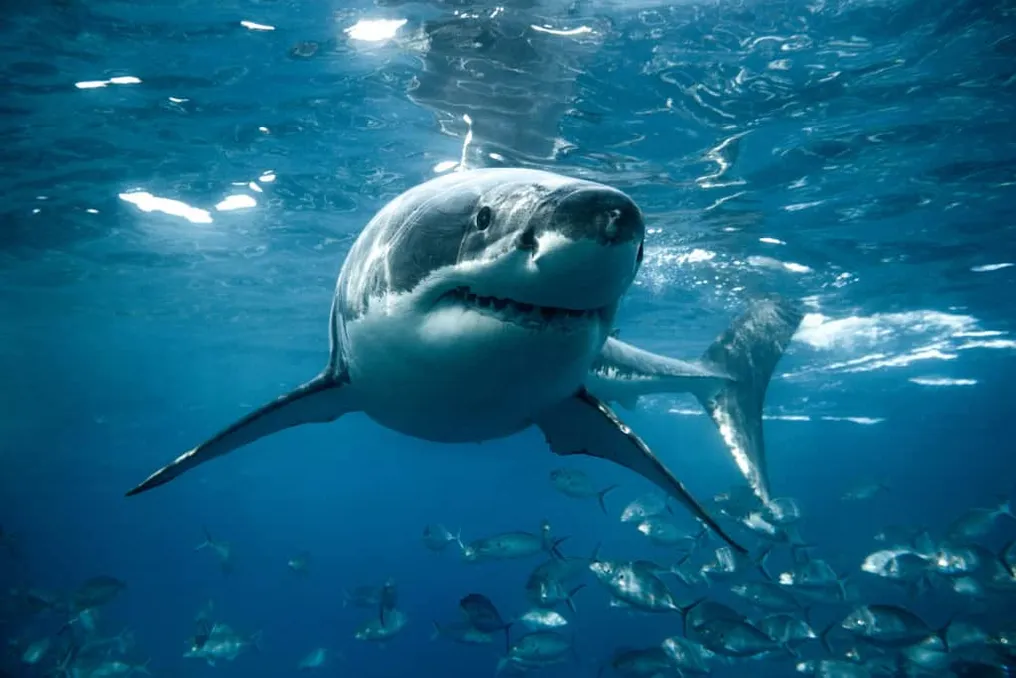
Researchers documented for the first time a hunting incident involving a white shark and a toninha, a dolphin considered rare, that occurred on the Brazilian coast. The toninha specimen was found dead on a Brazilian beach, showing three bite marks.
The investigation of the injuries confirmed that the attack took place while the animal was still alive. This record establishes an unprecedented interaction between the two species and provides new data on the presence of the white shark in Brazilian waters.
The toninha (Pontoporia blainvillei) is typically found on the southern coast of Brazil, but it also occurs in Uruguay and Argentina. This species is classified as one of the most threatened among dolphins in the Southwest Atlantic. Although it lives in the sea, it is technically a river dolphin, being the only species of this group that inhabits the marine environment; its closest relative is the pink river dolphin, found in the Amazon.
The toninha can be distinguished from other dolphins by its appearance, notably because its snout represents approximately 15% of the total body length, which is the largest proportion of this type among dolphins.
Finding a dead individual of a rare species like the toninha provides a valuable opportunity to study unknown aspects of its ecology. This opportunity arose when an adult toninha was found stranded on the Brazilian coast, exhibiting the three bite marks.
To determine the predator, scientists examined the dimensions of the marks, the morphology of the bite, the size and shape of the teeth, as well as the direction of the scars. The information was processed using the TPSdig software, a tool used to estimate the measurements of the potential predator.
One of the bites, located on the dorsal fin, showed characteristics consistent with a white shark. The analysis indicated that the animal responsible for the attack had an estimated length between 3.6 and 3.8 meters and a weight ranging from 400 to 490 kilograms. The presence of hemorrhage at the wound reinforced that the toninha was alive at the time of the attack.
This event constitutes the first documented hunting record between white shark and toninha in this region. The discovery also suggests that white sharks may be present and interacting with this species in Brazilian waters, despite being locally considered rare.
The finding adds knowledge about the ecological relationship between the two animals. While the toninha is listed among the most threatened dolphins in the Southwest Atlantic, white sharks also face a decline in population. Researchers emphasize the importance of understanding the role of these species in the ecosystem, and the study based on the carcass of this single dolphin aids in deepening this knowledge.