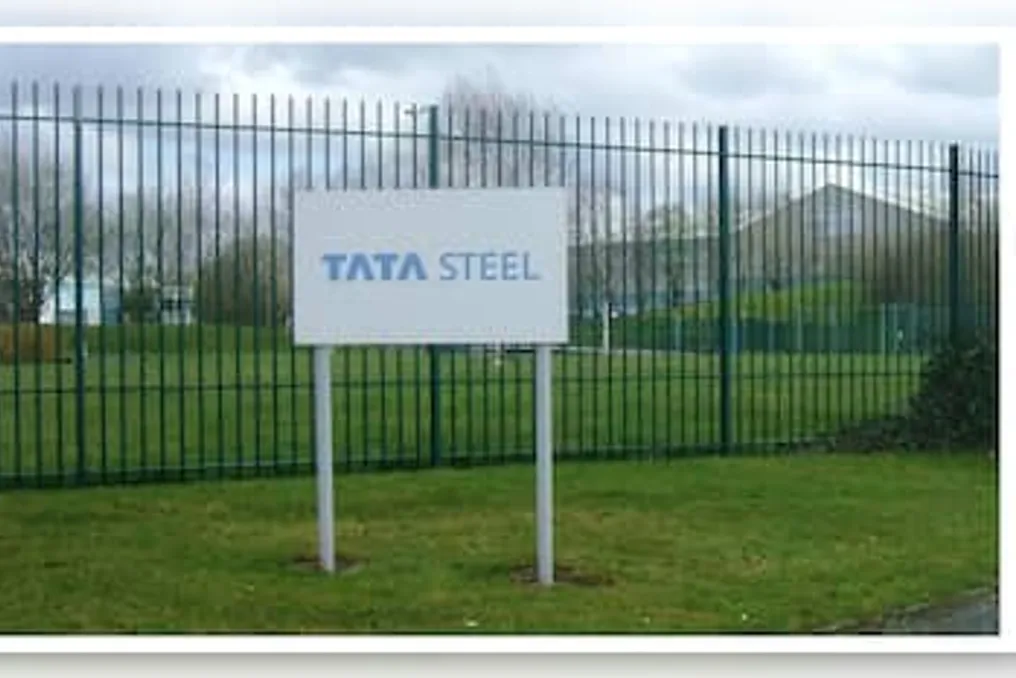
Tata Steel and the Dutch government extend Letter of Intent for green steel project until 2027
Read more
Business Standard
business-standard.com

Tata Steel and the Dutch government extend Letter of Intent for green steel project until 2027

Tata Steel, the Dutch government, and the province of North Holland have agreed to extend the Joint Letter of Intent (JLoI) for the Green Steel Project until March 1, 2027. This will allow for the continuation of discussions on decarbonizing the steel company's operations in the Netherlands.

In a statement published on Friday, Tata Steel announced that the five-month extension provides all parties with additional time to resolve several outstanding issues and develop a realistic approach to the integrated health and decarbonization project. The company emphasized that the overall goal remains unchanged.

The non-binding JLoI was signed between Tata Steel, the Dutch government, and the province of North Holland in September 2025, providing for potential state support of up to 2 billion euros.

The green steel project, according to the company, recognizes the economic importance of steel production for the Netherlands and aims to achieve sustainable, healthier, cleaner, and more promising steel production in IJmuiden, as well as improve living conditions.

Reasons for Extension and Next Steps

The company noted that extending the JLoI allows the parties to take into account several recently changed circumstances and matters necessary to reach a final individual agreement and make a final investment decision. Tata Steel Nederland is collaborating with the Province of North Holland and the Environmental Agency to explore options for the safe, responsible, and controlled closure of both coke and gas plants.

The regulatory system in the Netherlands concerning the production, storage, and transport of steel slag is becoming increasingly complex, which has implications for metallurgy. Therefore, a sustainable and workable solution is required to ensure regulatory certainty and clarity to support future investment decisions.

Various issues affecting the long-term financial and operational viability of the project are being addressed, including grid tariffs and changing market and regulatory conditions, such as the recent review by the European Commission of the phase-out schedule for free carbon allowances.

Tata Steel stated that as the basic engineering phase nears completion, Tata Steel Nederland is working on optimizing and prioritizing the costs and implementation of the Green Steel Project, taking into account the changed circumstances. Key permitting procedures have been initiated, including installations for the Green Steel Project, windbreaks, and coverings.

Furthermore, Tata Steel reports the implementation of its cultural transformation program aimed at improving governance functions, corporate governance, and compliance.
Similar stories

Government likely to extend RoSCTL textile export scheme past September 30
Read more
business-standard.com

Government likely to extend RoSCTL textile export scheme past September 30

According to an official source familiar with the situation, the government may extend the 'Reimbursement of Central and State Taxes and Duties' scheme (RoSCTL), which serves as a stimulus for the textile industry, beyond September 30.

Although the industry sought a five-year extension of this scheme to synchronize it with the period of the Sixteenth Finance Commission, the final decision on the extension period remains with the Department of Expenditure (DoE) of the Ministry of Finance, an anonymous source reported.

The same official added that they have also requested the DoE to double the amount of funds allocated under this scheme, increasing it from the 5,000 crore rupees allocated for the current fiscal year.

Under RoSCTL, the government reimburses embedded central and state taxes on textile exports, including apparel, articles, and woven or knitted goods. The goal of this measure is to prevent tax leakage, which helps maintain product competitiveness.

According to a revised estimate presented in the Budget for the 2027 fiscal year, the government spent 10,010 crore rupees on RoSCTL in the 2025–26 fiscal year (FY26).

The final decision on the extension and funding of the scheme is expected by September 30. Stability and predictability of the RoSCTL scheme have been long-standing demands of the textile industry.

Updip Singh Chatrath, Chairman of the National Council for Textile and Technical Textiles of Assocham, noted that 'policy consistency is a key factor influencing investment decisions, and the textile sector needs sustained investment to achieve the government's goals for 2030.'

The government has set a target to increase textile exports to $100 billion by 2030 (currently around $37 billion) and grow the sector size to $350 billion by 2030 (currently around $190 billion). Industry estimates suggest that such growth will require investments of at least $60 billion, added Chatrath. He emphasized that these investments, in turn, require certainty and policy stability.

The tax exemption scheme was initially launched ten years ago as the Reimbursement of State Levies (RoSL) scheme, which returned local and state taxes. After the introduction of the Goods and Services Tax (GST) in 2017, the government replaced RoSL with RoSCTL. This transition was necessary because, although GST consolidated several major indirect taxes, some embedded central and state duties remained unrefunded, necessitating the creation of a new mechanism to sustain export competitiveness.

The government is also implementing a similar tax refund scheme for other exported goods called Reimbursement of Duties and Taxes on Exported Products (RoDTEP), which is also due to conclude on September 30. The possibility of extending this scheme for five years is currently being actively considered.

These two flagship tax exemption schemes have been extended multiple times previously, often simultaneously. In March, the government last extended both schemes by six months to support exporters amid the conflict in the Middle East.

Popular