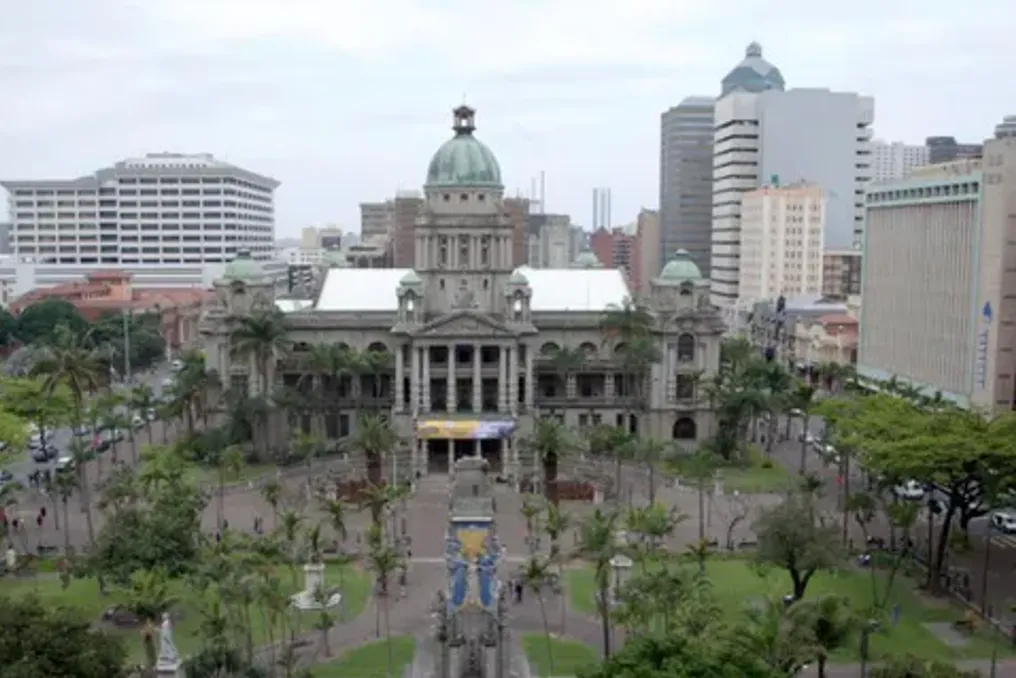
R8 million will be allocated to update the audio equipment in the eThekwini municipal City Hall, with these funds being reallocated from other projects. A report presented to the executive committee recently required the reallocation of funds from other areas to implement this audio project.
The report indicated that an additional R8 million is needed to complete the modernization of the sound and audiovisual system. It was emphasized that this funding is exclusively for audio equipment and is not related to the broader reconstruction works currently underway. This recommendation was approved by the executive committee.
The City Hall has been under renovation for several years, during which millions of rand have been spent. City council members noted the importance of addressing the sound system issues, as they often have to use rented equipment during meetings due to poor sound quality.
It was previously reported that the total cost of the City Hall reconstruction in Durban for the eThekwini municipality is estimated at R29.8 million, with the extensive repair scheduled for completion by June 2028. This 115-year-old building required repairs after parts of the ceiling collapsed in the main hall and other parts of the building, as well as damage caused by the 2022 storm. Renovation work began in March 2024.
The project has faced delays, which the municipality attributed to the low quality of the contractor's work, leading to the termination of the contract with the original contractor in March 2026. The city is under pressure to complete the reconstruction. The eThekwini Municipality has already spent R15 million over three years on renting the Durban International Convention Centre (ICC).
The report presented to the executive committee stated that the additional R8 million was reallocated from other services for the City Hall reconstruction needs. The report specified: 'Authority was requested to reallocate funds from the Director of Executive Council Support capital budget for 2026–27. This money will solve the problems with the council hall reconstruction and the audiovisual and sound system project.' It also added that the proposed funding would come from savings identified in the Kloof facility upgrade project, as current funds are sufficient to meet obligations for that project.
The report further noted: 'Regarding the circumstances that led to the funding deficit, the funds initially allocated for the council hall audiovisual and sound system project were used during the 2025–26 financial year to cover the funding deficit for other completed projects, leading to the current deficit.'
IFP council member Mdu Nkosi stated that the City Hall is important because it is a historic building and the council headquarters. He stressed that the reconstruction must be completed to avoid rental costs at the ICC. Nkosi noted that the portfolio committee had pointed out the faulty operation of the sound system. He added that with the renovation and improvement, the City Hall will be able to host committee meetings and other events. He also mentioned that discussions in the Exco meeting room were hampered by the sound system, and the city often had to rely on rented equipment, and the building needed large screens for presentations.
Nkosi stated: 'The City Hall is important, and I want the reconstruction to be finished. We need large screens for presentations. When committees hold meetings in the hall, it looks bad if the sound is poor. We need the City Hall in good condition, with clear sound.'
DA council member Tabani Mthethwa expressed serious concern about the funds spent on the City Hall reconstruction. He stated: 'While we appreciate that the City Hall is a city asset, we are not convinced that value for money has been achieved since the project started more than five years ago. Due to the unavailability of the City Hall, the municipality has incurred hundreds of millions of rand by holding council meetings outside the City Hall. Thus, the municipality has suffered more than threefold the costs. Expecting even more money to be poured into this project now is an insult to already suffering taxpayers, so we will not vote for additional funding.'
The eThekwini Municipality confirmed that the project funding had been approved.