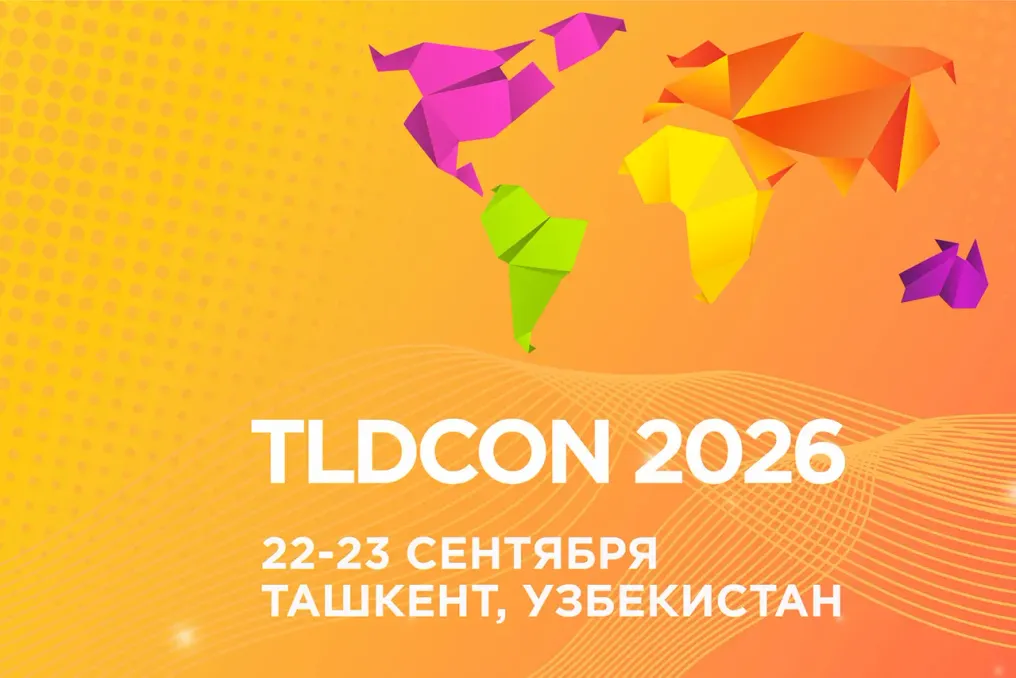
The 19th International Conference of Administrators and Registrars of National Top-Level Domains of Eastern Europe and Central Asia, known as TLDCON 2026, recently concluded its proceedings in Tashkent, Uzbekistan.
During the two-day event, attendees engaged in discussions covering various aspects of the domain sector, such as internet infrastructure, cybersecurity measures, regulatory frameworks, the application of artificial intelligence, and professional training for the workforce.
The organization of the conference was a collaborative effort involving the Coordination Center for TLD .RU/.РФ and the Russian Institute for Network Development (ROSNIROS), while UZINFOCOM acted as the host entity.
On the inaugural day, three memoranda of understanding and cooperation were formally signed. These agreements were established with the administrators of the national domain zones belonging to Kazakhstan, Uzbekistan, and Kyrgyzstan, specifically KazNIC (.KZ), UZINFOCOM (.UZ), and AZIAINFO (.KG).
These newly formed partnerships aim to foster collaboration in several key areas: enhancing DNS security and preventing misuse, sharing expertise in domain zone management, implementing internationalized domain names (IDNs), and organizing shared educational programs.
The conference agenda also dedicated time to reviewing advancements within Russia's domain industry. Andrey Vorobyov, Director of the Coordination Center, detailed the new regulations for domain registration. These include the requirement for mandatory identification via the Unified Identification and Authentication System (ESIA), which was implemented on September 1, 2026, alongside replacing the previous accreditation system with a formal registrar list.
Significant focus was placed on advancing multilingual capabilities within the .РФ domain. The allowed character set was expanded by 26 letters, enabling the registration of over 2,000 domains that accommodate the writing systems used by the peoples of Russia.
Discussions also addressed modifications concerning the .SU domain. These changes encompass registry normalization, the deployment of an updated WHOIS system, the introduction of transfers utilizing AuthInfo codes, and the integration of Escrow and EBERO systems to guarantee uninterrupted service.
Evgeny Morozov, CEO of MSK-IX, provided data indicating that the DNS infrastructure supporting Russia's national domains handles approximately 20 billion requests daily across 29 nodes situated in 21 cities globally.
A dedicated segment of the conference explored specialized service regimes designed for sensitive domain categories. Experts analyzed different strategies for safeguarding governmental resources, drawing upon Kazakhstan's experience in linking domain mechanisms with official government registries.
Artificial intelligence was identified as one of the primary focal points throughout the entire conference program.