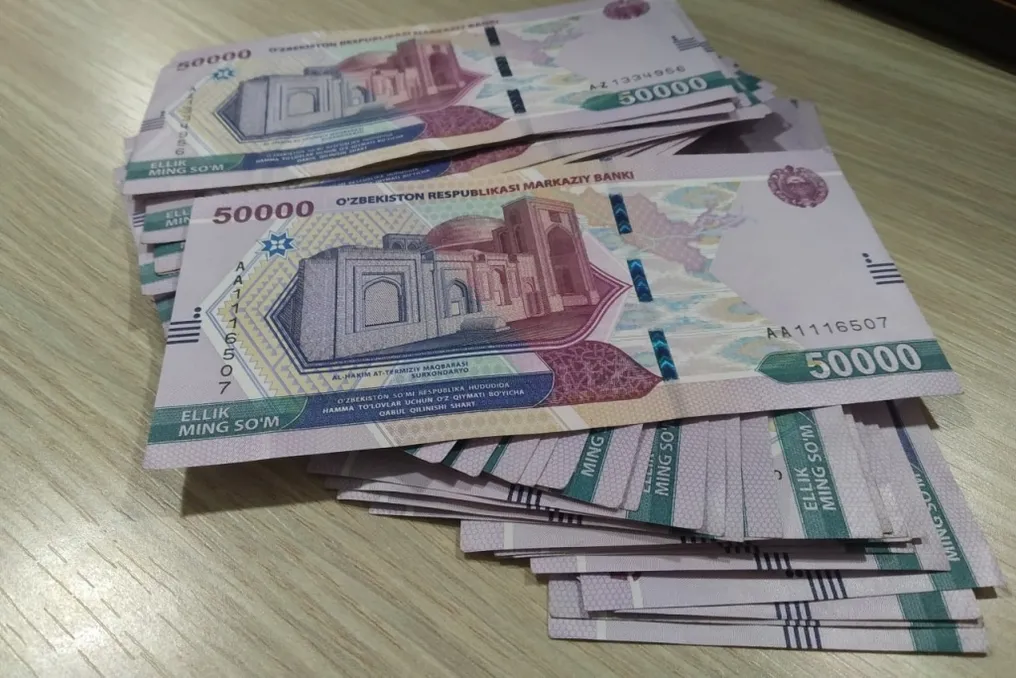
Assets of private banks in Uzbekistan grew by 29% over the year
Read more
UzDaily
uzdaily.uz

Assets of private banks in Uzbekistan grew by 29% over the year

According to the Central Bank of Uzbekistan, the assets of commercial banks in Uzbekistan without state participation increased by 29% compared to the previous year, reaching 386 trillion sums as of August 1, 2026. The assets of banks with state stakes grew by 14% over the same period, amounting to 630.6 trillion sums.

During the year, the share of state-owned banks in the total assets of the banking system decreased from 64.9% to 62%. Total assets of the banking sector reached 1,016.6 trillion sums.

Differences became more noticeable in the lending sphere. Private banks increased their loan portfolios by 21.2%, bringing them to 222.7 trillion sums, while banks with state stakes increased lending by 7.5%, reaching 421.9 trillion sums. The share of state-owned banks in the total volume of loans decreased from 68.1% to 65.5%.

At the same time, both groups demonstrated almost identical growth in deposits. Deposits in private banks grew by 34.1% to 234.4 trillion sums, and in banks with state stakes—by 33.8% to 248.2 trillion sums. The share of state-owned banks in the system's deposit base was 51.4%, compared to 51.5% a year earlier.

The loan-to-deposit ratio in banks with state stakes decreased from 211.5% to 170% over the year, while the similar ratio in other banks fell from 105.1% to 95%. Consequently, private banks collectively issued fewer loans than they attracted in deposits.

The liabilities of state-owned banks increased by 14.4% to 542.9 trillion sums, while the liabilities of private banks grew by 28.9% to 323.1 trillion sums. Banks with state stakes accounted for 58.3% of the sector's total capital, which is 87.7 trillion sums, while other banks contributed 41.7%, or 62.8 trillion sums. The share of non-performing loans in the portfolios of state-owned banks was 4%, compared to 3.2% in private banks.

The group of banks with state stakes includes nine institutions: UzNatsBank, Agrobank, Uzpromstroybank, Asakabank, Halk Bank, Business Development Bank, Aloqabank, Microcreditbank, and Turonbank. Among them, UzNatsBank remained the largest with assets of 145.8 trillion sums. Kapitalbank led the other twenty-five banks with 62.1 trillion sums, Ipoteka Bank with 56 trillion sums, and Hamkorbank with 42.5 trillion sums.

Among large private banks, asset growth was noted: Ipak Yuli Bank increased its assets by 36.8% over the year, Hamkorbank by 33.1%, Kapitalbank by 20.3%, and Ipoteka Bank by 10.1%.

Similar stories

Uzbekistan Banks Issued Mortgage Loans totaling 18.3 Trillion Uzbek Sums
Read more
uzdaily.uz

Uzbekistan Banks Issued Mortgage Loans totaling 18.3 Trillion Uzbek Sums

The Central Bank of Uzbekistan reported that commercial banks in Uzbekistan provided mortgage loans for housing purchases totaling 18.3 trillion Uzbek sums to nearly 59,200 citizens between January and August 2026. This figure exceeds the volume issued during the same period last year by 4.9 trillion Uzbek sums.

Average interest rates on the issued mortgage loans ranged from 16.9% to 21.6%, depending on the source of financing.

Distribution of Mortgage Loans by Market

Approximately 74% of all mortgage loans, amounting to 13.6 trillion Uzbek sums, were directed to the primary housing market, serving 43,757 borrowers. The secondary housing market received 26% of the loans, or 4.7 trillion Uzbek sums, covering 15,422 people.

Among borrowers, men accounted for 53%, and women for 47%. By age group, the largest share—64%, or 37,980 people—was comprised of citizens aged 31 to 50 years. The 18–30 age group provided 26% of borrowers (15,224 people), while 10% (5,975 borrowers) were over 51 years old.

Geography and Leaders of the Banking Sector

The largest volume of mortgage lending was registered in Tashkent, amounting to 5.592 trillion Uzbek sums. This is followed by the Andijan region with 1.591 trillion Uzbek sums and the Fergana region with 1.264 trillion Uzbek sums.

Among the banks leading in issuance volume, Halk Bank ranked first with 2.845 trillion Uzbek sums. Following them are Agrobank (2.771 trillion Uzbek sums), National Bank (2.212 trillion Uzbek sums), and Ipoteka-bank (2.167 trillion Uzbek sums).

It is also noted that over the past five years, the volume of issued mortgage loans has almost doubled: it grew from 9.8 trillion Uzbek sums in 2021 to 21.2 trillion Uzbek sums by the end of 2025.

Investments of Uzbek insurance companies grew by 28.8% to 10.740 trillion soums in the first half of 2026
Read more
uzdaily.uz

Investments of Uzbek insurance companies grew by 28.8% to 10.740 trillion soums in the first half of 2026

The total volume of investments by Uzbekistan's insurance organizations increased by 28.8%, reaching 10.740 trillion soums in the first half of 2026. This figure is higher than 8.340 trillion soums the previous year, according to data from the National Agency for Advanced Projects (NAPP). The growth rate of investments generally corresponded to the increase in insurance premiums, which rose by 28.6% over the same period.

Structure of Investment Portfolios

The structure of insurers' investment portfolios changed significantly during the year. Bank deposits maintained the largest share, increasing from 60.9% to 65.1% of the total portfolio. In absolute terms, deposits grew by 37.6%, amounting to 6.991 trillion soums, and remained the main driver of all investment growth.

Conversely, the share of investments in securities decreased from 16.7% to 14.2% of the portfolio. However, in absolute terms, such investments increased by 9.7%, reaching 1.525 trillion soums.

A similar trend was observed in real estate investments. Their share decreased from 18.7% to 16.5%, while the absolute value of these investments increased by 13.9%, totaling 1.773 trillion soums. In both cases, the growth of investments was slower than the expansion of the overall portfolio, leading to a decrease in their percentage shares.

Investments in company charter capital shares decreased both relatively and absolutely, falling by 25.7% to 78.7 billion soums. Their share in the portfolio dropped from 1.3% to 0.7%.

Loans also showed a decline, decreasing by 23.5% to 38.1 billion soums, and their share fell from 0.6% to 0.4%.

The 'other investments' category showed the fastest growth among all types of investments, more than doubling by 111.4% to reach 333.8 billion soums. Despite this significant increase, it remained the smallest component of the insurers' portfolio, only surpassed by loans.

Overall, the structure of investments by Uzbekistan's insurance organizations in the first half of 2026 showed an strengthening role of bank deposits against the relative decrease in the share of securities and real estate. The total portfolio continued to grow at a rate close to the pace of growth of insurance premiums.

Savings of Uzbekistan residents in banks increased by 122 trillion soms
Read more
podrobno.uz

Savings of Uzbekistan residents in banks increased by 122 trillion soms

The total volume of deposits in the banking system of Uzbekistan showed significant growth over the past year, increasing by almost 34%. The deposit amount grew from approximately 360 trillion soms to 482.7 trillion soms, which represents an increase of more than 122 trillion soms.

Deposit Structure

According to information provided by the Central Bank, 142 trillion soms, accounting for 29% of the total amount, was placed as demand deposits. Additionally, 36% of all deposits, or 175.7 trillion soms, were placed for a term not exceeding one year.

Long-term deposits, which have a term of more than one year, accumulate 164.9 trillion soms, corresponding to 34% of the total volume. It is worth noting that a year earlier, the share of such long-term deposits was 37%, while the share of deposits for up to one year reached 33%.

It was also announced that the methodology for calculating the official currency exchange rate has changed. Starting from September 15, the formation of this rate will be based on data not only from the foreign exchange market but also from the interbank over-the-counter market.

Popular