Agricultural subsidies in Uzbekistan will depend on yield and resource efficiency
Read more
Podrobno.uz [uz]
podrobno.uz

Agricultural subsidies in Uzbekistan will depend on yield and resource efficiency

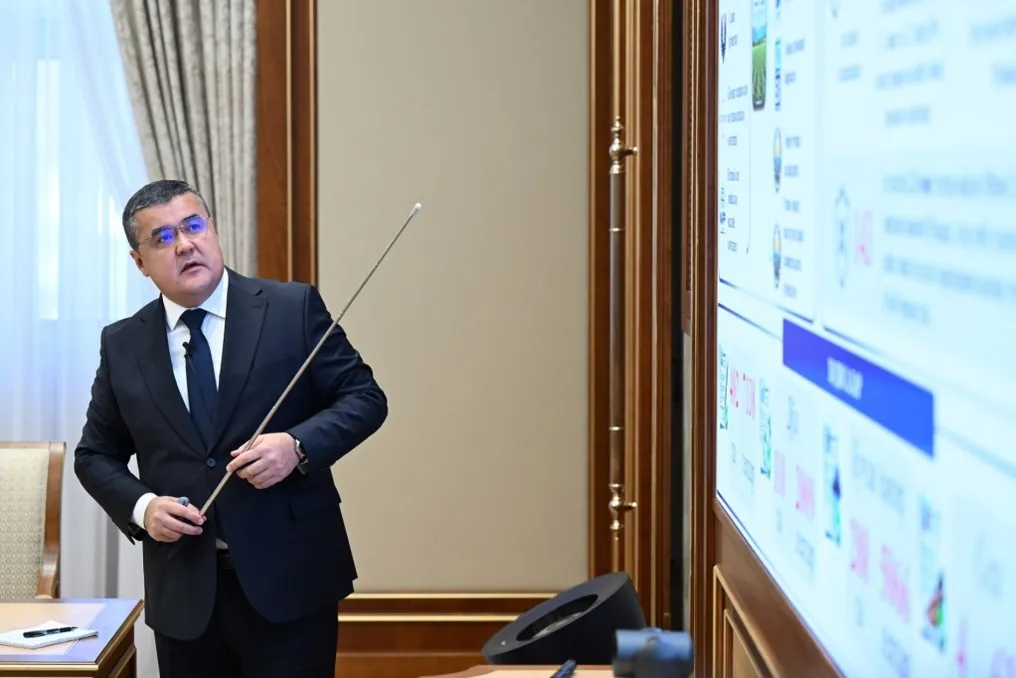
Uzbekistan plans to transform the state support system in agriculture starting next year. Subsidies will be tied to specific measurable indicators, such as yield, as well as the level of water and energy savings. If established criteria are not met, recipients may be required to return the received funds.

New approaches to supporting the agricultural sector were presented to President Shavkat Mirziyoyev on September 25. Currently, the industry operates with 29 directions and 91 types of subsidies, totaling 2.7 trillion soms annually. Furthermore, many workflows have already been digitized, and the timelines for application review and payment disbursement have been shortened.

It is proposed to move away from the previous model of simply allocating funds towards a 'results-based subsidy' system. When granting such subsidies, yield, the volume of produced goods relative to consumed resources, and the efficiency of water and energy use will be taken into account. Information for assessing these parameters will come directly from state information systems.

An electronic passport will be created for each beneficiary of the subsidy, allowing for online tracking of performance indicators. The first area where this updated mechanism will be tested will be water-saving technologies. An evaluation of changes in water consumption and yield levels will be conducted two to three years after receiving the subsidy; if target indicators are not achieved, the funds are subject to return.

Additionally, the development of agricultural insurance was discussed in detail at the meeting. A significant portion of procedures in this field is already carried out digitally through the Agrosafe system, covering the entire cycle—from application submission to contract signing and insurance payout. Plans include expanding the list of insured objects and risks to include seedlings, trees, and imported livestock, as well as developing new insurance products for animal husbandry, potatoes, onions, and melons.

The goal set for 2027 is to insure 45 thousand agricultural enterprises and bring the share of insured production to 60%. The preparation of 500 independent experts and the complete digitalization of insurance services are also planned. Special attention will be paid to risk prevention: it is proposed to allocate 3–5% of the insurance premium to a special fund that will be used for veterinary services, vaccination, biological protection, and installing protective measures in orchards and vineyards against natural threats.

The President emphasized the importance of ensuring the convenience of subsidization and insurance systems for farmers, as well as the transparency of state aid distribution. Responsible agencies have been instructed to refine existing proposals and prepare the necessary regulatory legal acts. It was previously reported that producers and processors of fruit and vegetable products, as well as greenhouse farms in Uzbekistan, will have the right to defend their interests in court through the Agency for Agro-Industrial Complex Development without having to pay state fees.


Similar stories

Social institutions in Uzbekistan are allowed to provide paid services and rent out property
Read more
podrobno.uz

Social institutions in Uzbekistan are allowed to provide paid services and rent out property

A decision has been made in Uzbekistan allowing social institutions to provide paid services and rent out their property. According to the new document, such institutions can now charge for services related to rehabilitation, medical diagnostics, treatment, and care, as well as for the services of defectologists and psychologists.

It is emphasized, however, that state-guaranteed free services cannot be converted into a paid format. It is also established that the personnel of the institutions cannot be forced to provide paid services.

In addition, social facilities gain the right to sell products produced by themselves and to rent out their property. State customers have the opportunity to purchase this product directly from the institutions, provided that the annual volume of purchases from one organization does not exceed 1.5 thousand basic calculation units (BRV), which currently amounts to 660 million soms.

Income generated from this commercial activity will be directed towards the further development of the social institutions themselves. Employees who participate in providing paid services or other income-generating activities will be able to receive additional payments reaching 300% of their official salary. Furthermore, top employees are entitled to a quarterly bonus of up to five salaries.

The National Agency for Social Protection will monitor the fulfillment of the institutions' revenue plans, which are formulated annually based on data on paid services and other activities.

Uzbekistan simplifies business access to subsidized loans for job creation
Read more
podrobno.uz

Uzbekistan simplifies business access to subsidized loans for job creation

New measures are being introduced in Uzbekistan to expand entrepreneurs' access to subsidized financing, and some requirements for those receiving loans are being abolished. District and city headquarters are granted the authority to independently allocate funds for projects aimed at creating stable jobs and increasing household income.

This presidential decree establishes new rules for the development of small businesses and increasing household incomes. The district and city headquarters will have access to a total fund exceeding 3.2 trillion UZS, sourced from various sources.

These funds include 1.37 trillion UZS from family entrepreneurship support programs, 450 billion UZS for youth business, 240 billion UZS from the Poverty Reduction Fund, and 100 billion UZS from the Employment Promotion Fund.

Entrepreneurs who bring families from the Social Register into cooperation can obtain unsecured loans. Each household is allocated 50 million UZS, with a maximum amount reaching 5 billion UZS. Starting October 1st, the headquarters will begin compensating part of the interest on bank loans for small and medium-sized businesses, as well as for self-employed individuals. The Company for Entrepreneurship Development is responsible for implementing the subsidies.

Furthermore, the headquarters will be authorized to manage funds from the 'Sahovat va Kumak' funds, as well as the youth and women's 'notebooks,' totaling 760 billion UZS. Starting January 1, 2027, the criteria for including families in the Social Register will be determined by a point system that will take into account factors such as income, presence of chronic diseases, disability, migration, and number of children, allowing families to receive necessary social support.

The State Social Security Fund will also begin providing childcare benefits to female employees under employment contracts, starting from the end of maternity leave until the child reaches one year of age. It should be noted that entrepreneurs willing to build kindergartens, schools, and technical colleges, as well as provide free education for children from low-income families, will be offered land plots in auctions with a starting price of 1 million UZS.

Popular