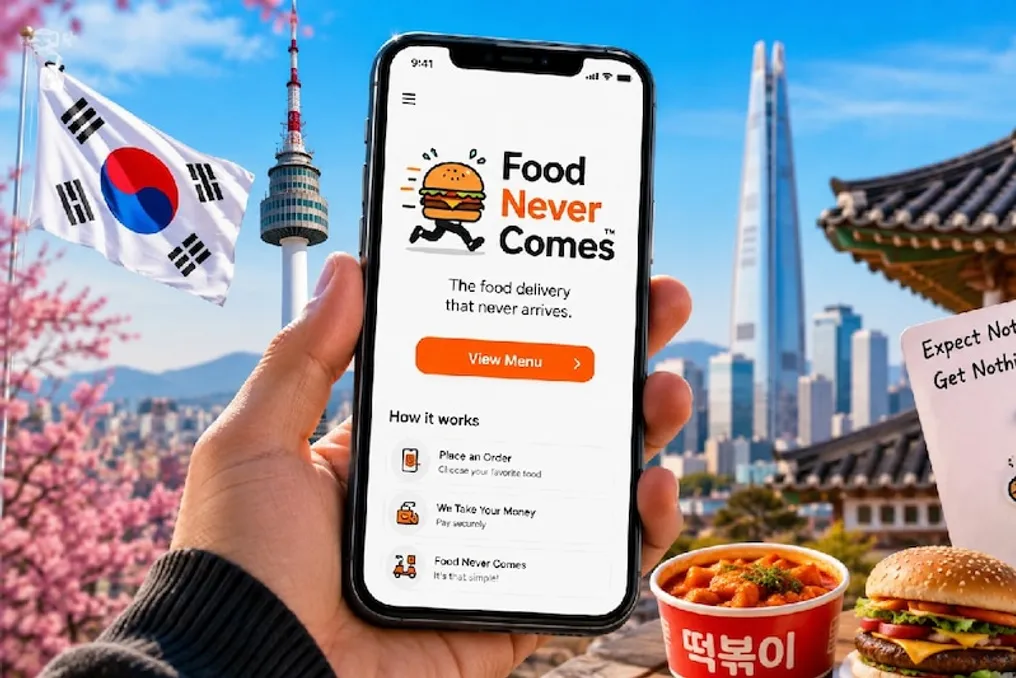
If the habit of ordering food through apps persists, there is an application that offers a similar experience for free. When the desire to eat something spicy at night arises, people often order food through online services, but such eating is unhealthy and incurs costs.
To avoid this, a viral service has become popular in South Korea. The main feature of this application is that users can experience ordering food online, but actual food delivery is not carried out. This is why the application attracts attention on social media.
The viral application from South Korea is called FoodNeverComes. Essentially, it is a simulation application. It creates the feeling that the user is actually ordering food from one of the delivery services. Users can browse restaurants and dishes, as well as follow the checkout process.
However, when an order is placed, a courier does not come home with the food. The purpose of this application is only to provide a fake or virtual ordering experience.
Typically, when opening a food delivery app, the user selects a restaurant, then chooses a dish, and places an order. This application provides a similar experience. The user feels like they are actually ordering food, but the entire process takes place exclusively within the application itself. That is, there is no real system for purchasing or delivering food here.
The concept of this application differs from regular services, which surprises people, and videos about it are actively spread on social networks. Some users find this idea amusing, while others find it strange.
Nowadays, many applications and digital experiences appear that demonstrate real processes in a virtual format. This application is one such example.
At first glance, this application might seem like just a way to pass the time, but such simulation applications can also be used to explain certain processes or test user experience. Nevertheless, it is important to understand that an order placed in the application is not a real food order. If a person really needs to order food, they should use a real delivery platform.
Currently, it is the unique concept of this application that attracts attention, and it remains unknown how much the trend for such virtual applications will grow in the future.