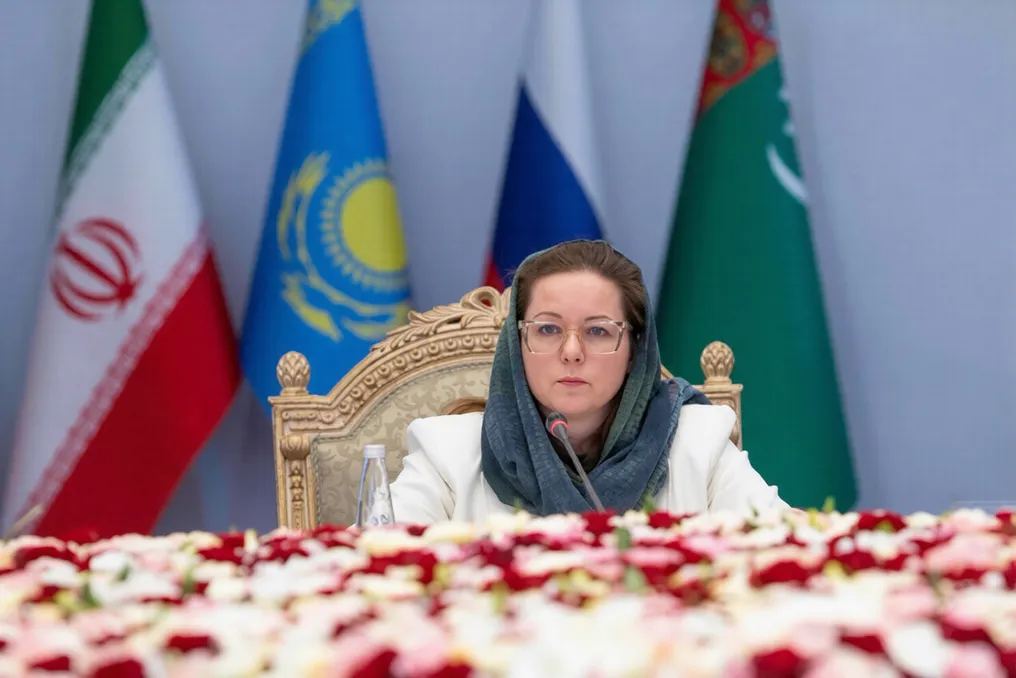
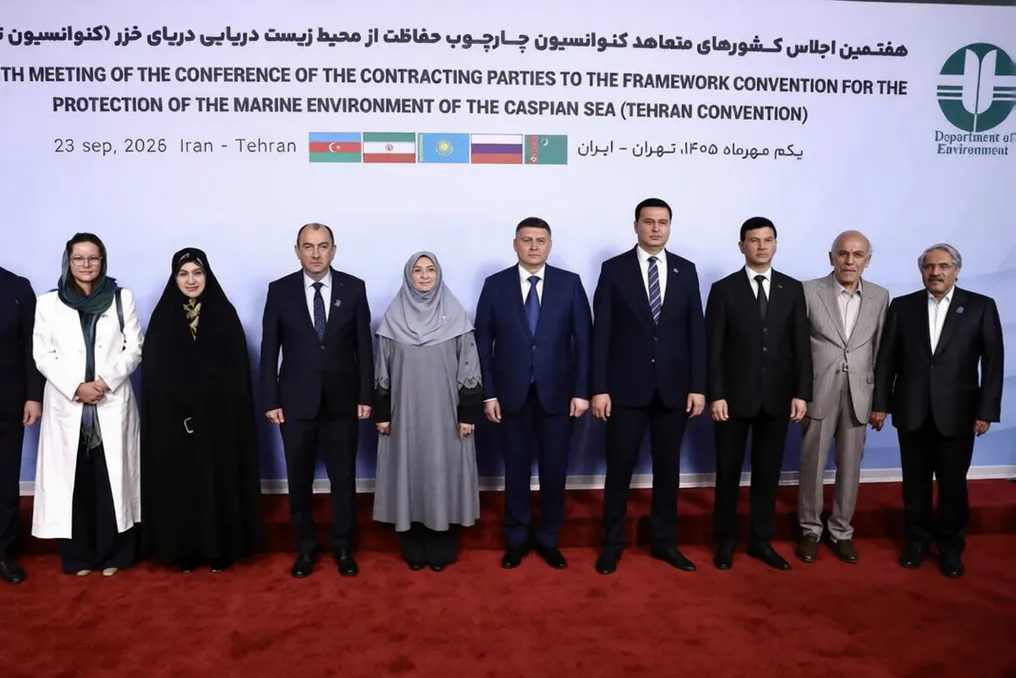
At the seventh meeting of the Conference of Parties (COP7) to the Tehran Convention on the Protection of the Marine Environment of the Caspian Sea in Tehran, Shina Ansari, head of Iran's Department of Environment, emphasized the importance of preserving the unique ecosystem of the Caspian Sea for current and future generations of the region. She presented the thesis: 'Five countries, one ecosystem, one future.'
Ansari stated that protecting the Caspian Sea is a common and transnational responsibility. She strongly urged the five coastal states to move from formal legal obligations to real actions, replace fragmented information with a common dataset, and substitute national monitoring with coordinated regional observation. Furthermore, she advocated for more active use of science and technology to maintain the sustainable future of the shared ecosystem.
Addressing the opening ceremony of COP7, Ansari welcomed representatives of the member states of the Tehran Convention, the United Nations, international organizations, ambassadors, government officials, scientists, experts, civil society representatives, and the media. She viewed the meeting in Tehran as an opportunity to renew the collective commitment of the countries to protect the Caspian and strengthen regional interaction.
Highlighting the significance of this body of water, Ansari noted that the Caspian is not just a surface of water, but a common heritage, an interconnected ecosystem, and a vital resource for all generations. This unique, biodiverse sea is home to species such as the Caspian seal and represents one of the most important global spawning grounds for sturgeon. Millions of people living near the Caspian depend on the health and sustainability of the sea for their existence.
Ansari stressed that protecting the Caspian has become a more than ever common and transnational task. She pointed to issues such as land-based pollution, habitat degradation, pressure on biological resources, climate change, and water level fluctuations—challenges that no single country can solve alone.
The Head of the Department of Environment also mentioned the Islamic Republic's experience over the past year, noting aggression from the United States and Israel. As a result of these events, in addition to the loss of Iranian leaders and civilian populations, including women, men, and children, infrastructure, scientific and medical centers, and historical heritage were damaged. The environment, protected areas, and some international environmental norms and regulations were also affected.
She cited explosions at fuel storage facilities in Tehran, which caused widespread pollution, and attacks on oil facilities in Assaluyeh, as examples of what she termed 'ecocide' or environmental crimes. Ansari warned that 'the environment is the silent victim of wars,' as water and soil contamination, habitat destruction, and increased pressure on natural resources can leave the consequences of wars for years or even generations.
Therefore, she insisted that environmental protection and enhancing ecosystem resilience must become an integral part of countries' efforts to promote peace, security, and sustainable development.
Returning to the history of the Tehran Convention, Ansari reported that in 2003, the five Caspian coastal states—Azerbaijan, Iran, Kazakhstan, Russia, and Turkmenistan—established a common regional legal framework for the protection of the Caspian Sea by signing the convention. This treaty, according to her, went beyond a mere international document and reflected the shared determination of the five countries to cooperate in protecting the common biome.
Ansari added that over two decades, cooperation between the coastal states has expanded to areas including oil spill response, biodiversity conservation, and assessment of transboundary environmental impact, and it is time to take another step forward.
She described the phrase 'Five countries, one ecosystem, one future' as one of the central messages of the meeting, clarifying that it is more than just a symbolic slogan. 'Five countries' symbolizes shared responsibility; 'one ecosystem' reflects the scientific reality of the interconnected nature of the Caspian; and 'one future' serves as a reminder of the countries' duty to coming generations.
Ansari emphasized that the fate of the Caspian cannot be divided by political borders, as water currents, animal species, pollution, and climate change do not adhere to these boundaries. She stated: 'The future of the Caspian cannot consist of five separate futures; it is a common future for all coastal states.'
In Ansari's view, advanced technologies, including remote sensing, satellite monitoring, smart environmental systems, ecological modeling, common databases, and modern analytical and predictive tools, offer valuable opportunities for better understanding changes in the Caspian Sea and responding more quickly to emerging threats. Thus, another message of the meeting is the movement 'together, supported by science and technology, to protect the Caspian Sea ecosystem and build a more sustainable tomorrow,' provided this message is translated into practical action.
Ansari called for strengthening mechanisms for joint exchange of scientific data, creating joint monitoring systems, regularly assessing the state of the ecosystem, joint preparedness for pollution incidents, biodiversity conservation, and measures to reduce pollutant discharge into the sea. Stressing the responsibility of coastal states towards future generations, she noted that their duty extends beyond the present time.
She concluded that Iran is ready to deepen cooperation with the Caspian coastal states, the Secretariat of the Tehran Convention, the UN Environment Programme (UNEP), research institutes, and other regional and international partners. Ansari expressed hope that the decisions made at COP7 will not only reflect the collective political will of the coastal states but also provide a clear roadmap for practical and measurable actions to protect the Caspian Sea. Finally, she thanked the coastal states, the Secretariat of the Tehran Convention, UNEP, experts, researchers, civil society organizations, local communities, the media, and all institutions that have worked to protect the common heritage over more than two decades. She wished that the Caspian Sea would remain healthy, vibrant, sustainable, and viable—today, tomorrow, and for generations to come.