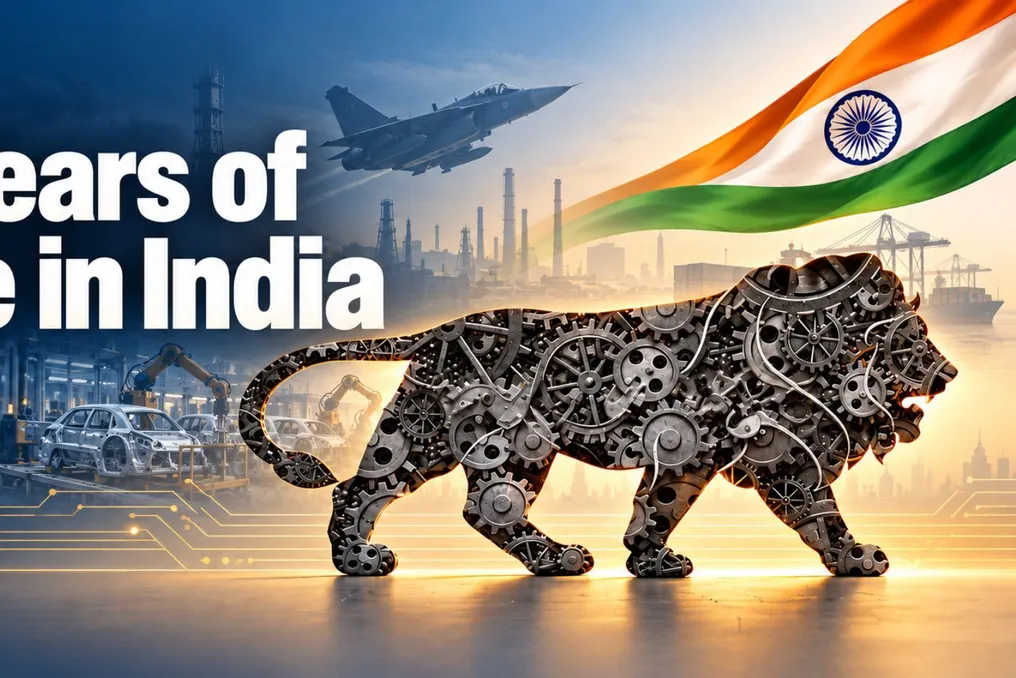
Narendra Modi marked the 12th anniversary of the 'Make in India' initiative, emphasizing that the program aims to build the infrastructure, enterprises, and innovations necessary for India's growth and prosperity.
In his post on X, the Prime Minister shared a video and wrote that 'Make in India' contributes to creating the infrastructure, enterprises, and innovations that allow India to develop and prosper, noting this with the hashtag #12YearsOfMakeInIndia. He also pointed to the increase in production volumes, investments, and exports as signs of transformation visible across all sectors.
The 'Make in India' initiative was launched on September 25, 2014, with the goal of transforming India into a global hub for manufacturing, design, and innovation. Currently, it covers 27 sectors: 15 manufacturing and 12 service sectors.
A key mechanism of the program has been the Production Linked Incentive (PLI) schemes. According to government data, these schemes have facilitated production and sales worth approximately 23.8 lakh rupees, exports exceeding 15.5 lakh rupees, and attracted investments of about 2.58 lakh rupees.
The electronics sector has shown the most noticeable success. Electronics production has increased nearly sevenfold: from 1.9 lakh rupees in 2014–15 to 13.11 lakh rupees in 2025–26. Mobile phone production has grown by approximately 33 times, reaching 6.27 lakh rupees, making India the world's second-largest mobile phone producer by volume. Government data indicates that currently, 99.2% of mobile phones used in India are manufactured domestically.
India's defence sector has demonstrated one of the sharpest turns. Defence exports have grown by approximately 55 times—from almost 690 crore rupees in 2014 to over 38,400 crore rupees. Domestic production in the defence industry also reached a record 1.78 lakh crore rupees in the fiscal year 2025–26, compared to 46,429 crore rupees in 2014–15.
In the automotive industry, production volume reached 31.03 million units in 2024–25, which is 33% more than in 2014–15.
Union Minister of Commerce and Industry Piyush Goyal stated that India has transitioned from producing mainly for the domestic market to producing goods for global markets. He cited the change in confidence among founders, manufacturers, innovators, and exporters as the most significant outcome of the initiative: 'India can manufacture, India can innovate, and India can compete with the world.'
Although achievements in phones, defence, and PLI-related exports are substantial, the main goal—increasing the share of manufacturing in India's economy—is still in progress. The initial target was to raise the manufacturing share to about a quarter of GDP, which the sector has not yet achieved. As the initiative enters its thirteenth year, the focus will likely shift to deepening domestic value addition in semiconductors, components, and advanced manufacturing, so that assembly-based growth transforms into overall supply chain capability.