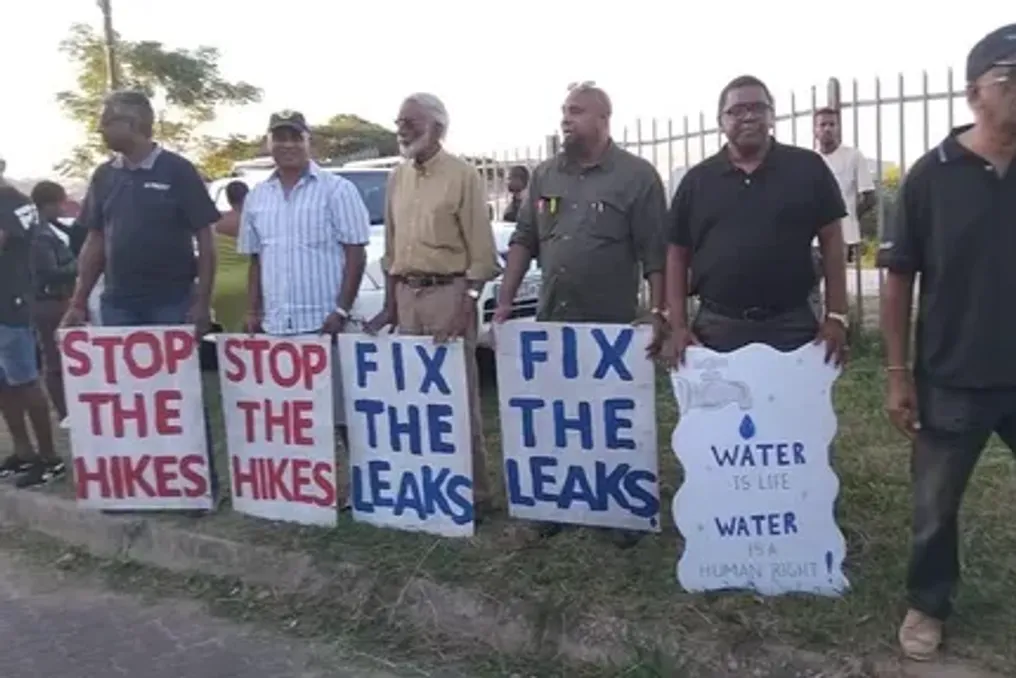
Civil society and public organizations are opposing the proposed 8.83% increase in electricity tariffs by Eskom. They warn that further increases in energy costs could intensify financial pressure on households and small businesses, which are already struggling with the rising cost of living.
The public has until October 2nd to submit comments regarding Eskom's proposed tariff structure while the National Energy Regulator of South Africa (NERSA) reviews the submission. If approved, the 8.83% increase for direct Eskom customers will take effect in April 2027, and municipal wholesale purchases will increase by 8.84% from July 2027.
The 'Better Governance Initiative' (BGI), which launched the petition against the hike, noted that electricity is taking up an increasing share of household and business budgets. BGI founder and director, Sabelo Chalufu, stated: 'Residents simply cannot afford any further increase in electricity prices.'
He added that the organization's primary concern relates to the cost of living and doing business, affecting residents first and small businesses second. According to him, electricity consumes a larger portion of budgets, hitting the most vulnerable the hardest.
BGI calls on NERSA to reject the increase, arguing that Eskom has demonstrated the ability to operate sustainably on previously approved tariff hikes. AfriForum will also submit official objections to this increase. Morne Mostert, local government affairs manager, questions the decision amid declining electricity sales and Eskom's multi-billion rand profits.
Mostert noted: 'Electricity sales have dropped by 6.2%, yet revenue has grown thanks to unreasonably high tariffs. Now Eskom wants to raise tariffs again above inflation levels.'
He warned that higher tariffs might push more households and businesses towards using solar panels and other forms of self-sufficiency, thereby reducing dependence on Eskom. Mostert emphasized: 'Consumers are buying less electricity but paying more for it.'
The company ActionSA Gauteng also participated in the consultation process, focusing on how Eskom plans to recover revenue, rather than just the overall increase. Funzi Ngobeni, provincial chairperson of ActionSA, stated that the proposed structure could lead to low-consumption households facing a greater effective increase than more active users.
ActionSA clarified that the average increase does not reflect the whole picture; what matters is how much people are actually paying. For instance, a Homepower 4 household consuming 350 kWh could face an 11.02% rise, compared to a 7.32% rise for a user consuming 1,500 kWh. Furthermore, they question the R8.569 billion gap between Eskom's proposed and approved revenue figures.
Matthew Cruz, an energy analyst at Jaltech and member of the Board of Directors of the South African Independent Power Producers Association (SAIPPA), believes that when assessing Eskom's financial obligations, including debt and infrastructure investment, affordability must also be considered. He stated that NERSA should carefully examine not only the need for additional revenue for Eskom but also whether the costs reimbursed to consumers are effective, reasonable, and fairly distributed across different customer groups.
Cruz also warned that tariff increases could accelerate the shift to alternative energy sources. He noted: 'As electricity becomes more expensive, customers who can afford it are increasingly investing in energy efficiency, solar panels, batteries, and other forms of self-sufficiency.'
NERSA requested written comments by 4:00 PM on October 2, 2026, and a virtual public hearing is scheduled for October 8th from 9:30 AM to 1:00 PM. Interested parties wishing to attend or present must apply by 4:30 PM on October 2nd.