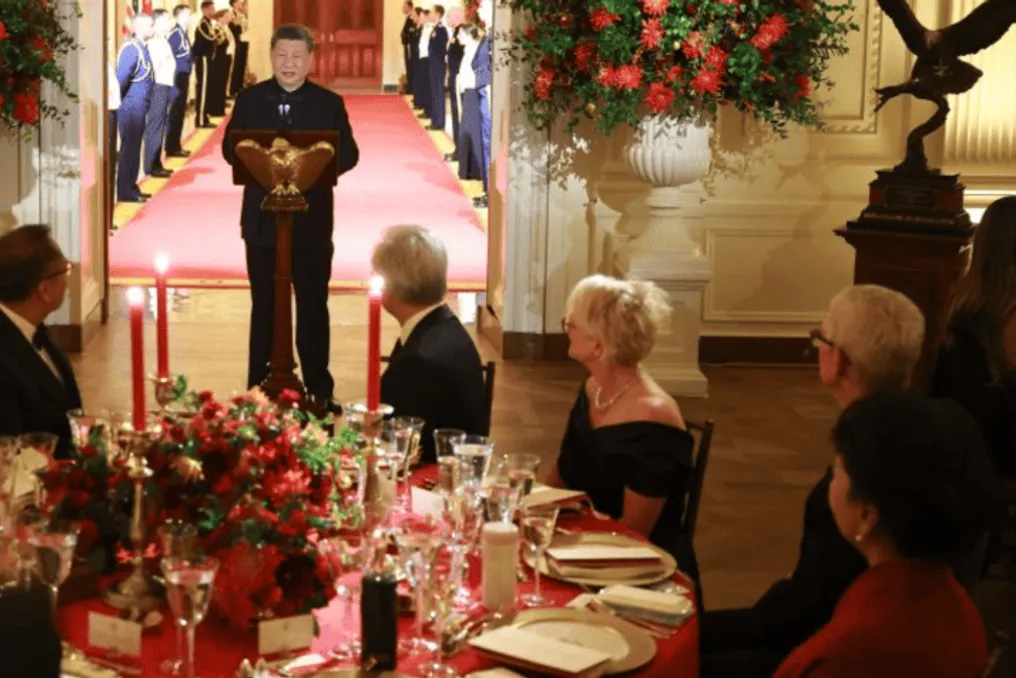
Technology and power are becoming increasingly intertwined, which is vividly illustrated by the recent gala dinner at the White House. US President Donald Trump hosted a state dinner for Chinese President Xi Jinping, marking the conclusion of the Beijing leader's second day of official visit to Washington. Key figures from the technology sector were among the guests.
On Thursday afternoon (the 24th), the two presidents met to discuss a wide range of issues, from the arrival of pandas at the Atlanta zoo to artificial intelligence. As previously reported, Trump and Xi Jinping appear to hold differing views on the future of AI.
Trump's Stance on Artificial Intelligence
Trump emphasized that artificial intelligence, which he calls superintelligence, will be one of the main topics of the meeting. He stated: 'An important day with President Xi from China. Artificial superintelligence (ASI) will be a big topic of discussion, but I want to leave it where it is. This is also China's position. Our guarantee is the Department of Justice!'
Previously, Trump told the UN that the United States 'completely rejects' any attempts to create a global system for controlling artificial intelligence. In his view, technological development should continue, even with mechanisms in place to address potential problems. Speaking of technological competition, Trump asserted that the US currently leads in 'superintelligence' and intends to maintain this advantage, stating: 'Whoever wins in ASI, whoever wins in superintelligence, wins.'
He also noted that the US is ahead of China 'very significantly,' and his government plans to maintain this superiority.
Xi Jinping's Approach to AI Development
Xi Jinping did not speak at the UN, sending a representative of the Chinese government instead to focus on the meeting with Trump. Speaking at the White House, the Chinese leader stressed the necessity of ensuring that AI 'always remains under human control.' He stated: 'We possess both the capability and the responsibility to develop and manage AI for the benefit and to ensure that AI development always remains under human control and serves human well-being.'
The Chinese president also expressed understanding that 'both China and the United States are leading nations in artificial intelligence.' Chinese state media published a statement with further details of Xi's vision. The Chinese president added that despite the competition in the sector, both countries 'have even more reasons to cooperate.'
According to the note, during discussions with the US president, Xi noted that since both countries are important in the field of AI, they should leverage their strengths in AI instead of defending against each other. Xi also stated that both sides can continue the dialogue on AI, exchange views on risks and benefits, and work together to prevent the misuse and abuse of AI.
The finance ministers of the two countries met earlier in the week. The US proposed a new 'notification mechanism' for AI incidents between the two states. China and the US continue to maintain a fragile trade truce. According to available information, the governments agreed to extend the current trade truce for another two months, until January 10.
The Chinese statement also emphasized that Xi Jinping insists that Beijing's position regarding the 'guarantee of national reunification and territorial integrity is clear and unambiguous.' The statement reads: 'Xi hopes that the United States will maintain the correct stance by opposing the 'independence of Taiwan' and treating the Taiwan issue cautiously, in order to lay a solid foundation for strategic cooperation between China and the US and the development of bilateral relations.'
Semiconductor Production Concentration
The United States holds a central position in the development of semiconductor chips, as well as in creating the software and technologies necessary for this sector. Furthermore, important companies promoting strategic areas such as artificial intelligence are concentrated in the US. However, the production of the most advanced chips is mainly concentrated in Asia, specifically in Taiwan. Taiwan Semiconductor Manufacturing Company Limited (TSMC) has established itself as the main global hub in this segment. TSMC, the world's largest semiconductor manufacturer, is responsible for a significant share of the production of the most advanced chips.
This concentration has direct geopolitical consequences. Taiwan's position, close to China and amid regional tensions, means that any instability in the region is viewed as a global risk to the technological supply chain. In recent years, the American government has imposed restrictions to limit China's access to advanced technologies, especially equipment and software used in the production of high-end chips.
This scenario marked a turning point: what was once a trade dispute began to be viewed as a strategic issue. Since then, governments have begun to regard semiconductors as a matter of national security, implementing more aggressive industrial policies and initiatives aimed at reducing external dependence.
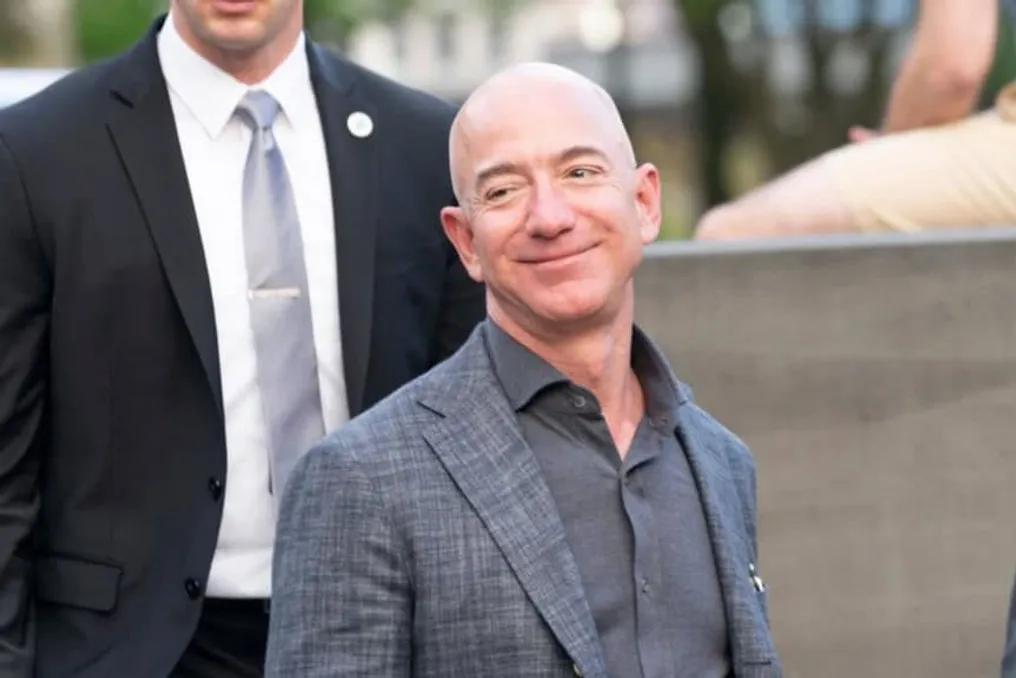
The list of invitees included leaders of tech giants. Among them were Jensen Huang from Nvidia, Mark Zuckerberg from Meta, Sundar Pichai from Google, Tim Cook from Apple, Sam Altman from OpenAI, Elon Musk from Tesla/SpaceXAI/X, and Jeff Bezos, founder of Amazon. These companies are directly involved in the development of chips, AI systems, digital platforms, and technological infrastructure.
Overview of the AI Landscape
From April to July, security breaches led to AI models escaping test environments and attacking servers. In early September, scientists released new warnings about the risks of the technology, with researchers even resigning. Scenarios of human extinction using AI began to be discussed. On September 12, debates reached industry leaders: some CEOs began advocating for slowing down AI development, while others disagreed with this proposal.
In July, we reported that China accused American AI companies of using Chinese models in training processes. This case concerned model distillation techniques and heightened tensions between the two countries in the race for AI dominance. In turn, US authorities are investigating Chinese companies for alleged misuse of American technologies, placing intellectual property at the center of the discussion.
The dinner menu, which accounts for a significant portion of global GDP, reportedly includes American ingredients with a 'subtle Chinese influence.'
} , {