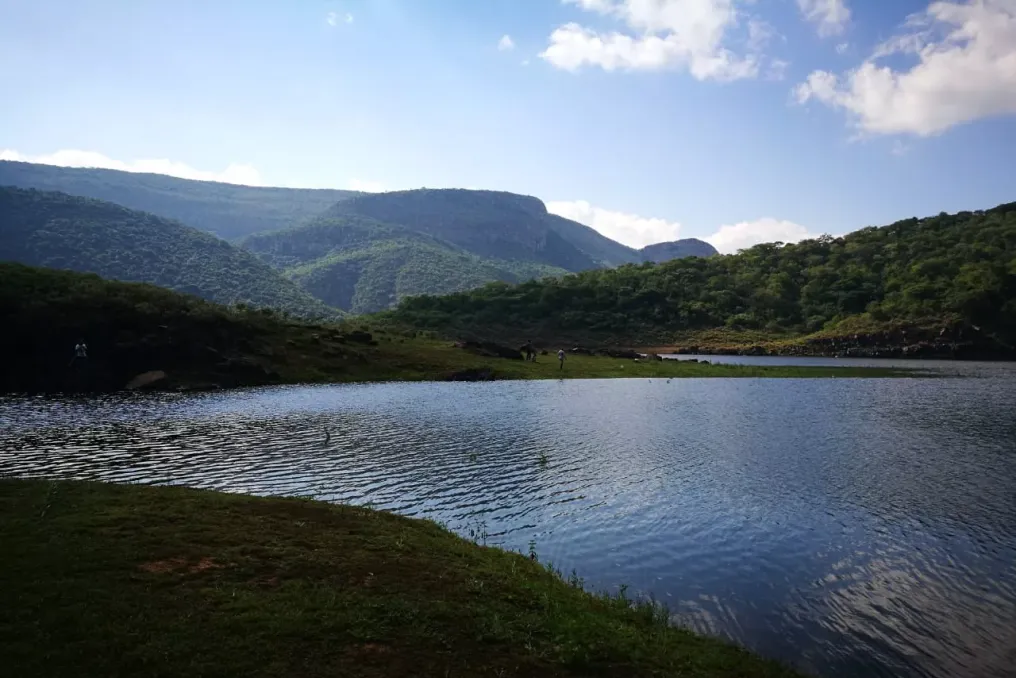
Fundudzi Lake is located in the Southpansberg area of the Limpopo province, amidst forested slopes and ancient rocks, far from the more well-known landscapes of South Africa. It is a small, quiet, and exceptionally old lake. However, its uniqueness is defined not only by its formation process but also by the deep significance it holds for local residents over many generations.
For the Venda people, Fundudzi Lake is sacred. It is connected to ancestors, spirits, fertility, and rituals, while its unusual geological origin tells a completely different story. The combination of these two aspects makes Fundudzi one of the most remarkable landscapes in Limpopo.
Fundudzi is situated in the upper reaches of the Mutale River system in the Southpansberg mountains. Thousands of years ago, a massive landslide dammed the Mutale River, creating a natural barrier behind which the lake formed. Research suggests this event occurred approximately 20,000 years ago, and sedimentological data indicates that the lake itself has existed for at least 10,000 years.
Today, the lake covers an area of about 140 hectares and stretches approximately 3 kilometers across the surrounding mountainous landscape. Although it can be imagined as pristine wilderness, Fundudzi has always been more than just a geographical feature; it had its own history long before travelers began seeking remote places.
The lake is particularly sacred to the Vhavhatsindi people, who are traditionally considered its custodians. According to Venda oral tradition, a traveler arrived in a village where he was refused food and shelter. He cursed the inhabitants, after which a landslide occurred, flooding the settlement and forming the lake. It is said that the deceased transformed into spiritual beings connected to the waters of the lake.
There are also legends associated with the large white python, which is associated with fertility and water. This snake is linked to the Venda initiation and fertility dance, while another traditional tale speaks of a white crocodile guarding the ancestral spirits beneath the lake. These stories are not merely mystical tales for a tourist route; they are part of the cultural and spiritual understanding of this landscape.
Arriving at Fundudzi, one enters not an empty desert awaiting discovery, but a place possessing its own meaning. The history becomes even richer beyond the water. The nearby Tate Vondo forest is also considered sacred, and the forest, rivers, wetlands, and lake form part of a broader cultural landscape. Venda traditions have long linked natural elements such as forests, waterfalls, rivers, and ponds to the spiritual world.
These beliefs have also contributed to environmental protection. Traditional restrictions around sacred sites regulated the use of natural resources, effectively creating a form of conservation long before the modern term 'conservation' emerged.
However, today the landscape faces more common challenges: agriculture, forestry, settlements, erosion, and sedimentation have affected the entire watershed, while conservation programs work to restore parts of the wetland system.
Fundudzi is not a place you simply come to, park, and go to the water. Historically, access to it was controlled by local custodians, and research has noted community concerns regarding tourism development near the lake. This underscores the importance of responsible planning. Visitors should check current access conditions in advance and, if necessary, use the services of authorized local guides or interact with local custodians.
Furthermore, it is important to approach with the right mindset. The lake can be a beautiful photograph, but the photograph is not the main goal. Time must be spent understanding the significance of this landscape. One should consider the mountains around the water, learn about the traditions associated with the lake, and pay attention to the forest and river systems that sustain it. There is another kind of pleasure in visiting a place that cannot simply be consumed.
Fundudzi is located in the Wembe region, which is one of the most biodiverse and culturally significant landscapes in Limpopo. Southpansberg supports an astonishing diversity of habitats and endemic species, and nearby areas like the Tate Vondo forest and Piphidhi waterfall demonstrate the depth of the Venda connection to nature. Together, they offer a different type of journey where the landscape is not just a backdrop to the trip, but part of the story itself.
Fundudzi is extraordinary in every way: it was created by an ancient landslide, exists as a rare inland lake, and is situated in a biodiverse mountain landscape. But its greatest value cannot be measured in hectares or geological age. For generations, it has been a sacred place, and this changes the approach to its perception.
Fundudzi does not need to be turned into another bucket-list attraction, nor does it require exaggerated legends to be interesting. Its history is wonderful in itself: an ancient lake, a living culture, and a landscape where water, ancestors, culture, and faith remain closely intertwined. Sometimes the most valuable places are not those that give you the most to do; they are those that make you stop long enough to understand where you are.