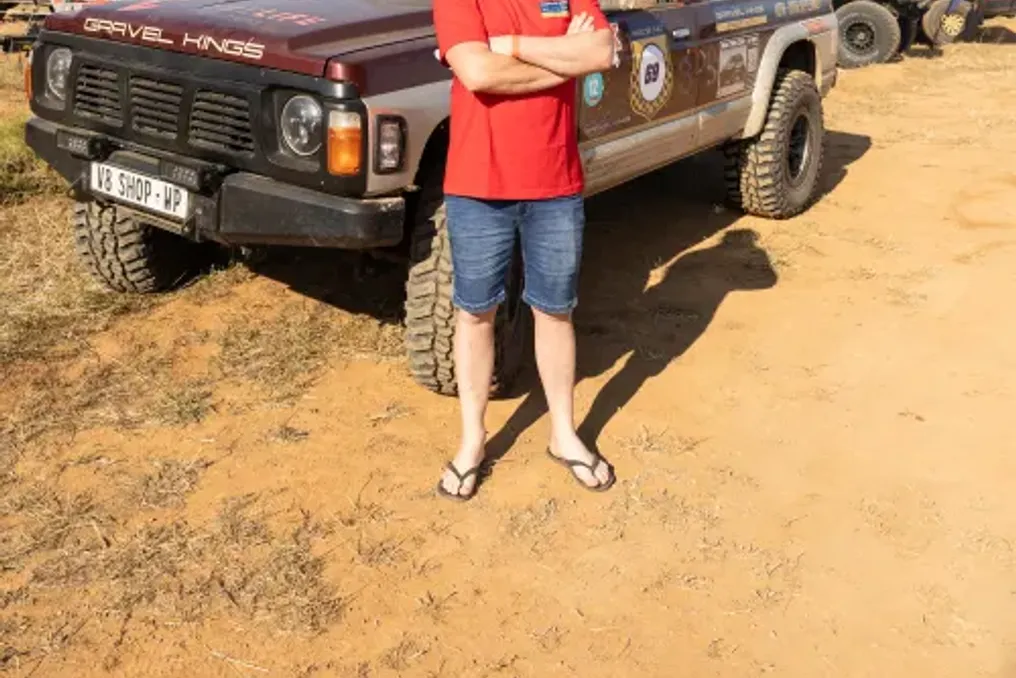
After several months of preparation and high anticipation, the Gravel Kings 3.0 event demonstrated its most significant scale: it ceased to be merely a dirt track race and transformed into a full-fledged motorsport and outdoor recreation festival.
The third edition of Gravel Kings took place in the Nuil Valley, near Worcester, from September 18th to 20th. It developed based on the format created by the Cape Route Rally team, which included Anthony Ashley, Louis Smith, and Jason Richards. The initial promise was three days of gravel drag racing, camping, an exhibitor fair, a food court, and family entertainment, and this time the weather also contributed to the success.
More Than Just Racing
One of the most substantial changes at Gravel Kings 3.0 was the festival aspect of the event. Instead of coming for just a few hours to watch the races, families spent the entire weekend at the event. The camping turned the site into a temporary off-road village, and children had their own entertainment throughout the days.
This shift was significant because Gravel Kings became a place where parents could come to watch the races without leaving their families behind. The combination of camping, dining, live performances, exhibitors, Overlander Alley, and Vendor Village helped create an atmosphere that persisted even after the last car crossed the finish line.
Built Cars, Powerful Engines, and High Speed
Of course, Gravel Kings remains focused on one thing: achieving high speed on dirt. This year, participants included both relatively standard vehicles and highly modified, custom-built machines. Powerful engines, serious horsepower, and increasingly complex designs demonstrated how fast the level of competition is developing.
This was confirmed by stopwatch readings: a new record of 11.9 seconds was set on the 400-meter gravel strip, with a terminal velocity of about 180 km/h. These figures are impressive even on asphalt, and on gravel, they give an idea of the capabilities of these cars and their drivers. The format remained intentionally broad, allowing petrol and diesel, two-wheel drive and four-wheel drive, standard and modified cars in different classes to participate. This accessibility was part of the original concept of Gravel Kings and remained its central element, despite the cars becoming faster and more specialized.
Over 300 Vehicles Supported Activity on the Track
During the event, over 300 vehicles drove along the track, many making multiple runs. This volume of racing meant that spectators did not have to wait all day for individual moments of action. Cars constantly returned to the starting line as competitors strived for better starts, faster times, and new opportunities to achieve speed. This also provided the variety that makes gravel drag racing such an exciting sport for spectators; a heavily modified competition car might be followed by a diesel bakkie, an SUV, or something completely unexpected. There was always another car coming up on the line.
A Meeting Point for the Off-Road Industry
Away from the track, Gravel Kings 3.0 brought together vendors, exhibitors, sponsors, participants, and spectators in one open environment. This increasingly made the weekend not just a motorsport event but a meeting point for the entire industry. The exhibitor program, planned before the event, was designed with dedicated spaces for brands so they could showcase products, display custom vehicles, and interact directly with the community of 4x4 owners and overlanding enthusiasts. For manufacturers and suppliers, this created something difficult to replicate in a traditional exhibition hall: customers could see products surrounded by the vehicles, people, and conditions for which they were actually designed.
Sun, Camping, and the Worcester Landscape
After much attention to the weather forecast before the weekend, participants and spectators enjoyed perfect conditions. Against the backdrop of mountains and vineyards, the landscape of Worcester and the Nuil Valley dust clouds over the track became part of the spectacle. Campers set up, barbecues were lit, and families stayed on the grounds after the races concluded. This may have been the clearest sign of Gravel Kings' direction of development. The event was not conceived as a regular circuit racing event moved to dirt. Its character is shaped by the combination of South African 4x4 culture, amateur motorsport, camping, and outdoor lifestyle over one weekend.
The Evolution of Gravel Kings
Having gone through three editions, Gravel Kings has significantly surpassed its original concept. Track speed increased, and the machinery became increasingly serious. More than 300 cars participated in the runs over the weekend. But no less important was the development of everything happening around the races: children had activities, families could pitch tents, and brands could hold exhibitions. Spectators could spend the entire weekend at the venue, rather than just coming for the race and leaving. Gravel Kings 3.0 demonstrated that these elements could coexist. The result was a well-attended outdoor festival built around one wonderfully simple attraction: powerful cars competing against each other on 400 meters of gravel.