Training on the Safe Use of Crop Protection Products for Agricultural Teams
Read more
Food For Mzansi
foodformzansi.co.za

Training on the Safe Use of Crop Protection Products for Agricultural Teams

Agricultural protection is evolving, providing farmers with new tools for their work. It is important to ensure that the team possesses the knowledge to use these tools responsibly through online training from CropLife South Africa.

A range of crop protection products is available on the farm, but the key question is whether the employees who use them have the necessary knowledge for safe and responsible application. To address this, an online training course on responsible use from CropLife South Africa is offered.

Crop protection tools are diverse: they include integrated pest management, biological solutions, low-risk technologies, and traditional agrochemical agents. Nevertheless, having a wide selection implies responsibility for their correct application. Improper use of agrochemicals can negatively affect people, the environment, and the future availability of certain plant protection products.

Having the right product in stock is only part of the task. The people working with these products must understand what they are using, how to apply it safely, and what actions to take if problems arise. This is where training comes in handy.

The 'Responsible Use of Agricultural Remedies: Train the Trainer' course from CropLife South Africa is designed to provide farmers, farm managers, supervisors, and farm workers with practical knowledge directly applicable in the workplace. Furthermore, it does not require taking the team out of the field for a full day of training.

The course is entirely online and has a flexible pace, giving participants three months to complete it. There is also the option to complete it in one day if that is more convenient. The program covers a wide range of topics: from understanding agrochemical regulations and reading labels to safe handling, use of personal protective equipment, emergency response and decontamination, as well as waste management and container disposal.

Upon successful completion, the course is certified for three years.

If people on your farm handle agrochemicals, there is no reason to delay. You need to register and give them the necessary knowledge to perform their work responsibly.

For anyone handling an agrochemical product, the label is one of the most important resources. It indicates how the product should be used and contains vital information about potential hazards and precautions. Understanding hazard communication, including signs, warnings, and instructions on labels, is an integral part of responsible use.

Similar requirements apply to personal protective equipment (PPE). Knowing that PPE is necessary is one thing; knowing exactly what to wear, when, and how to do it correctly is quite another.

Moreover, there is a situation nobody wants to face, but everyone must be prepared for: what happens if a problem occurs? Understanding emergency response and decontamination procedures before an incident can be crucial.

Thus, responsible use goes beyond simply applying a product; it begins before opening the container and continues until the proper disposal of the product and its packaging.

The 'train the trainer' approach is particularly useful for farmers. The course from CropLife South Africa is not just about issuing a certificate to one person. Those who successfully complete the training retain access to resources they can use to pass on the acquired knowledge to colleagues, co-workers, and peers. This allows knowledge to spread throughout the farm.

A farm manager can share knowledge with the team, a supervisor can reinforce best practices among workers, and a trained employee can share experience with colleagues. One person can start this process, but the ultimate goal is the entire farm understanding the principles of responsible use. This is especially valuable for farmers who manage permanent and seasonal work groups. Responsible use becomes part of the daily life of the farm, rather than something discussed only during inspections or after an incident.

Another reason for updating the knowledge of farmers and farm managers is the continuous development of the regulatory framework concerning agrochemicals. South African legislation regarding agrochemicals has introduced additional requirements for certain restricted products, and the Globally Harmonized System has changed how chemical hazards are communicated via labels and other information. Understanding these requirements is critical for people directly working with agrochemicals.

However, farmers do not need another set of complex documents stored in an office. They need people on the farm who understand how the rules are applied in practice, which is why practical training is so important.

Farmers need tools that align with their cultures, conditions, and business processes. This means maximizing the effective use of available options while ensuring they are used in a way that guarantees their continued application. Crop protection tools are not just about having more products; it is about having the right tools at the right time and knowing how to use them responsibly.

Improper use of a tool can lead to consequences that extend beyond a single application. Therefore, responsible use plays a role in protecting both existing and future opportunities available to farmers. A farmer's toolkit is not just the contents of a chemical shed or barn; it is also the knowledge, skills, and experience of the people working on the farm. Perhaps the question is not, 'What is in your toolbox?', but 'Does everyone on your farm know how to use it responsibly?'

The 'Responsible Use of Agricultural Remedies: Train the Trainer' course is available for registration throughout the year. It is conducted online, at your own pace, and designed with agricultural realities in mind. Participants have three months to complete it, although they can complete it in one day. The certificate obtained is valid for 36 months. Most importantly, the knowledge gained should not remain with just one person; it can be passed on and reinforced, helping farmers responsibly use the tools available to them today and in the future.
Similar stories

Minister and Land Bank CEO Discuss Agricultural Debt Issues and Financing Reform
Read more
foodformzansi.co.za

Minister and Land Bank CEO Discuss Agricultural Debt Issues and Financing Reform

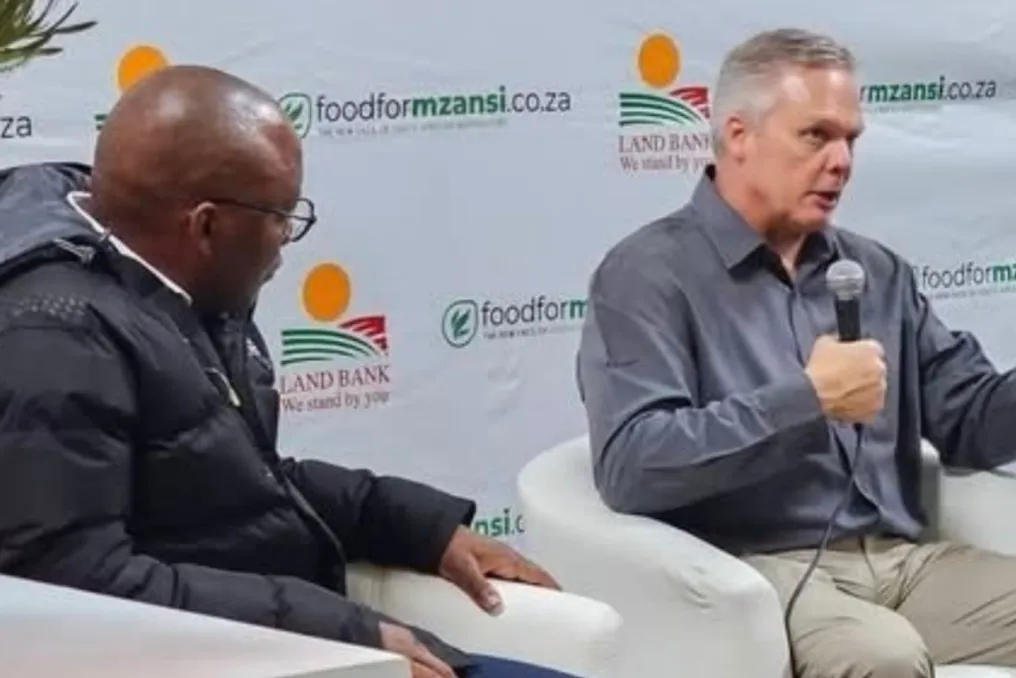
During the closing session of the Nampo Cape 2026 conference, Agriculture Minister Willie Aucamp and the current CEO of Land Bank, Jabu Mfanbo, held a fireside chat. The event was organized by Food For Mzansi and Land Bank in Bredasdorp.

Aucamp and Mfanbo engaged in a direct and constructive dialogue regarding farmers' debt issues, structural financial difficulties, biosecurity crises, and the urgent need to reform the agricultural financing system in South Africa.

While touring the country between the harvest of winter crops and the planting of summer crops, Aucamp noted that attending regional congresses allowed him to gain valuable insight into the specific and general challenges faced by South African producers. He stated that over the past two months, he attended numerous agricultural congresses where he spoke with farmers across the country and understood the various difficulties they encounter, noting that individualizing problems by region was a revelation for him.

Despite operational hurdles, Aucamp emphasized that he observes significant optimism within farming communities, citing recent successes in animal health management as evidence of progress. He mentioned that he has not heard complaints about foot-and-mouth disease for a long time because people can receive vaccines and solutions, and the overall mood is decidedly positive.

Highlighting the need for individualized debt assistance, Aucamp appealed to Land Bank management to help farmers who are financially sound but have been affected by unforeseen biosecurity outbreaks. He requested that they restructure and modify loan terms for these diligent payers, stating his desire to hold an official discussion on the matter.

This request came against the backdrop of a broader assessment of the lender's past performance, during which Aucamp did not hesitate to criticize previous lending practices that undermined the bank's reputation and reduced market confidence. He suggested that Land Bank had previously issued loans without proper vetting, negatively impacting the bank, much like any investment. This led short-term financial institutions to withdraw their funding due to a loss of trust in Land Bank.

Nevertheless, Aucamp made it clear that he fully supports the current management and the institution's transformation strategy. He stated that life is defined not by mistakes, but by how they are corrected, and expressed his willingness to provide full support for the changes at Land Bank.

Fostering a spirit of cooperation, Aucamp also stressed the mixed financing scheme as a vital tool for stimulating growth, insisting on the importance of transferring state-leased land and issuing title deeds in close partnership with the Department of Land Reform and Rural Development.

In response to the minister, Mfanbo confirmed that the demand for sustained financial support remains high across the country, especially among producers recovering from livestock losses. He also highlighted the progress made in stabilizing operations and restoring market confidence, despite past instances of the bank defaulting on obligations.

Mfanbo reported that they have made significant strides since the default in terms of re-entering the market to support the sector. He acknowledged that they previously struggled with distributing funds under the mixed financing scheme, but this issue has been resolved through grassroots work.

However, Mfanbo noted that providing widespread debt relief is constrained by how the bank itself secures funding. He explained that the old Land Bank received stable government support, which allowed the bank to offer cheap financing and conduct restructuring. Now, since they borrow money from other financial institutions to lend to farmers, they cannot grant a payment deferral to a farmer if they themselves do not receive one.

Plant breeding innovations can secure the future of South African agriculture
Read more
foodformzansi.co.za

Plant breeding innovations can secure the future of South African agriculture

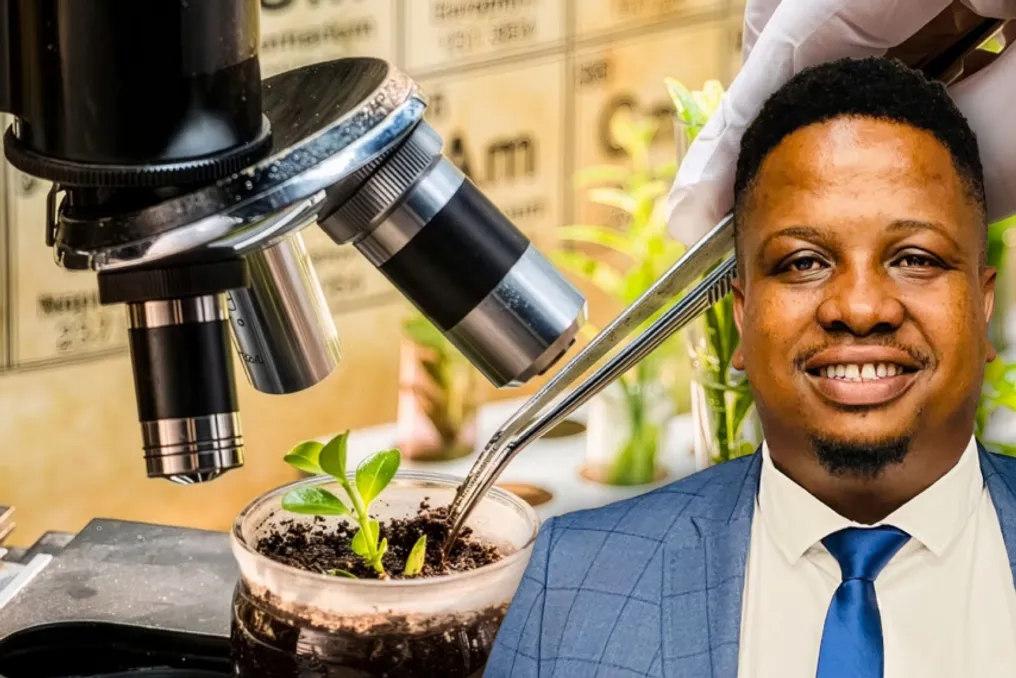
As global agriculture faces climate shocks and changing regulations, plant breeding remains a crucial foundation for farmer resilience. Dr. Makhlane Kgatle explains in detail how gene editing, biosecurity, and responsible innovation can protect productivity and foster the prosperity of South Africa's agricultural sector.

Agricultural genetics has always been the cornerstone of modern farming development. Long before the advent of genetically modified organisms and gene editing, farmers and breeders selected and improved plants with desirable traits such as higher yields, disease resistance, quality, and the ability to adapt to local conditions.

Over generations, traditional and hybrid breeding have made significant contributions to increasing agricultural productivity and sustainability. Recently, molecular breeding and biotechnology have expanded the arsenal of tools available to breeders to address increasingly complex production challenges.

For farming communities, the practical value of genetics lies in the fact that improved varieties help manage production risks, respond to climatic conditions, stabilize yields, combat pests and diseases, and produce raw materials that meet specific market demands.

Recent advancements in Germany and the European Union demonstrate growing international interest in the next generation of agricultural genetic technologies. The European Union adopted a new framework for certain New Genomic Techniques (NGTs), establishing different regulatory requirements for various categories of genetic modifications.

This framework recognizes that some targeted genetic changes may be comparable to those that could occur through traditional breeding, while more complex genetic modifications remain subject to more comprehensive requirements. These changes should not be viewed merely as a move towards deregulation, but as a demonstration of the importance of developing scientifically sound approaches that account for differences between technologies and genetic changes, while maintaining appropriate safeguards for human health, agriculture, biodiversity, the environment, and consumer confidence.

For South Africa, international trends present an opportunity to stay abreast of developments while continuing to develop the country's established scientific and regulatory systems. South Africa possesses significant experience in assessing and managing agricultural biotechnology, supported by research institutions, regulatory oversight, and risk assessment processes. These systems are vital safeguards that allow agricultural technologies to be thoroughly considered before application and adoption into production systems.

Breeding has constantly evolved. Farmers initially relied on selection and traditional breeding, then moved to hybrid breeding to increase yield and viability. Molecular approaches subsequently provided breeders with additional information to identify desired traits, and genetically modified crops introduced specific characteristics, such as insect resistance and herbicide tolerance.

Gene editing represents another development in this broad continuum of genetic improvement. These technologies offer various tools that can be suitable for different breeding objectives. Their value depends on the target trait, the production environment, the characteristics of the resulting variety, and the needs of farmers and markets.

The importance of genetics is growing as farmers face climatic variability, changing pest and disease pressure, rising resource costs, and evolving market demands. Genetic improvement can serve as an additional tool to manage these challenges, although genetics remains only one component of a broader production system. It is important to note that genetics does not operate in isolation; crop productivity is determined by the interaction of genotype, environment, and management.

A genetically improved variety may offer greater yield potential or enhanced resistance, but its actual effectiveness depends on whether it is suited to the production environment and whether it is supported by appropriate agronomic management.

South Africa already has extensive experience with agricultural biotechnology. Genetically modified maize, soy, and cotton have provided farmers with traits that support pest control, weed management, and production stability. These technologies have become part of modern production systems and have contributed to South Africa's accumulated experience in applying biotechnology in commercial agriculture.

This experience also underscores the importance of a robust legal framework. South Africa's GMO Act provides an established regulatory system for genetically modified organisms, backed by scientific assessments and institutional oversight. This framework provides essential guarantees, ensuring that potential risks to human health, agriculture, and the environment are properly considered.

The strength of this approach lies in responsible evaluation, not in adopting technologies for their own sake. Agricultural innovations must be accompanied by consideration of ecological interactions, biodiversity, food and feed safety, trade requirements, and consumer interests. Furthermore, biotechnology does not replace good agricultural practices. Improved genetics must be integrated with proper soil management, planting times, cultivar selection, pest and disease control, water resource management, climate information, and other agronomic methods. The greatest value is achieved when genetics and management work together.

Gene editing expands the range of tools available to plant breeders. It allows for targeted changes in genetic material and can open up opportunities for developing agriculturally relevant traits, including improved resistance to pests and diseases, adaptation to environmental stresses, and enhanced quality characteristics.

An important scientific aspect is that gene editing encompasses various types of genetic changes. Some may lead to changes that could also occur through traditional breeding or natural genetic variation, while other applications may involve more complex genetic modifications. Consequently, the characteristics of the resulting organism remain important when considering potential agricultural, environmental, and food consequences.

South Africa's existing regulatory framework serves as an important foundation for the responsible consideration of these technologies. As scientific understanding evolves, continuous assessment and monitoring can help ensure that new applications are considered within appropriate regulatory and biosafety requirements.

International developments can provide valuable scientific information without requiring South Africa to simply copy approaches adopted elsewhere. Different countries operate within different agricultural, environmental, economic, and regulatory contexts. Thus, South Africa can benefit from international experience while maintaining its own established safeguards and decision-making processes.

Ultimately, the key question for farmers is not the complexity of the technology, but the value it brings to the farm system. Several countries are developing approaches to assess or utilize certain gene-edited crops under specific conditions. These developments are relevant to South Africa because changes in international breeding technologies can ultimately affect seed availability, cultivar choice, commodity markets, and trade.

Canola is one example. Developments in gene-edited canola could eventually become relevant to South Africa through international seed markets and winter crop production. Therefore, these developments require constant technical monitoring. They do not necessarily mean that new technologies must be immediately adopted in South Africa. Rather, they provide researchers, industry, and farmers with an opportunity to understand new technologies, assess their performance, and consider their potential relevance in South African production systems.

Accessibility will also be a factor. A new variety must provide sufficient agronomic and economic benefit to justify adoption. Seed cost, availability, yield, technical support, market requirements, and compatibility with existing farming methods will influence whether farmers benefit from a new technology. This is particularly important for smallholder and small agricultural enterprises. Agricultural innovations must focus not only on what is technically possible but also on whether the relevant technologies can promote inclusive and sustainable agricultural development.

The path from genetic research to agricultural impact involves several stages: the trait must be scientifically characterized, incorporated into a suitable cultivar, evaluated under appropriate environmental conditions, and assessed for agronomic performance, and then it must demonstrate value within the farm system where applicable, meeting relevant regulatory and market requirements.

This highlights the importance of rigorous trials, farmer participation, extension support, and reliable technical information. Farmers must understand not only what a new variety can potentially offer but also how it performs in specific production settings and what that means for their costs, risks, and markets. Thus, the entire agricultural value chain plays a vital collective role: researchers provide scientific evidence, breeders develop suitable varieties, regulators assess potential risks, extension services provide technical information, and farmers evaluate technologies in their production systems.

Agriculture operates within complex biological and ecological systems, and technologies must be considered with due attention to their potential impact on health, biodiversity, the environment, trade, and production systems. Therefore, caution must remain an integral part of agricultural innovation. At the same time, continuous scientific monitoring of international developments allows South Africa to stay informed about new technologies and their potential applications.

This balanced approach supports responsible innovation, allowing for an understanding of what a technology can offer, identifying potential risks, assessing its performance, and ensuring its application complies with appropriate regulatory and biosafety requirements. Ultimately, agricultural genetics should be judged by its contribution to farming, where improved genetics can enhance productivity, sustainability, and resource use efficiency.

Popular