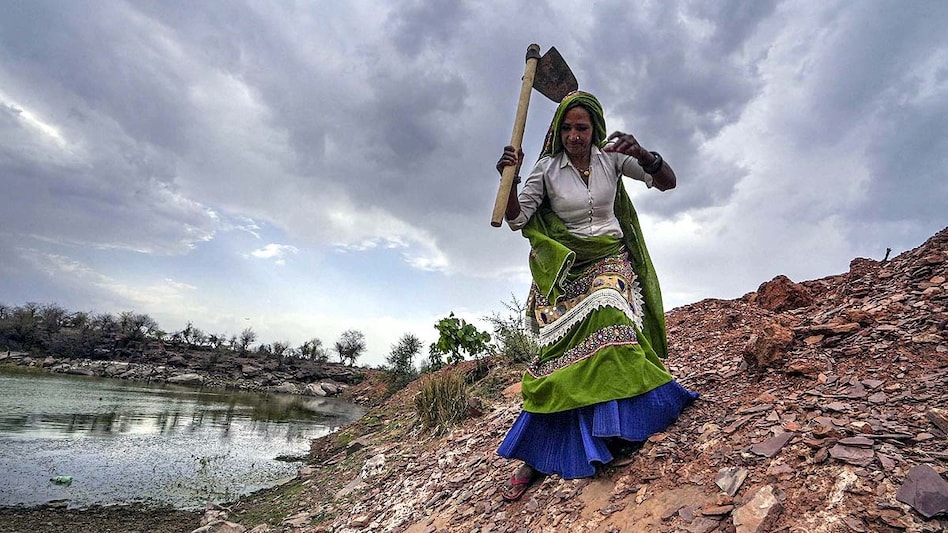
As the southwest monsoon weakens, farmers in many regions of India are facing prolonged droughts and soil moisture depletion.
According to the latest assessment by the India Drought Monitor from IIT Gandhinagar, over half of the country was under drought or dry conditions as of September 16, 2026. The area affected by such conditions has increased from 38.9 percent about a month ago to 52.5 percent.
Maharashtra is one of the states experiencing constant drought stress, with the Marathwada region recording a rainfall deficit of 36 percent between June 1 and September 20.
This situation is causing concern at a critical time for agriculturalists. Although Kharif crops are nearing harvest in several places, the remaining soil moisture and water reservoirs will affect the next sowing season. Parts of Maharashtra and other agricultural states have observed drought periods lasting from two to three weeks during the monsoon season.
In Bide, Maharashtra, where agriculture is traditionally challenging due to arid conditions and water shortages, farmer Parmeshwar Torat has learned to work with limited water resources.
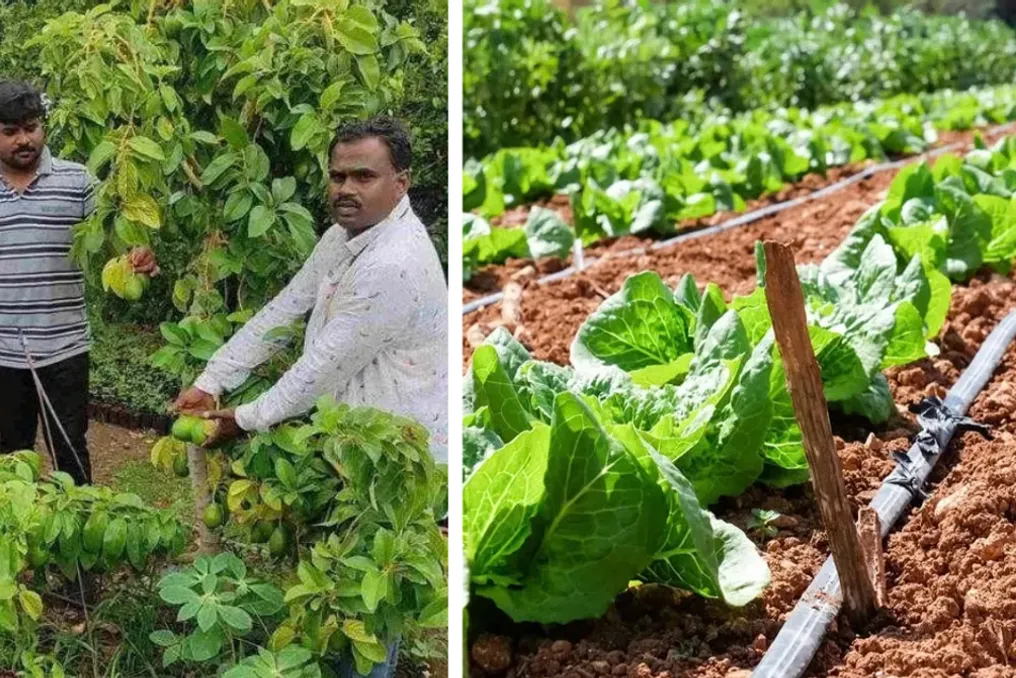
On his 1.75-acre farm, he grows avocados, directing water precisely where it is needed, storing rainwater for dry months, and preparing the soil before planting. He began experimenting with avocado cultivation in 2018 after learning about the Arka Supreme variety in Bengaluru. Later, he visited the ICAR-Indian Institute of Horticultural Research to better understand this crop.
His experience offers several practical lessons for farmers striving to protect their crops under water scarcity.
Water Retention at the Roots
The first step taken by Torat was installing a drip irrigation system. Instead of uniformly distributing water across the entire field, this system delivers it directly to the plants. This allows available water to reach the root zone, minimizing losses.
He notes: 'Drip irrigation delivers water and other nutrients directly to the roots, minimizing losses.' For farmers facing water shortages, this method provides more targeted watering instead of relying on large volumes of water sprayed across the field.
Collecting Every Drop
The avocado farmer also uses a pond on his farm to collect rainwater runoff. The water collected during the monsoons is stored and then used in drier months. This reduces his dependence on groundwater after the cessation of rainfall.
He explains: 'We collect as much rainwater as possible during the monsoons and use it in the dry seasons. This helps maintain the farm's sustainability.' This practice is particularly relevant for farms in regions where rainfall occurs in short bursts. Instead of letting rainwater run off the farm, collecting it creates a source that can be utilized during the next dry spell.
Starting with the Soil
Before planting avocado saplings, the farmer prepared the soil by digging two-by-two-foot pits across 0.75 acres of his land. He filled these pits with cow manure. He says: 'I knew the soil needed enrichment to provide nutrients to the plants.'
Soil preparation became part of his efforts to stabilize the plants in the challenging conditions of Bide. He later transitioned to organic farming, replacing the chemical fertilizers and pesticides he initially used with cow manure and natural farming methods.
Choosing the Right Crop
For Torat, drought management also began with the decision of what to grow. He did not immediately plant avocados. After learning about the Arka Supreme variety during a visit to Bengaluru, he studied its suitability for the Maharashtra climate and visited ICAR-IIHR to learn about its cultivation. He believes this variety can withstand temperatures from 40 to 45 degrees Celsius, making it suitable for the hot conditions of Bide. He then ordered 50 saplings from Karnataka.
His experience highlights another aspect for farmers facing changing precipitation patterns. Crop selection must take into account the conditions under which it will actually be grown.
Farming with Less Water
The avocado farmer's approach to agriculture in a water-scarce region was not based on a single solution. His farm integrated drip irrigation, rainwater harvesting, and soil preparation. Furthermore, he adopted organic farming practices after initially using chemical fertilizers and pesticides.
The result was an agricultural system designed around his available water volume, rather than assuming water would always be abundant. For farmers entering the final phase of the monsoon, his experience offers a modest lesson. When rainfall becomes uncertain, protecting the harvest can begin with judicious use of every available drop, accumulating water when it arrives, and choosing cultivation methods appropriate to local conditions.
As Torat says: 'Farming is not easy. There will always be difficulties, but with determination and a willingness to learn, everything can be overcome.'