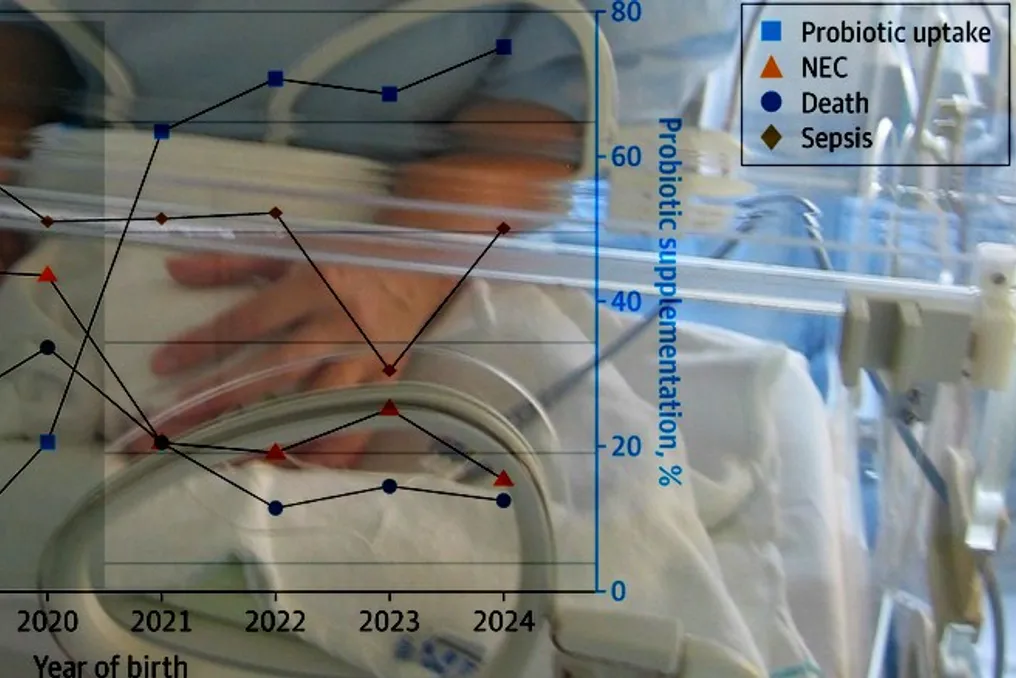
Colleagues of Alexandra Rakova from the Karolinska Institute conducted a cohort study that revealed a link between the use of multi-strain probiotics and a reduced probability of death and the development of necrotizing enterocolitis in infants born with very low gestational age.
The study utilized data from the Swedish neonatal register, which covered 4695 extremely preterm infants. These children were born between January 2017 and December 2024, with an average gestation period of 30.2 weeks, and the proportion of boys among them was 54.3 percent.
A portion of these infants received a daily probiotic prescription. This probiotic consisted of one billion colony-forming units of lyophilized bacteria, including Bifidobacterium infantis, Bifidobacterium lactis, and Streptococcus thermophilus, and was administered from birth until reaching 34 postmenstrual weeks.
The researchers examined the correlation of this treatment with various outcomes, such as death, necrotizing enterocolitis, as well as cases of death combined with proven sepsis culture. The results of this study were published in the journal JAMA Network Open.