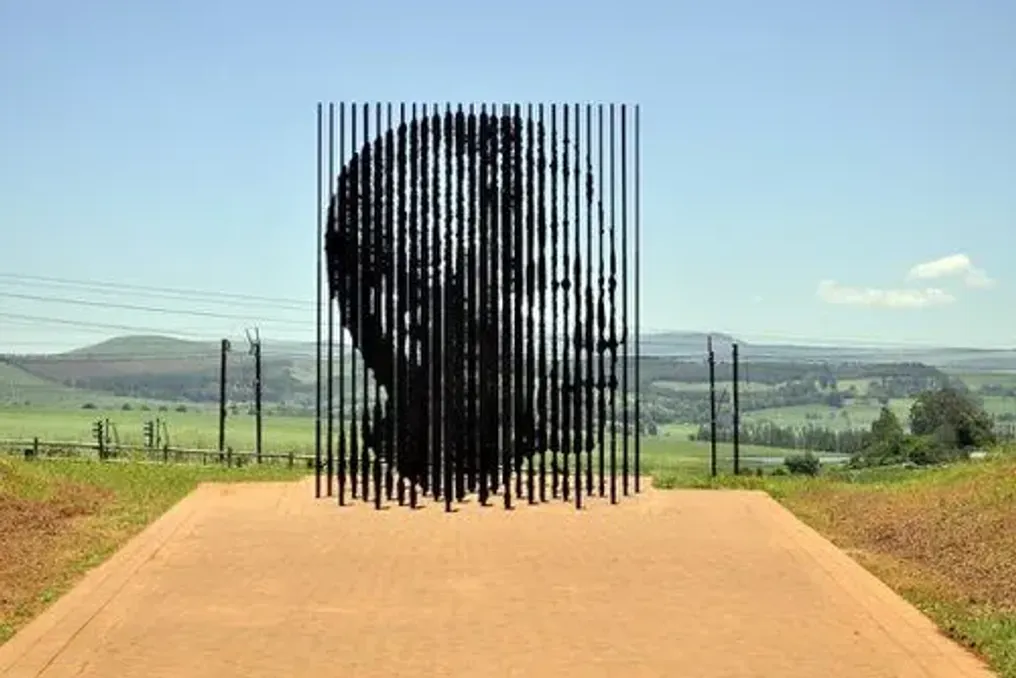
As Heritage and Tourism Month concludes, Sibusiso Ndebele, Chairman of Tourism KZN and Film, emphasizes the need for South Africans to discover and engage with the rich cultural heritage of KwaZulu-Natal, thereby unlocking the province's tourism potential while preserving its unique legacy.
The question that arises during this period is how deeply South Africans are familiar with the heritage of KwaZulu-Natal. Many know places like Isandlwana, Rorke's Drift, and Spionkop, as well as the names of Zulu kings, Nelson Mandela, and Mahatma Gandhi. However, there is a difference between knowing history and visiting the places where these events occurred, standing in those landscapes, and hearing the relevant stories.
KwaZulu-Natal offers exceptional opportunities for historical tourism: from battlefields and San rock art in the Drakensberg to sites associated with eMakhosi, Inanda, and Nelson Mandela's prison. As noted during Heritage Month in Appleboshe, there are important stories in rural communities that have not yet realized their full potential as visitor experiences.
The task is not to find a new story for KwaZulu-Natal, as they already exist; the problem is to turn more of them into journeys that people want to undertake.
Experience working as High Commissioner of South Africa in India and Ambassador to Australia has shown how powerfully heritage can stimulate tourism. For example, the Taj Mahal is an iconic Indian landmark, but the story of its heritage is much broader than one monument, including the complex in Agra with the Agra Fort.
Delhi demonstrates layers of history through sites such as the Red Fort, Humayun's Tomb, Qutub Minar, and monuments related to modern India. In Amritsar, the Golden Temple shows a different aspect—how faith, living religious practice, history, and place can become a strong reason for travel.
England provides another example: visitors move between very different eras, from prehistoric Stonehenge and Roman baths to the Tower of London, historic cathedrals, castles, old towns, and industrial heritage. These elements are presented not as competing narratives, but as different ways to experience the country.
Australia shows that heritage does not necessarily have to focus on buildings and monuments. In Uluru and Kakadu, Aboriginal culture, ancient rock art, storytelling, and the connection between people and land are integral parts of the visitor experience. Australia also interprets complex chapters of its colonial history through detention sites like Port Arthur and Fremantle Prison.
These examples also prove that heritage is not just about preserving the past, but is an important part of the hospitality economy. Attractions draw visitors to cities, villages, and communities, encourage them to stay longer, and create demand for accommodation, restaurants, guides, transport, crafts, and other local businesses. Thus, the economic value of an attraction extends far beyond the site itself.
Despite the differences in the history of these countries, there is a common lesson for KwaZulu-Natal: successful heritage destinations recognize the various layers of their history, interpret them skillfully, and use them to create reasons for travel, longer stays, and greater visitor spending.
KwaZulu-Natal possesses similar depth. Its San heritage, Zulu culture, battlefields, liberation struggle, missionary, and religious heritage represent different chapters of KwaZulu-Natal's history, and with effective development and linkage, they can become an even stronger part of the tourism economy.
Battlefields Demonstrate Opportunities
There is compelling evidence that people are willing to travel for these stories. Visitors from South Africa and abroad come to Isandlwana to learn how the Zulu army defeated British forces on January 22, 1879, in one of the defining battles of the Anglo-Zulu War. The nearby Rorke's Drift tells another chapter of the same conflict.
In Spionkop, visitors immerse themselves in the history of the South African War and encounter a battlefield associated with figures like Winston Churchill, Mahatma Gandhi, and Louis Botha. However, the battlefield itself is just a landscape. What changes the experience is the interpretation. A knowledgeable guide allows the visitor to understand who was there, what happened, why it happened, and why these events are still important.
History turns a place into an experience. And when these places are connected, we begin to create a journey. A person who stops at one place for an hour has a limited impact on the local tourism economy. A person who follows a route can stay overnight, eat locally, hire a guide, use transport, and visit other attractions.
Therefore, a heritage route cannot simply be a collection of points on a map; it must give the visitor a reason to continue the journey.
Appleboshe: Seeking Another Story for KwaZulu-Natal
This is why our experience in Appleboshe during Heritage and Tourism Month was significant. We joined the community as Appleboshe Hospital celebrated its centenary. But the hospital is only one chapter of a much larger story.
The presence of the Swedish mission in Appleboshe dates back to the nineteenth century. By 1886, the building in the area served as both a church and a classroom. Over time, this story of faith and education expanded to healthcare, and Appleboshe Hospital was founded in 1926. There is a natural connection between this history: faith, education, and healing.
As part of our Heritage Month program, we went beyond the hospital into the surrounding community and its religious heritage, including the parishes of Zwatini and Nhlankazhi. We also listened to the people who hold this history, including 95-year-old alumnus Caleb Chaman.
This raises a practical tourism question: why do these stories remain known mainly to the people who live there? The history of the Swedish mission gives Appleboshe an international connection. The churches provide the religious heritage. The hospital brings a century of healthcare history. Former students and elders hold the living memory. Separately, these are distinct stories. Connected and properly interpreted, they can begin to form a journey.
The opportunity is not to create a tourist attraction, but to take what is authentic to Appleboshe and explore how it can develop into a meaningful religious and cultural tourism experience that can also attract visitors and economic activity to the area.
Our Opportunity is Much Greater
Similar thinking applies to other parts of KwaZulu-Natal. Ukhahlamba-Drakensberg contains incredible San rock art dating back thousands of years. In eMakhosi, the Valley of the Zulu Kings, the landscape carries the history of the Zulu people. In Inanda, the heritage of John Langalibalele Dube and the Olange Institute is in the same broad historical landscape as Mahatma Gandhi's Phoenix Settlement. Outside Howick, Nelson Mandela's prison demonstrates how a defining moment in our liberation history can become a contemporary experience for visitors.
Our advantage is the diversity of these stories. However, having heritage assets is not enough. It is necessary to determine whether visitors can easily find them, if there is a convincing interpretation upon arrival, what else they can experience nearby, and what will convince them to spend another day or night in the area.
This is the difference between having heritage and developing heritage for tourism. There is also an important economic argument, especially when we aim to expand tourism beyond the established tourist centers of the province. Heritage-based tourism can bring visitors to rural towns and communities without the need to build large new attractions. Their strongest tourism asset may already exist in their history, culture, landscape, and people.
But communities must participate in creating value. Who guides the visitor? Where do they eat and sleep? Who provides transport? Can local storytellers, artisans, and small businesses benefit? If tourists pass through a community, but very little of their spending remains there, we have not realized the full potential of heritage in tourism.
This is why routes are important. They encourage visitors to travel further and stay longer, creating opportunities for accommodation, dining, guides, transport, and other local enterprises along the way.
A Challenge Beyond September
As Heritage and Tourism Month draws to a close, perhaps the question to carry forward after September is whether we are doing enough to engage with our own heritage. Millions of people travel around the world to see the Taj Mahal, explore the layers of Delhi's history, visit the Golden Temple in Amritsar, walk through England's historic landscapes, or experience Aboriginal culture in Australia. We must treat what is in KwaZulu-Natal with the same confidence.
We must stand at Isandlwana and Rorke's Drift. We must walk the landscape of Spionkop. We must experience the San rock art in the Drakensberg and the history of eMakhosi. We must visit Inanda and Nelson Mandela's prison. And we must continue to find stories that are not yet included in established tourist routes, as we are beginning to do in Appleboshe.
KwaZulu-Natal does not need to invent its heritage. It needs to be experienced, preserved, better told, and connected. This is how Heritage Month goes beyond commemorating the past. It can prompt South Africans to travel through their own history while inviting visitors from all over the world to discover the extraordinary stories that have shaped this province. And importantly, it can transform this interest in our past into today's economic activity, creating opportunities for communities that have preserved these stories for generations. Our heritage is already here. The journey is ours.