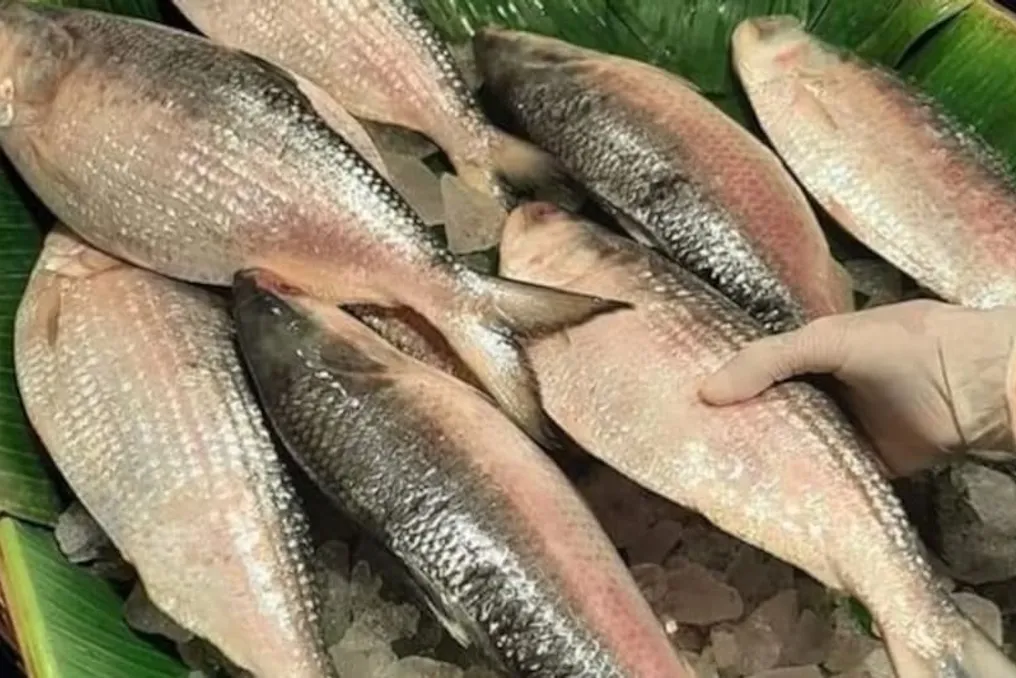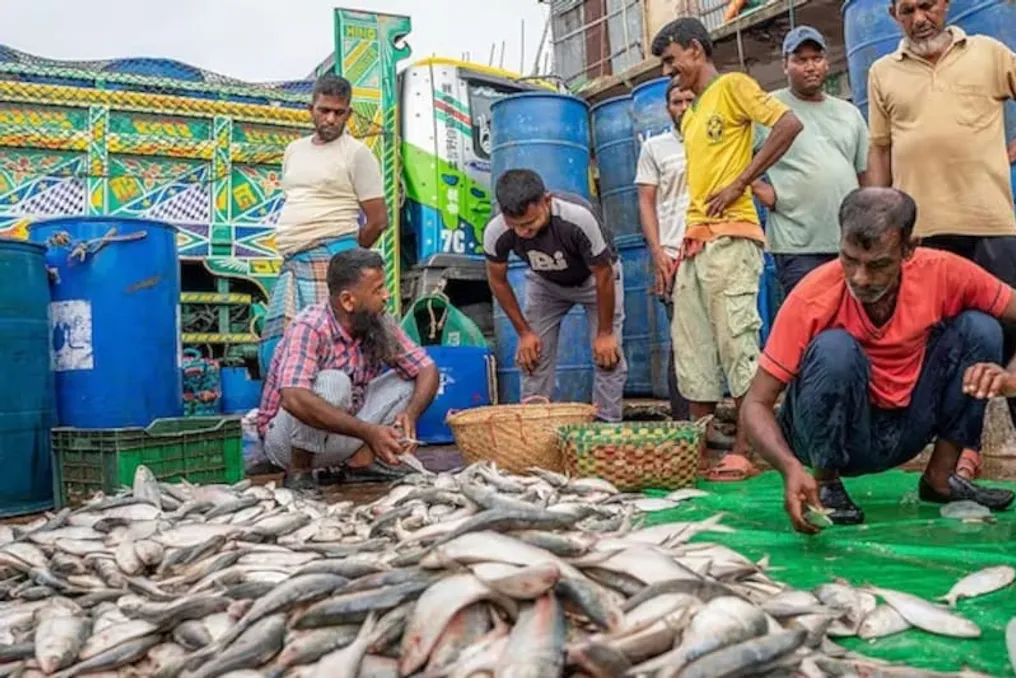
Bangladesh has unexpectedly halted the import of Hilsa fish from India, and its fisheries department has canceled 103 No Objection Certificates (NOCs) issued for the import of Indian Hilsa. This decision was made on September 22, after which the arrival of Hilsa through the Benapole port terminal in Bangladesh stopped.
This move has been a serious blow to traders who had already purchased the fish in India and were preparing to ship it to Bangladesh. They now face the problem of selling the fish at a lower price directly in India, as well as the risk of incurring losses from transportation costs and other import expenses.
According to Bangladeshi data, about 535 tons of Hilsa were imported from India this year. Furthermore, 1739.50 tons of Hilsa were permitted to be imported from India for the current fiscal year. The sudden cancellation of NOCs led to a complete halt of all other imports.
The main source of Hilsa from India is reported to be in the state of Gujarat, specifically from the Bharuch district. This fish arrives in Bangladesh via the Benapole port, where it is sold in local markets.
The Bangladeshi Fisheries Department has not officially stated a clear reason for the import ban. However, people involved in trade in the country have put forward several possible explanations. Among them are suspicions that Indian Hilsa might be sold as local or Padma Hilsa.
The possibility of money laundering and under-invoicing was also mentioned. Another suspected reason is the desire to stimulate local Hilsa production. It is important to note that the government has not officially confirmed any of these assumptions.
It is known that Padma Hilsa is highly valued in Bangladesh, considered to be more tender and flavorful. Hilsa from Gujarat has a different taste due to a higher amount of roe. Due to its lower cost, it is also used for other commercial purposes.
The import of Hilsa from India helped meet local demand in Bangladesh, as Hilsa production in the country has been declining in recent years, making the supply of Indian fish vital for traders.
After Bangladesh restricted the import of Hilsa from India, attention is now also focused on batches of Padma Hilsa arriving from Bangladesh to India. Limited quantities of Hilsa were sent from Bangladesh to India annually before the Durga Puja festival. However, no announcement regarding such shipments has been made at the moment.
In 2012, Bangladesh imposed an export ban on Hilsa. After that, the fish began being sent to India in limited quantities around Durga Puja. In 2025, about 1200 tons of Hilsa were permitted to be sent to India, but according to reports, only a small portion reached India.
Currently, traders are concerned about Bangladesh's decision to stop importing Hilsa from India. Many importers state that they purchased the fish after receiving permits, and the sudden halt could lead to financial losses. The Government of Bangladesh has not yet disclosed detailed reasons for this decision.