United Nations Secretary-General António Guterres warned that humanity is the first generation with the tools to end the fossil fuel era and the last that can prevent climate catastrophe. He called on countries to develop convincing roadmaps with clear deadlines for phasing out fossil fuels.
These statements were made during the UN General Assembly High-Level Week in New York, where the UN Climate Conference 2026 took place. It gathered leaders of major economies vulnerable to climate change, as well as key energy producers and consumers to accelerate climate measures and strengthen international cooperation.
The global renewable energy market shows significant progress. The International Renewable Energy Agency reported on Monday that a record number of new renewable energy capacities—693 gigawatts—were added in 2025. Total installed capacity reached 5.15 terawatts, allowing for savings of nearly $500 billion in fossil fuel expenditures.
Nevertheless, the pace of this progress is insufficient to meet the temperature goals of the Paris Agreement. The UN Environment Programme (UNEP) calculated that even with full implementation of national Determined Contributions by countries, the global temperature could rise by 2.3–2.5 degrees Celsius this century, significantly exceeding the 1.5-degree Celsius limit set by the Paris Agreement.
UNEP Executive Director Inger Andersen stated in her declaration that while national climate plans have brought some progress, their pace remains too slow.
Climate policies show divergence among major economies. In the US, the Environmental Protection Agency revoked several federal greenhouse gas emission standards, including the 2009 Greenhouse Gas Hazard Finding and power plant emission limits. Meanwhile, states like California continue to work towards achieving 100% zero-emission vehicle sales by 2035.
In Europe, the European Union maintains its commitment to decarbonization while striving to balance climate goals with industrial competitiveness. The European Commission proposed adjusting the implementation of the 2035 vehicle emission target, replacing the requirement for 100% zero emissions with a goal of reducing tailpipe emissions by 90%.
In the Asia-Pacific region, economies are exploring new mechanisms for cooperation in the energy transition. At the latest meeting of the Asia-Pacific Economic Cooperation (APEC) energy ministers, countries agreed to work on creating an Asia-Pacific energy community to enhance energy security, stimulate innovation, and achieve common benefits.
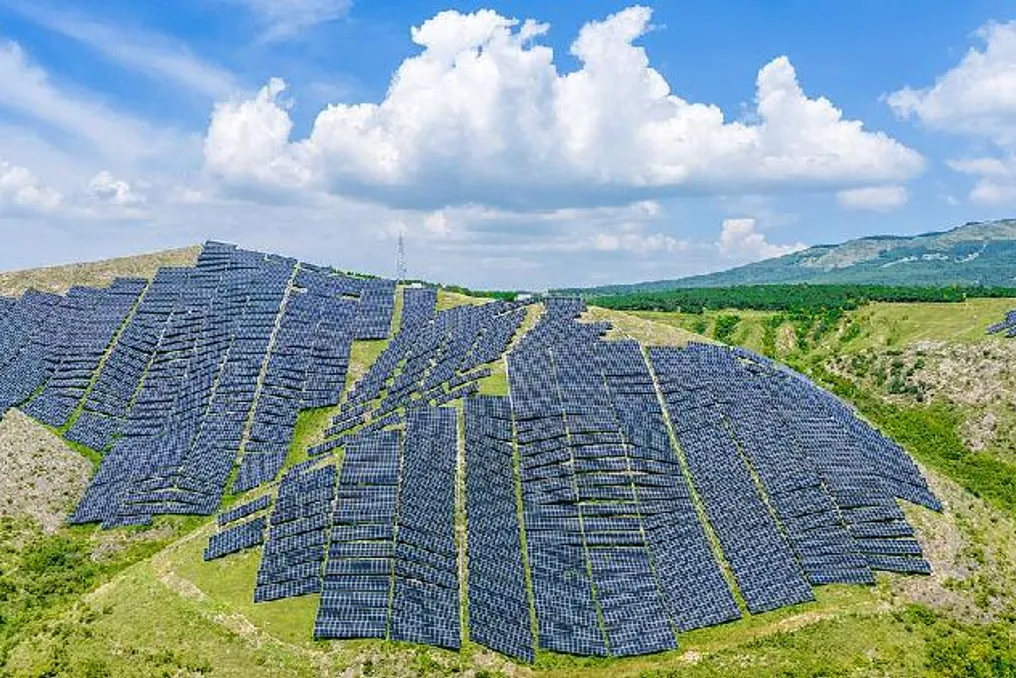
As an active participant in global climate governance, China has steadily expanded its renewable energy sector in recent years. By the end of July, solar power installed capacity in China reached 1.286 billion kilowatts, surpassing coal generation capacity for the first time and becoming the country's largest energy source.
China is also developing its national carbon market, which has become the world's largest in terms of traded greenhouse gas emissions. Large-scale production of solar modules, wind equipment, batteries, and other clean energy technologies has also contributed to expanding the global supply of renewable energy and reducing technological costs.
In 2025, China's import and export volume of green products exceeded $802 billion, accounting for 14.68% of total global green trade, placing China first globally in trade volume. According to a recent report on China's green trade development, energy-saving, low-carbon, and clean energy products accounted for 82.35% of China's green product exports.
Selwyn Hart, UN Secretary-General's Special Advisor on Climate Action and Just Transition, noted: 'Through innovation, production, and investment, China has helped transform the global clean energy landscape, making clean energy technologies more accessible worldwide.'
Climate change is a global problem requiring international cooperation. At COP30 in 2025, the Global Agenda for Climate Action defined 117 specific initiatives across six main areas, including energy, ecosystems, and agriculture, aimed at increasing climate resilience for both human societies and the natural environment.
COP31, which will take place in Antalya, Turkey, from November 9 to 20, will continue efforts to promote global climate cooperation. Turkey, as the host country, proposed a new electrification target—to increase the share of electricity in total final energy consumption from the current 20% to 35% by 2035.