Vaivava Suryavanshi is currently awaiting his chance in the Indian team's starting lineup. He has been out of the game during three T20 matches against Afghanistan and a match against Japan. However, while waiting for his next match in India, his upcoming test in New Zealand is already being discussed.
The visit to New Zealand will begin on October 22, 2026. As part of this tour, there will first be a series of five T20 matches in India, the first of which will take place in Christchurch, and the fifth T20 is scheduled for November 1 in Hamilton. Following this, five ODI matches and two Tests are planned, making for a full tour of 12 games.
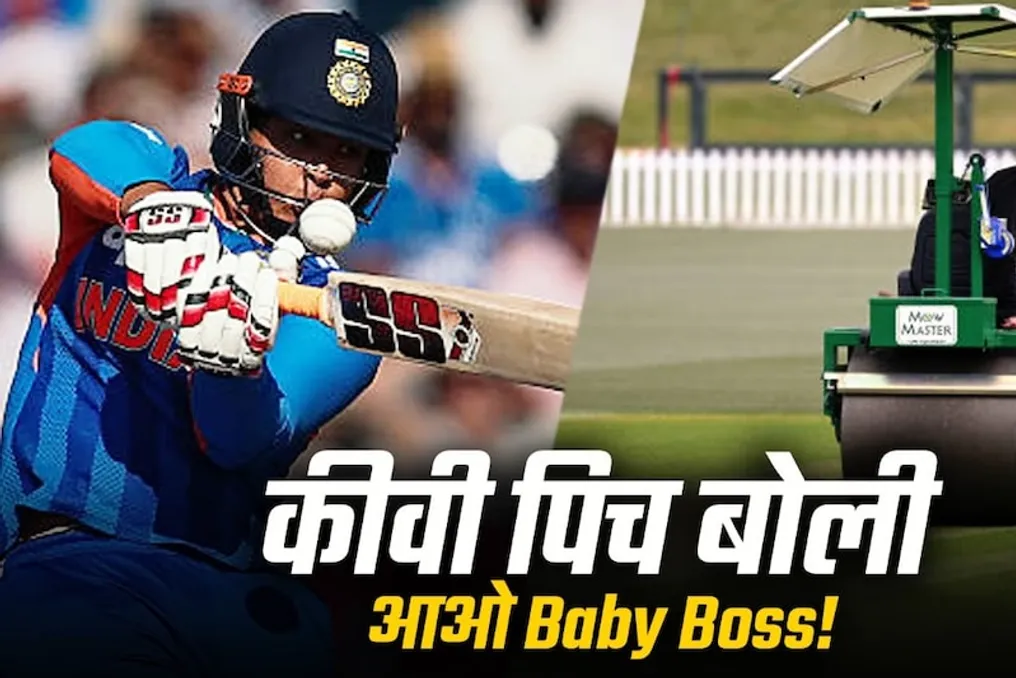
New Zealand coach Rob Walter noted not only his admiration for Vaivava but also raised the question: how will this teenager, who plays fearlessly against big bowlers in the IPL, adapt to the fast and bouncy conditions of New Zealand?
This question makes the next stage in Vaivava's career quite intriguing.
It is unnecessary to remind one what an aggressive batsman Vaivava is. His IPL 2026 statistics, where he scored 776 runs in 16 matches with an average of 237.30 and 72 sixes, speak for themselves about his play. He was not just scoring runs, but doing so in a unique style, which has placed him among the most discussed young players in world cricket.
However, with every new victory comes a new, more complex question. In youth cricket U-19, Vaivava scored centuries in England, Australia, and South Africa. In the IPL, he demonstrated uncompromising play against top world bowlers. Thus, he has shown the strength of his bat in different countries and conditions.
The situation in New Zealand will be somewhat different. There, the ball can be not only fast but also high. Wind and conditions can affect the batsman's decisions. In such conditions, the ability to send the ball outside the boundary must be combined with the ability not to hit the ball.
That is, the question is no longer just about how far Vaivava can hit the ball, but also when he should not do it.
Walter stated that he wants to observe Vaivava on pitches with high speed and bounce, and also study how his game changes under various circumstances. This is important because the New Zealand coach views Vaivava not only through the prism of his current achievements. He wants to see how his IPL performance holds up to the test in different conditions.
In cricket, great batsmen are defined not only by their shots. They are recognized for their ability to adapt their game to changing circumstances. Vaivava has established himself as an aggressive batsman. Now he has to write a new chapter of control within that same aggression.
The biggest test for Vaivava in New Zealand will likely not be specific bowlers, but the conditions themselves. What will he do when the ball approaches his body? Will he be able to play the same pull shot when the ball goes outside the off-stump? Will his decision to hit change when the ball lands lower than expected? And will he be able to continue his innings in a new manner if the first few balls do not result in a boundary?
There are no answers to these questions in the statistics yet. This is why the visit to New Zealand could be exciting for Vaivava. Here, he does not need to change his game; he needs to add something new to it.
Pressure is not a new concept in Vaivava's history. Playing in the IPL at such a young age is an exceptional situation in itself. He started from sixteen on his very first delivery. Then he scored big runs. When the pressure of expectations arose in youth cricket U-19, he also scored runs. Having received the chance to play for India, he scored a half-century internationally.
However, the nature of the pressure changes. Before, the question was: can this child play at a high level? Now the question is: how far can this child advance at a high level? There is a huge difference between these two questions. Previously, Vaivava needed to prove his talent. Now he needs to show the diversity of his game.
There is an interesting paradox here. In the recent Indian T20 squad, Vaivava did not secure a permanent spot in the starting lineup. This means the Indian team management is considering his gradual progression. On the other hand, New Zealand coaches publicly state that they want to see how his game performs in local conditions.
This does not mean that New Zealand has made any decision regarding Vaivava or that his place is secured. But it certainly means that at the age of 15, his game has become a topic of discussion for the opposing coach. This is an interesting stage in Vaivava's journey. Baby Boss must master another skill. Vaivava's greatest strength is his fearless play, so there is no need to turn him into a timid batsman.