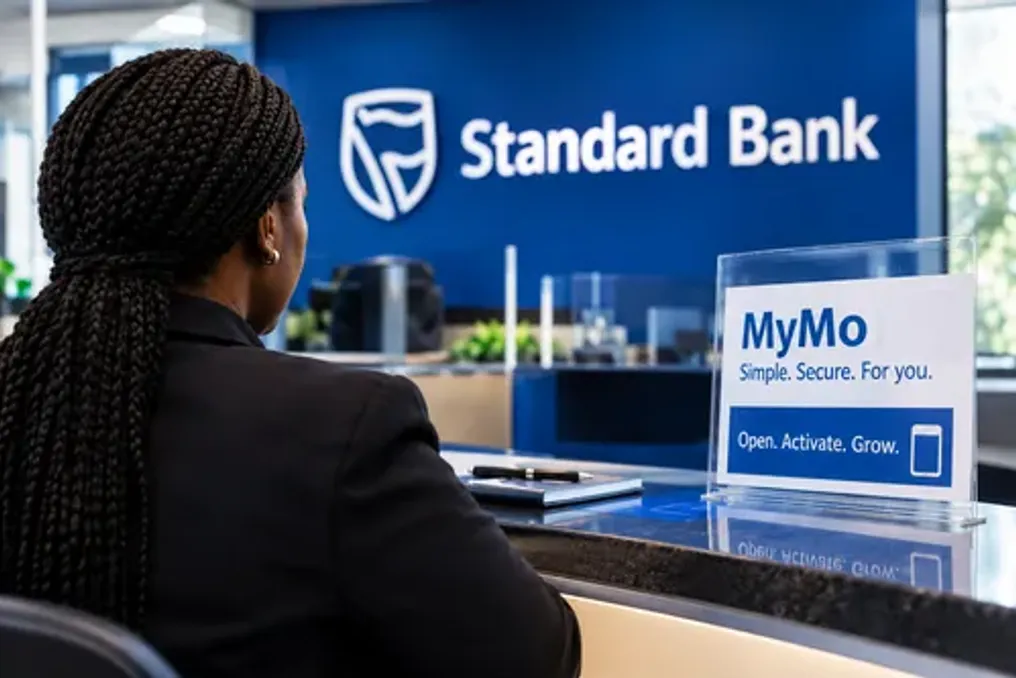
A Standard Bank employee who was dismissed for depositing funds to activate two clients' accounts in their absence lost her challenge to the dismissal in the Labour Court.
The Johannesburg Labour Court ruled that despite errors in the CCMA commissioner's reasoning, the decision to uphold the employee's dismissal was one that a reasonable person could have made based on the evidence presented. Consequently, the court rejected the appeal lodged by SASBO – the Financial Workers Union, acting on behalf of Buble P Sikhakhane. No ruling was made regarding the reimbursement of legal costs.
Sikhakhane had been permanently employed at Standard Bank since September 2015, having previously worked with the bank through a broker since 2008. At the time of her dismissal, she held the position of Customer Relations Officer at the Scottburgh branch, where her duties included meeting with clients and directing them to appropriate services.
The conflict arose concerning MyMo bank accounts, which are intended for low-income and unemployed clients. Opening a MyMo account required activation through a deposit, and Standard Bank had notified staff of this requirement as early as February 2020. The activation of MyMo accounts was also factored into performance targets.
The bank later discovered, through a whistleblower report, that employees were activating MyMo accounts without the clients present. In March 2022, Standard Bank sent an email to employees reminding them that account activation must be initiated by the clients themselves, and that staff members were not authorized to make activating deposits on their behalf. This email stated that 34 employees had already faced disciplinary action, and some had been dismissed. This message was sent to Sikhakhane and forwarded to her team leader, who called it an important notification and strongly urged employees to 'do the right thing the first time.'
In May 2022, Sikhakhane accompanied a universal banker during visits to potential clients being recruited for MyMo accounts. The court learned that the clients were predominantly located in rural areas or construction sites, and Sikhakhane accompanied the banker because she could assist with the isiZulu language. Upon returning to the branch, the universal banker gave Sikhakhane money and two account numbers, asking her to deposit the funds via the ATM. She made these deposits, which activated two MyMo accounts while the clients were absent.
Sikhakhane knew that employees were prohibited from activating client accounts on their behalf but disputed knowledge that they specifically pertained to MyMo accounts. She claimed she simply took the money and followed instructions because she was trying to be a team player. She also stated that she could not determine from the account numbers that they were MyMo accounts. In her explanation and during arbitration, she expressed regret and admitted that she should have asked questions before making the deposits in hindsight.
Sikhakhane was accused of misconduct, found guilty at a disciplinary hearing, and dismissed in November 2022. At that time, she had approximately seven years of service and a clean disciplinary record. She subsequently filed a wrongful dismissal claim with the CCMA. The Commissioner determined that she had violated Standard Bank policies and knew that account activation had to be initiated by the client. The Commissioner also concluded that employees were prohibited from conducting transactions on client accounts in their absence, regardless of the account type. Although the Commissioner took into account her length of service and clean disciplinary record, he felt that the misconduct was serious enough in a banking environment to affect trust and confidence, and rejected the argument for corrective discipline, upholding the dismissal as substantively fair.
The SASBO union appealed the Commissioner's decision to the Labour Court. The union argued that the Commissioner had misinterpreted the nature of the misconduct, as Sikhakhane was specifically accused regarding the activation of MyMo accounts. It insisted that it was not established that she knew those two accounts were MyMo accounts, and the Commissioner instead relied on a broader rule prohibiting employees from operating on client accounts in their absence. The union also objected to the Commissioner not adequately considering Sikhakhane's clean disciplinary record, her length of service, lack of dishonesty or personal financial gain, remorse, and the possibility of progressive discipline. Furthermore, it challenged the assessment of Sikhakhane's explanations.
Judge SJ Harvey acknowledged that the Commissioner had indeed framed the misconduct too broadly. The employee was accused of misconduct specifically related to the activation of MyMo accounts, whereas the Commissioner seemed to rely on a more general rule prohibiting employees from operating on client accounts in their absence. However, the court found that this error did not render the outcome unreasonable. The employee admitted to violating the rules and had recently received a direct warning against staff activating accounts on behalf of clients. She also spent the morning accompanying the universal banker during MyMo account sales, immediately after which she was given the money and account numbers for the deposits. Under these circumstances, the court deemed it reasonable to assume she knew the purpose of the deposits, or at least that she should have asked questions before making them.
The Labour Court also considered factors in Sikhakhane's favour. These included her seven years of employment, clean disciplinary record, the absence of proof of dishonesty or personal financial gain, her remorse, and the possibility of applying progressive discipline. Nevertheless, the court concluded that these factors did not render the dismissal unreasonable. The rule had been explicitly reiterated shortly before the misconduct occurred, and the deposits concerned two accounts and took place under circumstances where Sikhakhane could reasonably expect them to be for the activation of MyMo accounts that were being sold that morning. The court also took into account the importance of adhering to client account service rules in the banking sector, as well as the regulatory and reputational consequences associated with the practice that prompted Standard Bank's intervention. The court noted that MyMo activation contributed to the branch's performance, which in turn affected the bonus pool available to employees, including Sikhakhane. Judge Harvey conceded that there were considerations that might support a lesser penalty, but this did not mean the dismissal was unreasonable. Even if another commissioner might have reached a different conclusion, this was not sufficient grounds to overturn the decision. The court ruled that 'based on the evidence presented to the commissioner, the conclusion that the dismissal was substantively fair was one that a reasonable person could have reached.'