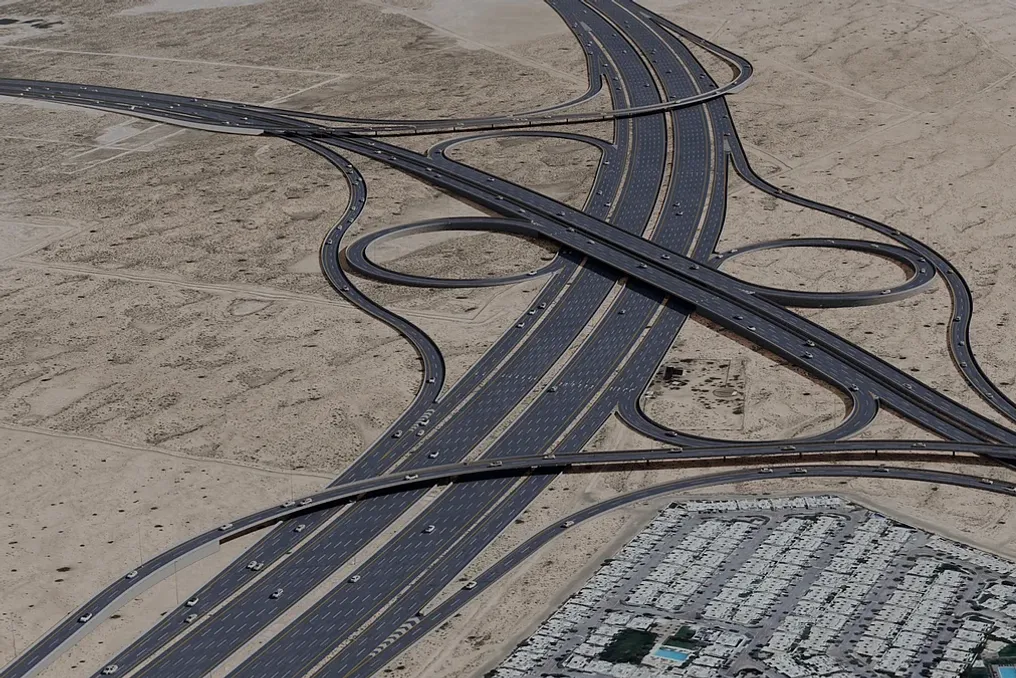
New Dubai Fourth Corridor promises residents reduced travel time and less traffic
Read more
Khaleej Times
www.khaleejtimes.com

New Dubai Fourth Corridor promises residents reduced travel time and less traffic

Residents of new, more distant areas of Dubai have long faced the problem of long commutes across the city, affecting daily needs such as trips to school, work, or short excursions to the city center.

Now, many Dubai residents believe that the implementation of the Fourth Corridor can solve this issue. For instance, 17-year-old student Damien Dexter Goveas, who has lived in Damac Hills 2 for almost five years, noted that connectivity with the rest of the UAE and central Dubai presents significant difficulties. He reported that getting anywhere in the city takes a minimum of 45 minutes from his home but believes the Fourth Corridor will make trips into the city and to school significantly easier and faster.

Last week, Sheikh Hamdan bin Mohammed bin Rashid Al Maktoum, Crown Prince of Dubai, approved the implementation of this 80-kilometer project in the emirate. This new arterial route will be the fourth major road connecting the emirates, alongside Sheikh Zayed Road, Sheikh Mohammed bin Zayed Road, and Emirates Road.

Muhammad, a Dubai resident who purchased property in The Valley, was initially skeptical about the project, fearing it was too far from central Dubai. However, his confidence was strengthened by the existing Dubai–Al Ain road and the Dubai 2040 plan. Now, after the confirmation of the Fourth Corridor, he feels his investment is paying off. He added that adding an extra lane between Emirates Rd and Lehbab Rd will make journeys even smoother.

The corridor will also provide fast access to Al Maktoum Airport, Abu Dhabi, Sharjah, and the northern emirates. Muhammad emphasized that this will eliminate the need to connect to existing highways when traveling to other emirates. He is also confident that his property value will increase, as improved transport accessibility will be an advantage rather than a drawback for future developments in the area.

This project will also help his family. His daughter, who is currently taking A-level exams, is considering universities in Academic City, Sharjah, and Abu Dhabi. Muhammad noted that travel time and connectivity were one of their concerns, and the new project should ensure faster movement regardless of where she enrolls.

Construction will proceed in two phases. The first phase covers approximately 30 km from Al Shanouf Road in Sharjah to the Dubai–Al Ain road, costing about 3.5 billion dirhams. The second phase will add another 50 km to Al Faya Road in Abu Dhabi. The highway will feature 12 lanes, 72 bridges, 17 tunnels, and 45 drainage culverts. It will be capable of handling up to 24,000 vehicles per hour and will be directly connected to Al Maktoum International Airport and Etihad Rail.

Joseph Salem, Partner and Head of Transport and Hospitality Practice at Arthur D. Little Middle East, believes this project aligns with the concept of forward-thinking infrastructure planning required by the region. He stated that by integrating road, air, and rail connectivity into a single corridor, Dubai is once again demonstrating an approach to transport as an integrated system, rather than a series of isolated fixes.

He also noted that combining a 60 percent reduction in travel time with real multimodal connections shows that Dubai is 'building potential that matches its long-term demographic and economic ambitions, rather than just reacting to today's transport pressure.' For Damien, the new highway offers hope for the development of a good public transport system. He mentioned that there are currently few accessible public transport options for city travel and hopes that after the corridor is completed, RTA will begin implementing faster and more convenient direct bus routes. He also suggested that introducing good feeder bus routes from nearby metro stations and Etihad Rail stations would be a big step forward.
Similar stories

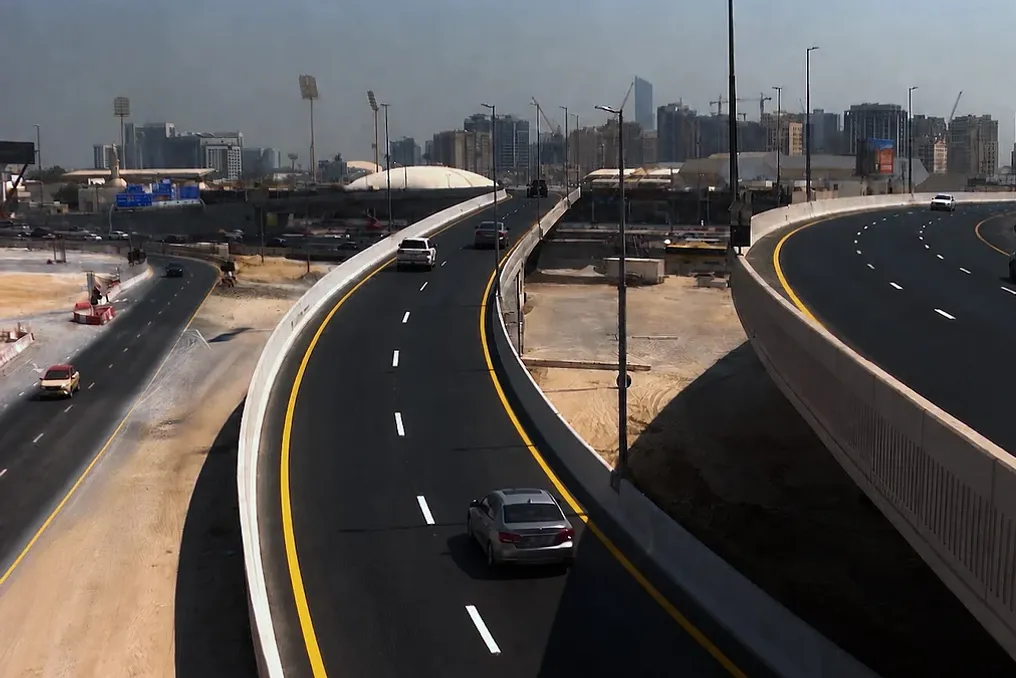
Completion of the RTA project in Dubai reduced travel time on Oud Metha and Al Asail routes from 20 to 5 minutes
Read more
www.khaleejtimes.com

Completion of the RTA project in Dubai reduced travel time on Oud Metha and Al Asail routes from 20 to 5 minutes

Drivers in Dubai traveling through the areas of Oud Metha, Al Jaddaf, Umm Hurair, and surrounding territories can now complete key journeys significantly faster thanks to the completion of a major road project implemented by the Roads and Transport Authority (RTA).

The development project for Oud Metha Road and Al Asail Street has increased the capacity of Oud Metha Road from 10,400 to 15,600 vehicles per hour in both directions, representing a growth of up to 50 percent. Furthermore, travel time has been reduced from twenty minutes to five minutes.

As part of this project, 14 kilometers of roads were constructed, four intersections were modernized, and bridges and tunnels totaling 4.3 kilometers were built, improving connectivity between Oud Metha Road, Al Asail Street, and neighboring routes.

This project serves residential and developing areas, including Zaabil, Al Jaddaf, Oud Metha, and Umm Hurair, as well as important destinations such as Latifa Hospital and Al Wasl Club. It is expected that the population in the served areas will exceed 420,000 people by 2030.

The CEO and Chairman of the RTA Executive Council, Mattar Al Tayer, stated that this project is part of a comprehensive plan to expand Dubai's road and transport infrastructure in line with population and traffic growth. He emphasized that the project's goal is not only to meet future demand but also to make daily commutes more comfortable for residents and visitors to the city.

Describing the project's role in connecting different parts of the road network, Al Tayer noted that it strengthens links between main corridors, residential areas, and service facilities while increasing intersection efficiency and road safety. He added that the project is vital for Dubai's road network due to its location and role in strengthening connections between multiple corridors, residential and developing areas, and service facilities, while improving intersection efficiency, facilitating access to key locations, and enhancing traffic safety.

Al Tayer also mentioned that the project was conceived with Dubai's future urban expansion in mind, and the infrastructure is designed to anticipate growing demand rather than just solving existing traffic problems. He reiterated that the project increases the capacity of Oud Metha Street from 10,400 to 15,600 vehicles per hour in both directions, which is an increase of up to 50 percent, and reduces travel time from 20 minutes to five minutes, which is a 75 percent time saving.

The authority reported that the changes improve the connection between Oud Metha Road, Al Asail Street, and the surrounding road network. At the intersection of Oud Metha Road and Sheikh Rashid Road, RTA added a left exit lane leading to Al Gharhoud Bridge, increasing its capacity to 1,800 vehicles per hour. Additionally, the service road on Sheikh Rashid Road between the existing bridge and the exit to Al Zahrawi Street was modernized to eliminate congestion and enhance safety.

The right turn capacity from Sheikh Rashid Road towards Oud Metha Road and Dubai-Al Ain Road was increased from two lanes to three, boosting the capacity to 4,000 vehicles per hour. A new tunnel connects the service road on Oud Metha Road with the Sheikh Rashid Road intersection for drivers heading to Bur Dubai.

Additional improvements were made at the intersection of Oud Metha Road, Al Asail Street, and Al Wasl Club Street. Two overpasses now connect Al Asail Street to Al Hail Road via Al Wasl Club Street. One bridge has two lanes and accommodates 2,400 vehicles per hour, while the second has three lanes with a capacity of 3,600 vehicles per hour. A separate two-lane bridge with a capacity of 2,400 vehicles per hour is designated for left-hand traffic from Al Asail Street towards Oud Metha Road.

RTA also improved access to Al Wasl Club, including its entrances and exits onto Al Wasl Club Street, to reduce conflicts with main traffic flow. Another two-lane bridge with a capacity of 3,000 vehicles per hour was built at the intersection of Al Wasl Club Street and Al Hail Road, serving traffic towards Al Hail Road and Business Bay crossing. Al Wasl Club Street was widened to create a two-lane exit onto Al Hail Road, along with service roads in both directions and additional parking spaces.

At the intersection of Zaabil Palace Street, Al Hail Road, and Oud Metha Road, RTA added a left exit lane towards Dubai-Al Ain Road, doubling its capacity from 900 to 1,800 vehicles per hour. A single-lane tunnel with a capacity of 1,200 vehicles per hour was also constructed to direct traffic from Dubai-Al Ain Road to the Oud Metha service road and alleviate current congestion. The project also expanded the bridge connecting traffic from Al Hail Road towards Oud Metha Road from two to three lanes, increasing its capacity from 2,200 to 3,300 vehicles per hour.

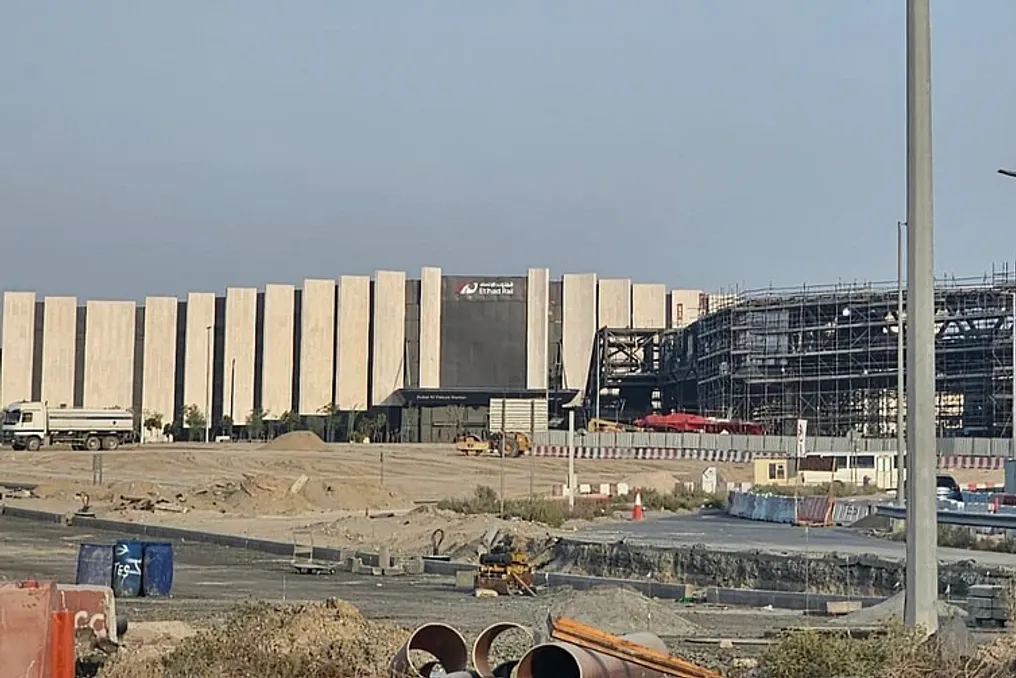
How the connection of Etihad Rail and Dubai Metro will change inter-emirate travel
Read more
www.khaleejtimes.com

How the connection of Etihad Rail and Dubai Metro will change inter-emirate travel

A resident of Abu Dhabi will be able to take a train to Dubai in the morning and then transfer to the metro to continue their journey to any point in the emirate. The same journey can be made in the opposite direction in the evening, saving time spent traveling between the two emirates.

This daily route will become possible after the full integration of Etihad Rail—the planned high-speed railway between Abu Dhabi and Dubai—and the expanding Dubai Metro network.

The Dubai rail network plan for 2032, published by the Dubai Media Office in April, demonstrates how these systems are planned to be integrated. It includes Etihad Rail, the high-speed railway, as well as the Red, Green, Blue, and future Gold Metro lines.

Matar Al Tayyar, CEO and Chairman of the Executive Council of the Roads and Transport Authority (RTA) of Dubai, stated that the railway communication projects are being developed jointly. During a press conference dedicated to the RailX Dubai conference and exhibition, he noted: 'We are working with them on these projects, and our plans complement theirs.'

The Etihad Rail passenger network is expected to have two stations in Dubai. One is planned in the Al Yayali area, near the Jumeirah Golf Estates, and the map indicates Meydan as a future station for Etihad Rail passengers.

On the Jumeirah Golf Estates grounds, passengers will be able to transfer to the Dubai Metro's Red Line. From there, they can travel towards Dubai Marina, Internet City, Business Bay, Downtown Dubai, or Dubai International Airport.

Meydan station is shown as the connection point with the future Gold Line. According to the map, the Gold Line will also intersect with the Red Line in Business Bay and Jumeirah Golf Estates, and with the Green Line in Al Ghubaiba.

For someone living in Abu Dhabi and working in Business Bay, this could mean taking Etihad Rail to Dubai and then completing the journey by metro. A Dubai resident working in Abu Dhabi could make a similar trip in the opposite direction.

A separate high-speed railway is planned between Dubai and Abu Dhabi. Trains should reach speeds of up to 350 km/h, and the journey between the two cities will take about 30 minutes. Six stations have been announced for this route: Palm Island, Saadiyat Island, Yas Island, Zayed International Airport, Al Maktoum International Airport zone, and Al Jaddaf.

This service has the potential to simplify inter-emirate travel for thousands of people who currently rely on private cars. Office workers could live in one emirate and work in another, and students could attend universities without long daily car commutes.

Doctors, nurses, and other shift workers may also benefit, especially when traveling early in the morning or late at night. However, the total journey time will exceed 30 minutes once travel time to the station, waiting, and transfers are accounted for.

The railway will provide Dubai residents with another way to reach Zayed International Airport. Passengers can board a high-speed train in Al Jaddaf or near Al Maktoum International Airport and travel to the airport in Abu Dhabi by train.

Important information, including fares, operating hours, service frequency, and the final design of the interchange stations, has not yet been disclosed. The opening date of the high-speed railway has also not been confirmed.

Dubai's Blue Line is scheduled to open in 2029, while the Gold Line is expected to be completed by 2032.

When all networks begin to operate, the most significant change may not only be the faster train between Dubai and Abu Dhabi. It will be the ability to exit the train and continue to the office, university, airport, or home using Dubai's broader public transport network.

Popular