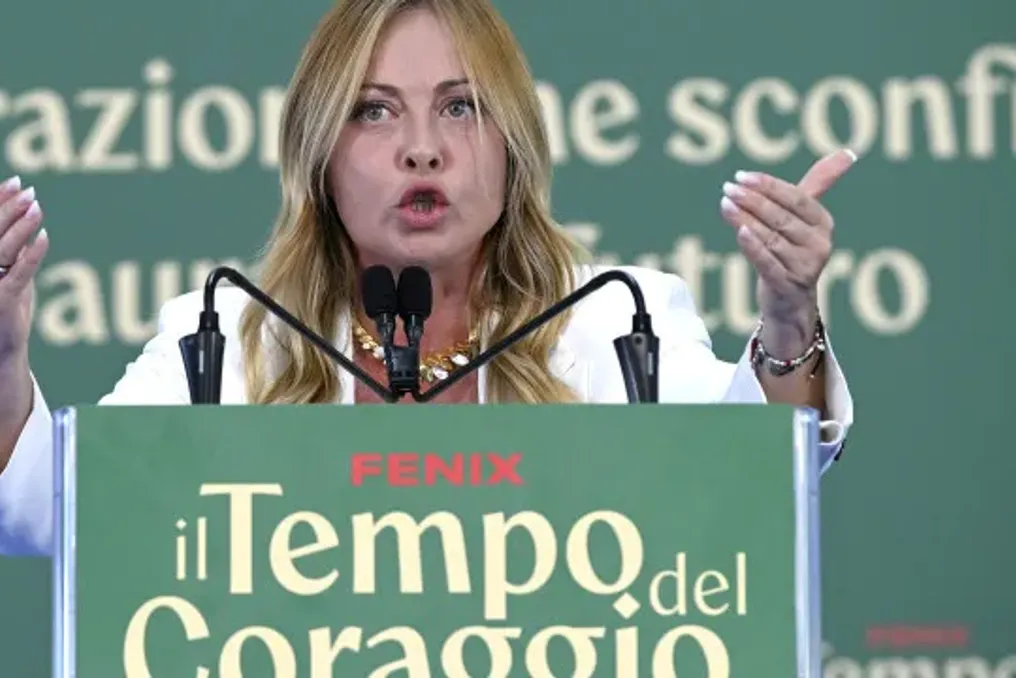
Prime Minister Meloni announced the approval of a ministerial council resolution concerning education. According to this decree, a limit of 30% is set on the number of students who do not adequately speak Italian, and additional resources for language learning are provided, along with a ban on wearing burqa and niqab in schools.
In Meloni's view, these measures are 'reasonable steps that do not divide but genuinely help integrate, preventing the creation of 'ghetto neighborhoods' and providing all students with equal opportunities.'
The government leader added that they intend to continue following a course that involves an integrating school, without abandoning rules, supporting those who have more difficulties, and placing everyone in conditions that allow them to start from one point.
The new law, which drew strong criticism from the opposition, was first presented by Meloni last Sunday during a gathering of her party's youth, Brothers of Italy (post-fascist), and it also requires parents of foreign students with serious integration problems in school to study Italian.
According to data presented today by the Minister of Education of the right-wing and far-right coalition government, Giuseppe Valditara, approximately 34,000 classrooms in Italian schools currently have a proportion of foreign students exceeding 30%.
Valditara noted that first-generation foreign students receive one year less preparation in Italian. He reported that the rate of 'implicit dropout'—that is, the inability to achieve required competencies—is 5.7% among Italians and 10% among foreign students. The goal is to place the Italian language at the center as a fundamental tool for integration, since knowing Italian means integration.
The leader of the main opposition political force, the Democratic Party (PD, socialist, center-left), called the decree approved today a 'shameful witch hunt against students.'
Elly Schlein expressed regret, stating that the results of today's Council of Ministers meeting confirm that the Meloni government lives 'on another planet' compared to the country's reality. She emphasized that Italian families are currently concerned about the condition of school buildings and expenses exceeding 500 euros for textbooks, while Italian teachers' salaries remain among the lowest in Europe. In light of all this, the government's response is to expel foreign children from classes.