If a room in your house requires artificial light even during the day, or if the room is always dark due to a lack of windows, it likely has LED or standard incandescent lamps installed. While this provides illumination, it also leads to increased electricity bills. Those concerned about unjustified rises in utility payments might be interested in an old lighting method that allows this without increasing electricity costs and without installing lamps.
An ancient way of generating light is currently being discussed again. It does not require expensive lamps, complex equipment, or solar panels. A transparent plastic bottle and water are enough to bring sunlight into the room. This method is known as the 'Mosier Lamp.' The idea, which originated about 26 years ago in Brazil, was later adopted in many other countries. The goal was to provide natural lighting to homes and rooms during the day, especially in places with few windows or no access to electricity.
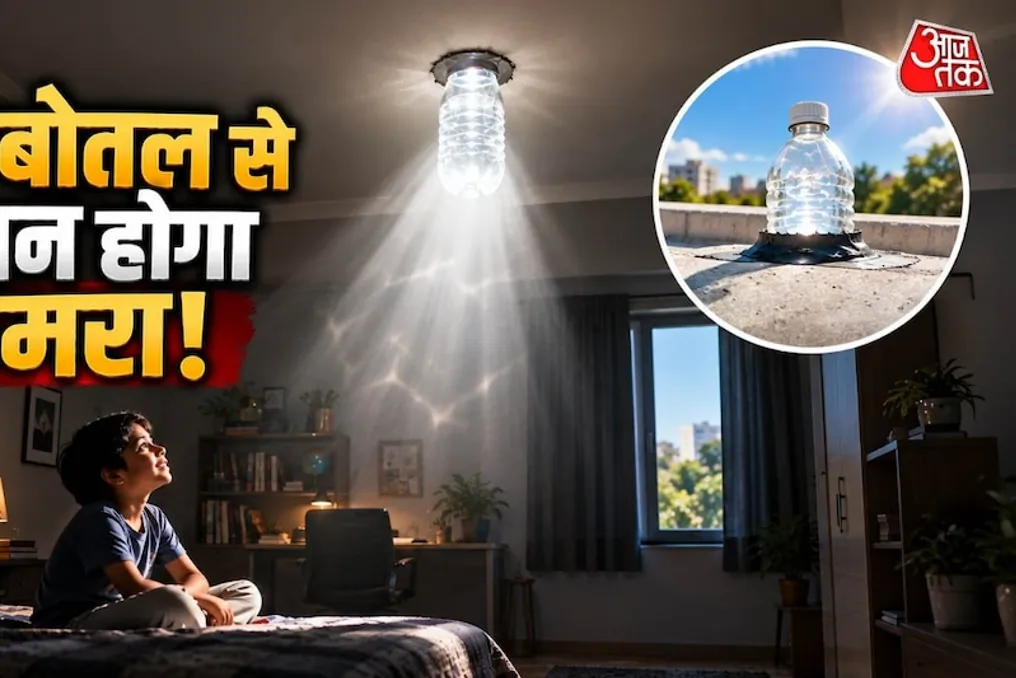
The name 'Mosier Lamp' is associated with the Brazilian mechanic Alfredo Mosier. Around 2000, amid electricity problems in Brazil, he developed a simple way to illuminate a room using a transparent plastic bottle filled with water. One part of the bottle is placed on the roof where sunlight falls, and the other part is inside the room. When sun rays pass through the water in the bottle, they begin to scatter throughout the room, reducing darkness during the day. Thus, a plastic bottle, often discarded as useless, can be used to deliver natural light into a room.
The operating principle is directly related to sunlight and water. When sun rays pass through the bottle and the water inside it, their direction changes slightly, allowing the light to spread over a larger area inside the room. Because of this, the bottle installed on the roof looks like a small light source in the room. The brighter the sun during the day, the more natural light can enter the room. In some places, the intensity of this light is comparable to the illumination from a 50–60 watt lamp. However, the actual brightness depends on the strength of the sun, the size of the room, the location of the bottle, and the method of its installation.
The idea, started in Brazil, became part of a campaign to deliver natural light to needy homes. Events such as 'Liter of Light' helped spread this technology to other countries. The advantage of the method was the use of ordinary and easily accessible items, such as plastic bottles and water. In places with limited access to electricity or where rooms remained dark during the day, this approach proved very useful.
If the bottle remains on the roof for a long time, the water in it may develop mold or other impurities over time. This reduces the transparency of the water and can negatively affect the light entering the room. Therefore, in such systems, chlorine or other treatment agents are sometimes used to maintain water cleanliness. Nevertheless, the dosage and method of use must be determined according to the system's design. Self-adding any chemicals to the water without proper knowledge is not recommended.
Although this method seems simple, its installation requires special caution. The bottle must be secured so that one part is outside under the sun, and one part is inside the room. This may require creating a niche in the roof corresponding to the shape of the bottle. It is crucial to completely seal the area around the bottle so that rainwater does not enter the room. Waterproof sealant is used for this purpose. If your roof is made of reinforced concrete, slabs, or has another special structure, it is safer to seek help from a specialist than to try to make the hole yourself.
If you are concerned that the plastic bottle on the roof will spoil the appearance of the house, it can be designed more elegantly. Decorative elements, such as circular diffusers, ceiling borders, or decorative frames, can be installed around the bottom part of the bottle inside the room. This will hide the lower part of the bottle, creating lighting in the room similar to a modern skylight. Thus, with proper design, this method can become not only a way to save energy but also an interior design element.
This approach is most useful in places where natural daylight is limited during the day, such as pantries, small workspaces, garages, or windowless rooms. However, it should be understood that this method cannot replace a lamp at night, as it functions exclusively using sunlight.