
Interest rate hike increases pressure on South Africans, economist warns of recession risk
Read more
IOL
iol.co.za

Interest rate hike increases pressure on South Africans, economist warns of recession risk

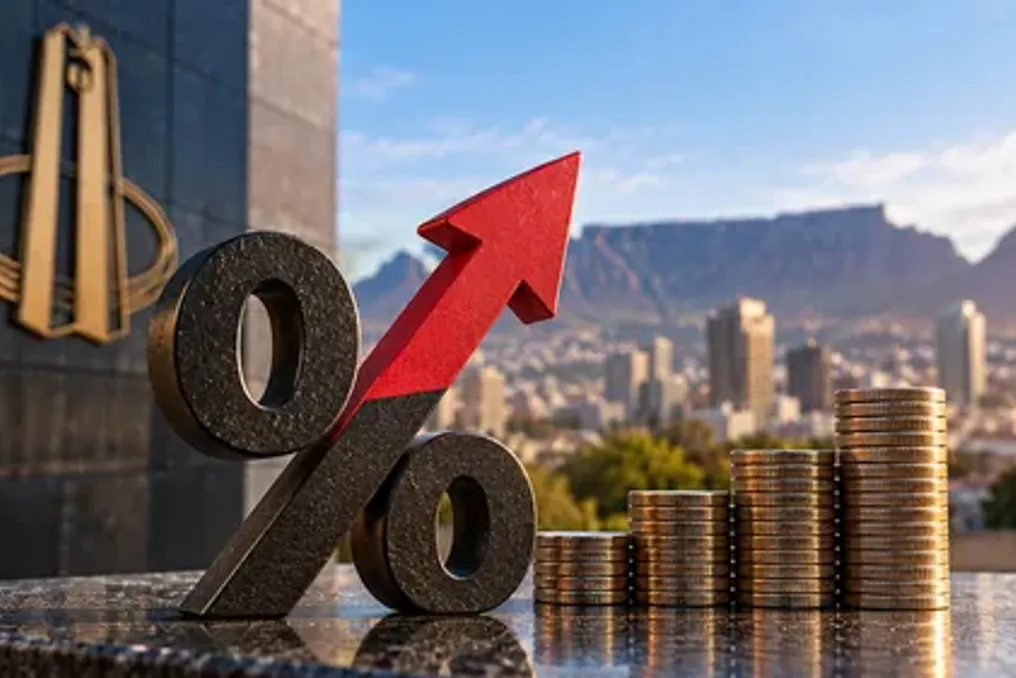
South African households have faced increased debt repayments after the Reserve Bank raised the repo rate to 7.25%. The organization Debt Rescue warned that consumers have very little left in their budgets.

South Africans, who were already struggling with high costs of living and loan repayments, received another financial blow following the interest rate hike by the South African Reserve Bank (SARB). The Monetary Policy Committee of the Reserve Bank unanimously increased the repo rate by 25 basis points, bringing it to 7.25% as of September 25th, to curb renewed inflationary pressures.

This increase means higher borrowing costs for consumers with variable-rate debt, including mortgages, car loans, overdrafts, and credit cards.

What does the repo rate hike mean for borrowers

Economist Douwe Rudd warned that the country may already be moving towards a recession. Rudd noted that this increase will be particularly difficult for indebted residents of South Africa during a period of extremely weak economic growth.

Rudd stated: 'This interest rate hike will be quite hard for the average citizen in South Africa, especially if you owe money.' He added: 'Since the economy is barely growing. In fact, we might be in a recession, and this will create additional financial pressure on people, mainly.'

Economists warn of slowing growth

He also suggested that the rate hike itself could contribute to further economic slowdown. Economist Ulrich Jobert believes that the impact of this decision will vary for each household depending on their level of indebtedness.

Jobert explained: 'It depends on whether you have a mortgage, a car loan, an overdraft, a credit card that you owe on.' He continued: 'If you have these loans, a car, housing, any loans, overdrafts, then you will pay more.' He specified that the increase could require extra expenses ranging from 100 to 500 or even 1000 rand monthly, depending on the size of the loan.

Sandra Dixon, founder of Stop City of Cape Town, noted that working families were already experiencing serious financial difficulties. According to her, 'for working families paying mortgages, higher interest rates mean higher monthly mortgage payments, while car loans, overdrafts, and other variable-rate debts also become more expensive.' She concluded that 'this adds to the overall financial pressure that working-class families are already facing.'

Pressure on households from fuel and municipal utility prices

'Combined with the increase in municipal bills for July, working-class families are now pushed to the limit,' Dixon noted. The rate hike also comes amid growing concerns about fuel prices.

Jobert warned that drivers could face significant price increases in October, as petrol recently showed a shortfall of about 2.88 rand per liter, and diesel was under pressure around 3 rand per liter. He predicted: 'In October you will pay at least 2.88 rand more for petrol, and I think it could be closer to 3.' He also reported that 'if you look at the price of better quality diesel, it already has a shortfall of 3 rand, so from October you will pay at least 3 rand more per liter of diesel.'

He emphasized that the impact would not be limited to gas stations, as higher transport costs would likely affect food and other commodity prices. Dixon stated that the combination of higher interest rates, utility bills, and expected fuel price increases will leave households with even less disposable income.

She added: 'This is happening at a particularly difficult time when households are already under pressure, and a sharp rise in fuel prices is expected, which will increase transport costs and add pressure to the cost of food and other necessities.' In her view, 'for many working households, this means less money at the end of the month and even tighter household budgets.'
Similar stories

Experts discuss whether South Africa's interest rates have peaked
Read more
iol.co.za

Experts discuss whether South Africa's interest rates have peaked

South Africans may have experienced the last interest rate hike in the current cycle, as economists predict that rates will remain at their current level for some time before a potential decrease.

The Monetary Policy Committee of the South African Reserve Bank (SARB) unanimously raised the repo rate by 25 basis points to 7.25% on Wednesday, which led to an increase in the base lending rate to 10.75%.

Although the hike was widely expected, PSG senior economist Johann Els noted that the unanimous decision was tougher than he anticipated. He stated: 'I expected the decision to be close, with a strong argument for a rate hike. However, the fact that it was unanimous turned out to be tougher than I expected.'

Likely Pause

Els believes that the monetary policy committee had enough arguments to keep rates unchanged, but the Bank's concerns about the global supply shock persisting long enough to raise inflation expectations ultimately outweighed other arguments.

Despite the unanimous vote, Els does not expect further hikes under current conditions. Furthermore, the SARB's Quarterly Projections Model (QPM) basic scenario also does not foresee further increases, although Els warns that the model should not be taken too literally, as circumstances can change.

He concludes: 'In my own forecast, the fact that they hiked the rate in May and now hiked it again in September, acknowledging that monetary policy is already restrictive, means there should be no further rate hikes under current circumstances.'

Has the Peak Been Reached?

Dr. Elna Moolman, Head of Macroeconomic Research at Standard Bank Group, agrees that rates may have reached their peak. She notes: 'It is very likely that this could be the peak in the interest rate hiking cycle, and it is possible that the Reserve Bank will have the opportunity to start providing some interest rate relief by the end of next year.'

However, Moolman emphasizes that this will depend on oil price dynamics and whether higher transport costs will affect other prices. Harry Scherzer, CEO of Future Forex, shares a similar view, suggesting the question is whether Wednesday's hike marks the peak of the tightening cycle. He adds: 'A lot will depend on the trajectory of inflation, oil prices, the rand, and global interest rates in the coming months.'

Further hikes are not ruled out. Els points out that SARB considered an alternative scenario where global interest rates rise more than assumed in the baseline scenario, leading to another local rate hike and a longer period of high rates. A second scenario related to rising inflation expectations and wages also leads to a rate hike.

SARB is forced to balance weak domestic growth against renewed external inflationary risks.

Weak Economy

The possibility of further tightening comes amid pressure on the domestic economy. Economist Lara Hodes from Investec reports that consumer and business confidence remains low, while GDP contracted in the second quarter. SARB forecasts economic growth of 1.2% this year.

Els argues that the Bank sees downside risks to economic growth, with the global environment having a greater impact on South Africa than previously expected. Rhys Dyer, CEO of ooba Group, says SARB is forced to balance weak domestic growth against increased external inflationary risks. Dyer states: 'SARB is navigating an increasingly complex balance between slowing domestic growth and renewed external inflationary pressure.'

Risk Containment

Els believes that the weakness of the economy itself reduces the risk of entrenched inflation. He notes that the economy is not strong enough to generate demand-driven inflation or significant secondary price impacts, while supply shocks ultimately negatively affect demand and growth.

If conditions in the Middle East improve and oil prices drop sharply, the inflation forecast may improve faster than SARB expects, paving the way for an earlier rate cut. Els concludes: 'In such a scenario, I think the rate cut could also happen earlier than currently expected. Therefore, my expectation is no further rate hikes after this, under current circumstances.'

Moody's raises India's GDP growth forecast for FY2027 to 7% due to resilience in West Asia region
Read more
business-standard.com

Moody's raises India's GDP growth forecast for FY2027 to 7% due to resilience in West Asia region

The credit rating agency Moody's increased its forecast for India's real GDP growth to 7% from the previous 6% for the current fiscal year on Friday. The reason for this increase was India's resilience amid the conflict in West Asia.

The agency noted that despite expectations of faster growth in India compared to all other G20 economies and sovereign developing market states with a similar rating, certain risks remain.

Moody's warns that higher energy prices and food price pressure related to El Niño pose a threat to inflation, consumption, and growth rates.

The agency also reported that India's fiscal response to the turmoil in West Asia was restrained. However, there is a risk that rising global energy prices may necessitate increased subsidy spending and force the government to provide additional support. Furthermore, increased defense and infrastructure spending could limit budget consolidation.

According to government data, India's economy demonstrated growth of 7.8% in the quarter from April to June. This figure exceeded forecasts as the surge in investment and manufacturing activity compensated for the slowdown in mining and consumer services.

Popular