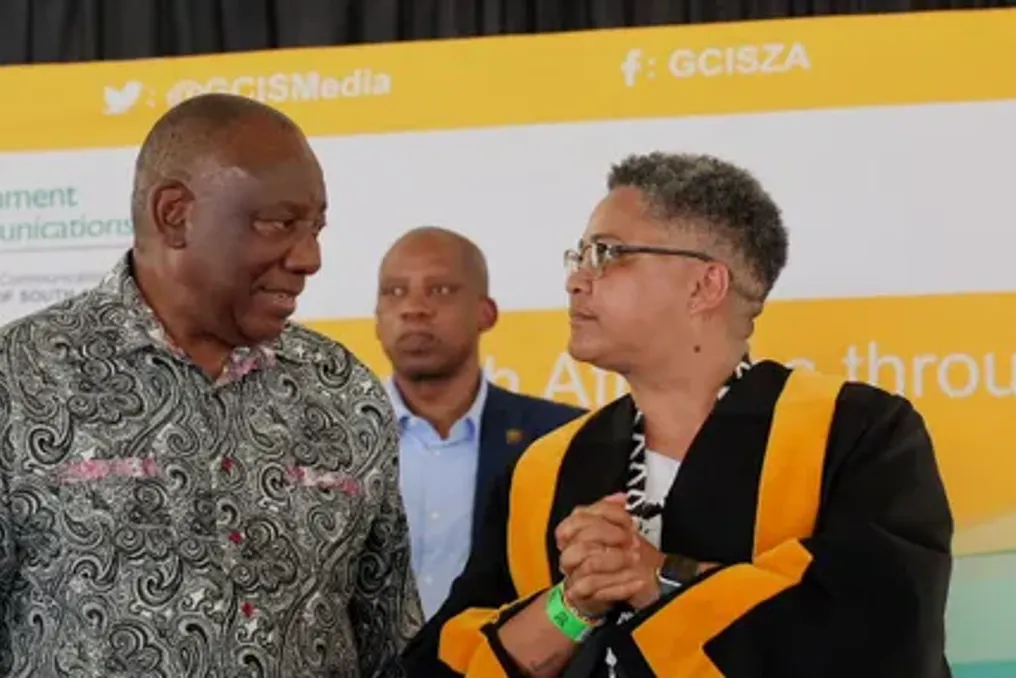
President Cyril Ramaphosa announced his intention to take decisive action against the problem of gender-based violence (GBV) during his speech for Heritage Day, which took place on Thursday.
During the national celebration of Heritage Day in Oudtshoorn, located in the picturesque Little Karoo region, Ramaphosa delivered an address to firmly reiterate opposition to the outbreak of gender-based violence affecting the country. His words came amid a worrying rise in violent crimes, particularly those targeting women.
In recent weeks alone, more than ten cases have been registered where women have been victims of brutal acts in Ekurhuleni and other regions of the country. Ramaphosa joined South Africans in Oudtshoorn to celebrate National Heritage Day 2026 under the slogan 'Celebrating our living heritage: strengthening the bonds that unite us,' where he pledged to take decisive measures against this issue.
He stated that 'in a few days I will address the nation with information on the steps the government is taking to combat gender-based violence and provide an update on the investigation into women's murders.'
Furthermore, Ramaphosa acknowledged and celebrated the diversity of the country. On Thursday, the President paid tribute to the rich cultural diversity and traditions of South Africa, emphasizing the nation's diversity against the backdrop of its complex history.
The President reflected on the profound influence of the Khoi and San peoples, the original custodians of the land and its stories, noting that despite the country's dark past, South Africa remains a country of unity in diversity.
The Minister of Sport, Arts and Culture was one of the prominent figures at the official Heritage Day celebrations in the Little Karoo on Thursday. He stated: 'Today we pay tribute to our ancestors, the Khoi and San, as well as all our predecessors who gave rise to our numerous languages and traditions. This region connects us to human history dating back thousands of years. We recognize the Living Human Treasures of our country, as well as traditional practitioners, storytellers, musicians, healers, artisans, and knowledge bearers.'
He emphasized the importance of recognizing the Living Human Treasures of South Africa, including traditional practitioners, storytellers, musicians, healers, and artisans, who shape the country's cultural identity.
Ramaphosa also expressed appreciation for the Northern Cape province, noting that Oudtshoorn and the Western Cape bear witness to a proud history of struggle in both the Coloured and Black communities of the region.
He added: 'Oudtshoorn and the Western Cape are a testament to the proud history of struggle in both the Coloured and Black communities of this region, under the banner of the United Democratic Front (UDF). We especially honor the rich political legacy of the people of Bongoletu and Brighton. We honor those who preserve our natural heritage for the benefit of future generations, and we commit to supporting this effort through the National Greening Campaign.'
Reflecting on the country's fight for freedom, which lasted more than three decades since democracy, he reminded: 'We must remember apartheid. We must remember forced removals. We must remember the humiliation of people who were told they could not live where they wanted, work where they wanted, love whom they wanted, or even enter the same door as another South African—because of their skin color.'