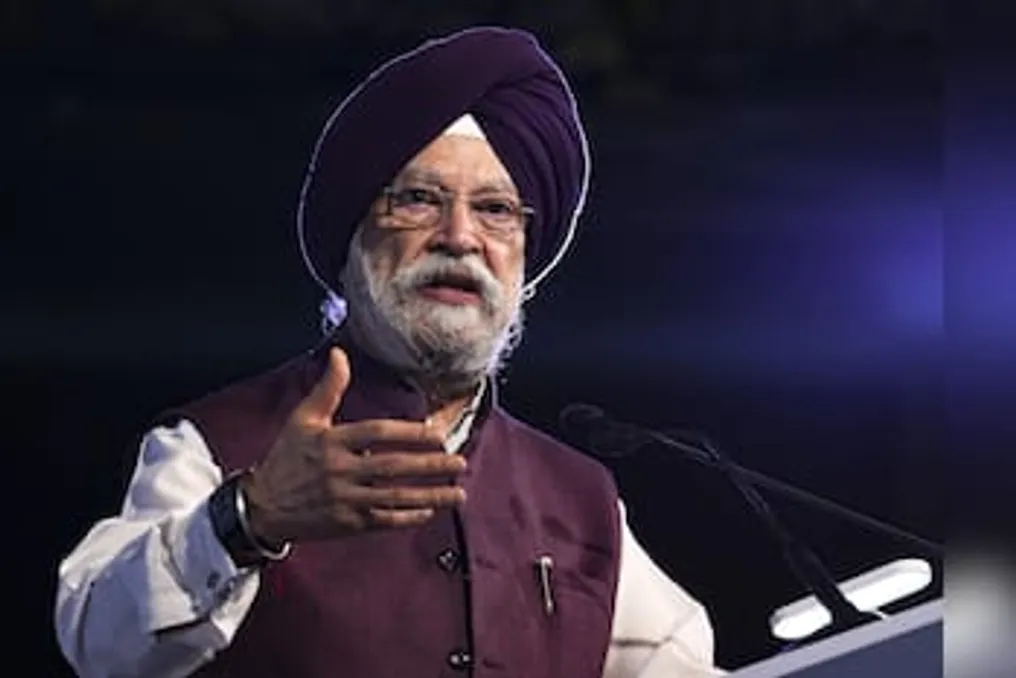
Oil Minister Hardeep Singh Puri stated on Thursday that the ongoing crisis in the Middle East could worsen amid escalating tensions between the US and Iran in recent weeks. He noted that India is currently managing the situation successfully, but an escalation of the conflict could create future problems.
Speaking at the thirteenth annual Indian Public Forum (PAFI), Puri emphasized that the crisis is not yet over and has the potential to intensify. He added that any crisis presents both a challenge and an opportunity, and India has managed to negotiate successfully and insulate itself from the worst consequences of the crisis so far. Nevertheless, he cannot guarantee that the situation will remain stable if it escalates.
Previously, the issue of crude oil availability in the global market was not a concern for India, as global supply of 102 million barrels per day (bpd) exceeded demand of 94–95 million bpd. However, Puri warned that the closure of key choke points, including the Strait of Hormuz and the Bab el-Mandeb, under the conditions of the Middle East crisis would lead to supply problems.
Thanks to India's robust refining capacity of 267 million tonnes per annum (mtpa), the country has been able to ensure fuel availability even during peak wartime periods. It is planned that this capacity will be increased to 320 mtpa by 2030. Furthermore, countries such as Saudi Arabia and the United Arab Emirates (UAE) are showing interest in investing in India's future refineries, provided they receive a significant return on investment.
Puri also reported that India exports about 1 million barrels of refined fuel products despite export bans imposed by some countries, such as Russia and China. The minister clarified that India intends to continue exporting petroleum products within contractual obligations. Regarding concerns about blending ethanol with gasoline, Puri stated that the government does not plan to increase the blending ratio above twenty percent amid growing consumer concern.