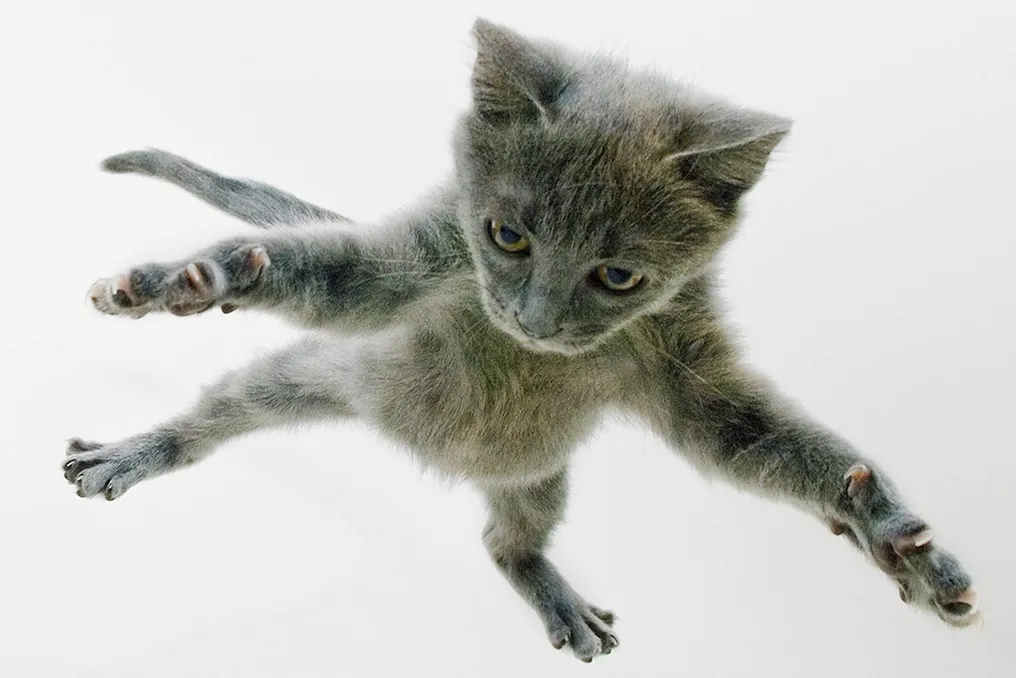
It is common to observe cats on rooftops, furniture, or trees, and many people have heard reports of animals that have survived very high jumps. Veterinarians explain that this ability is the result of a combination of physics, anatomy, and physiology.
This condition is called paraglider cat syndrome and refers to the group of injuries cats sustain after falling from two or more floors of a building, which equates to a height greater than eight meters. Interestingly, the higher the fall, the smaller these damages tend to be.
All mammals possess an auditory orientation system called the vestibular system. This mechanism is responsible for initiating the righting reflex: any increase in pressure in this area signals that the body is not in the correct position. When starting to fall, the vestibular apparatus comes into operation.
This system quickly determines the body's position relative to the ground, causing the animal to rotate its head, then its torso and hind legs, until it is lying on its belly, even if it fell on its back. This rotation is enabled by the feline's highly flexible spine, its shoulders not fixed to the main skeleton, and the absence of a collarbone.
By positioning itself with all four paws facing the ground, the cat extends its legs and opens up horizontally, functioning like a small parachute. This posture acts as a glider, reducing the speed of arrival on the ground and increasing the body's resistance to the air, which acts as a natural brake.
Upon hitting the ground, the impact is mitigated due to its small size and light bones. Body weight is a determining factor in the force of the impact; heavier bodies have a lower probability of surviving. In free fall, cats can reach up to 100 km/h, which represents half the human speed in the same situation.
The cat's limbs tend to disperse the impact force across the chest and abdomen, which are the areas where real injuries occur. The complexity of each phase also explains why higher falls result in fewer injuries: in very short jumps, the cat does not have enough time to realign and absorb the shock. In longer falls, it manages to activate the righting reflex and survive with few injuries.
A study conducted in 1987 analyzed 132 cases of cats that fell from great heights and were taken to a veterinary clinic in New York. Researchers found that 90% of the animals survived, and only 37% required emergency care to stay alive.
It is important to note that paraglider cat syndrome refers to the set of physical injuries sustained by felines after falling from elevated places, and not the righting mechanism itself. Research indicates that injuries are linked to factors such as age, the animal's behavior, and the cat's pre-existing medical conditions.
Despite the righting reflex offering protection during falls, prevention is crucial to avoid suffering for cats. It is recommended that, if living in an apartment, safety nets be installed on all windows before adopting a kitten.