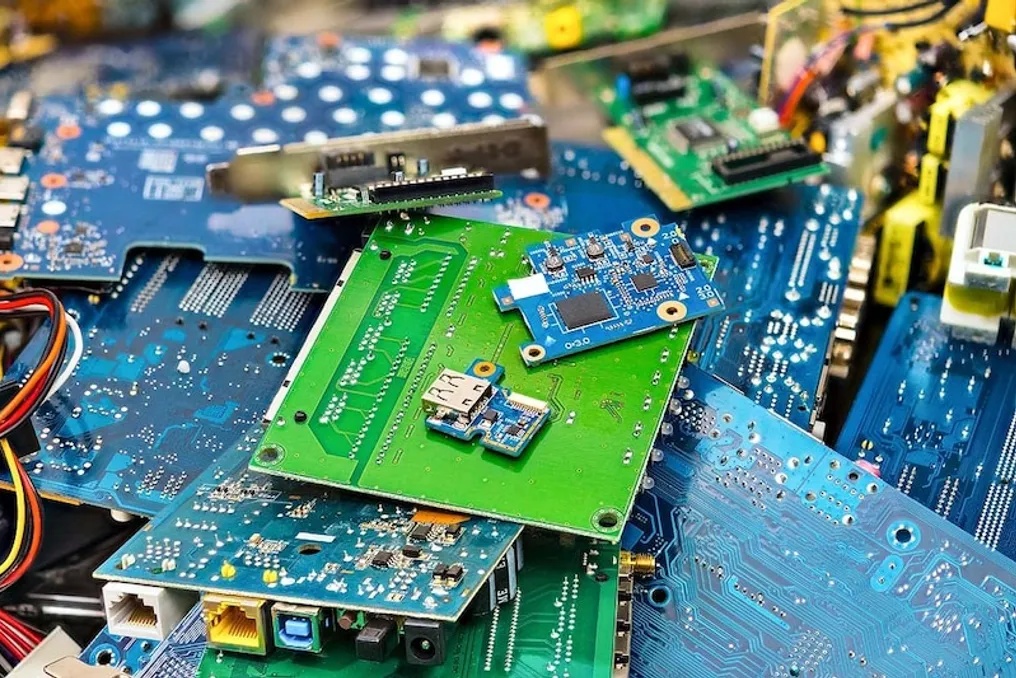
By 2050, AI is projected to generate up to 61.7 million tons of e-waste globally
Read more
Aaj Tak
www.aajtak.in

By 2050, AI is projected to generate up to 61.7 million tons of e-waste globally

With the increasing use of artificial intelligence (AI) worldwide, the number of new data centers and machines is rapidly growing. However, a serious question arises regarding the fate of these obsolete devices. According to a new report, between 2025 and 2050, AI-related equipment could be decommissioned in volumes ranging from 39.5 to 61.7 million tons.

This means that a significant amount of e-waste from AI will be generated over the next twenty-five years. This waste includes not only AI servers and chips but also network equipment, data storage systems, power supplies, batteries, transformers, and cooling systems installed in data centers that eventually become unusable.

It is projected that by 2050, the annual volume of e-waste from AI could reach between 3.1 and 4.6 million tons. As of August 2026, 12,259 data centers were operating in 179 countries, and their number, along with the number of machines used, continues to grow due to the rising demand for AI. Thus, managing obsolete equipment could become a serious future problem.

The new figure is significantly higher than previous estimates. Previously, calculations for AI e-waste primarily considered devices such as servers and GPUs. However, the new study included other critical components of data centers, including data storage systems for information retention, network equipment for connecting machines, and cooling systems to maintain their operation. All these elements wear out over time.

According to the report, by 2030, AI could lead to the decommissioning of between 8.6 and 13.1 million tons of electronic equipment annually, which is approximately 40–60 times higher than older forecasts.

It is important to note that data centers contain more than just servers and computing machines. According to the report, servers, accelerators, and racks account for only about 13% of the total electromechanical complex. The remaining 87% consists of power supply systems, network equipment, storage, transformers, batteries, backup systems, and cooling systems. Therefore, when calculating AI e-waste, all these components must be taken into account.

As of August 2026, there were 12,259 data centers in 179 countries. The largest concentration of such facilities is in the USA—5,388 centers. There are also 529 centers in Germany and 523 in the UK. The growing demand for AI is stimulating increased investment in these centers. The report mentions McKinsey.

Estimates suggest that around $7 trillion could be invested in AI infrastructure between 2025 and 2030. These funds will go towards installing new servers, network equipment, power supply systems, and cooling systems. Over time, many of these devices will be replaced, leading to an increase in the volume of e-waste.

The increase in waste will not only occur in data centers. The emergence of new technologies may cause computers, mobile devices, peripherals, and telecommunications equipment to become obsolete faster. If a company quickly transitions to a more powerful technology, old equipment may be decommissioned before it reaches the end of its service life.

The report indicates that by 2050, an additional 1.62 to 3.07 million tons of e-waste could emerge annually from sources outside data centers.

Concerns about AI waste are not only related to its quantity. The report also mentions chemical substances such as PFAS, which are classified as 'forever chemicals.' These substances can persist in the environment for a long time. If old electronic equipment is not properly recycled, the chemicals and other materials contained within it can pose ecological problems.

The rise in AI e-waste occurs against the backdrop of an existing global problem. According to the Global E-Waste Monitor, approximately 6.2 million tons of e-waste were produced globally in 2022, of which only 22.3% was officially collected and recycled. Thus, additional waste from AI could put even more pressure on existing e-waste management systems.

When combining regular e-waste with additional AI-related waste, it is projected that between 19.6 and 21.1 million tons of e-waste will be produced globally annually by 2050. This shows that the environmental impact of AI is not limited to energy consumption, water usage, and carbon emissions.

Since the machines powering AI are capable of generating large volumes of waste, mechanisms for extending the lifespan, reusing, and properly recycling old servers, computers, batteries, and network equipment are critically necessary.


Similar stories

System created from an old air conditioner that cools air from underground
Read more
www.aajtak.in

System created from an old air conditioner that cools air from underground

The need for air conditioners has become almost universal to combat heat, but standard systems have a drawback: they expel heat from the room outdoors, mixing with the hot external atmosphere. To solve this problem, one YouTuber conducted a unique experiment.

He connected an old window air conditioner found in a landfill to a pipe about 2000 feet long, buried underground. The goal of this project was to direct the heat emitted by the air conditioner into the earth instead of releasing it into the surrounding hot air.

This experiment was carried out by a YouTuber named Craftsman Chris. He used an old LG Dual Inverter window air conditioner with a capacity of 14,000 BTU. The air conditioner was connected to a PEX pipe approximately 2000 feet long, laid at a depth of 6 to 8 feet. This pipe was distributed across four separate loops, each about 500 feet long.

A conventional air conditioner extracts heat from the hot air in a room and dissipates it into the outside air through the condenser. However, in this experiment, this process was modified. Water constantly circulates in the pipes laid underground. This water passes through a special water jacket installed around the air conditioner's condenser. When the air conditioner's refrigerant releases its heat in the condenser, the water absorbs this heat. The heated water is then returned to the ground, where the soil acts as a heat sink. Simply put, the earth is used as a large heat dissipator.

The uniqueness of this test lies not only in burying the pipes. The air conditioner used was in poor condition. After cleaning, its copper condenser coil was rotated by about 90 degrees. Furthermore, a water jacket around the condenser was fabricated from metal scraps found in the landfill. Its purpose was to allow the water coming from the ground to pass near the condenser and carry away the heat released by the air conditioner into the earth.

It is important to note that this did not require opening or cutting the air conditioner's refrigerant line. Consequently, no refrigerant needed to be extracted, and the air conditioner's compressor and cooling system continued to operate in place.

Chris did not limit himself to manual control; he made the system capable of working with a home thermostat. For this, an old programmable logic controller and a linear actuator were used. When the thermostat signals the need for room cooling, the system automatically starts the air conditioner. Additionally, sensors were installed to monitor the temperature in the system, allowing the cooling system to shut down if the water temperature rises too high.

The most intriguing part of the entire experiment was the measurement of cold. During testing, air from the system reached temperatures between 49 and 54 degrees Fahrenheit, equivalent to approximately 9 to 12 degrees Celsius. In one test, a temperature difference of about 26.5 degrees Fahrenheit was recorded. The water in the underground loop circulated at a rate of about 3.3 gallons per minute. As it passed through the condenser's water jacket, the water temperature slightly increased before returning to the ground.

Initially, an uninsulated aluminum duct was used to deliver cool air into the house, but it quickly heated up. Later, an insulated flexible duct was employed, which allowed cool air to be delivered to the living room, dining room, and kitchen of the house.

Caution should be exercised when evaluating this experiment. While highly interesting, it is premature to call it a ready-made system for ordinary homes. The main question is whether the underground pipe of about 2000 feet can absorb the house's heat long-term and continuously. The results presented so far demonstrate performance only for a limited time, and there is a lack of sufficient data on long-term operation, overall energy consumption, and practical application.

Moreover, many factors can influence the performance of such a system, including the geological structure of the soil, the length and depth of the pipes, the water flow rate, weather conditions, and the house's cooling needs. Therefore, replicating this at home is not straightforward. However, the true value of this experiment lies in the idea itself. Typically, geothermal systems controlling underground heat are considered expensive and large-scale installations. Here, using an old air conditioner, scrap materials, a controller, and underground pipes, a small prototype of this concept was created.

At present, this is merely an experiment, and it is incorrect to consider it a replacement for a standard household air conditioner. Nevertheless, it raises an interesting question: if the air conditioner's heat is directed into the earth instead of into hot air, is it possible to create more advanced cooling systems in the future?

Old newspapers are useful for plants: three ways to reuse them
Read more
www.aajtak.in

Old newspapers are useful for plants: three ways to reuse them

Newspapers that arrive daily and are often thrown away after reading should not be discarded if you have a gardening hobby. If you are creating a small garden on a balcony or roof, an old newspaper can be used to simplify various tasks in your home garden.

Newspaper can be used for many purposes in plant care, ranging from preventing soil from drying out to making small pots for sowing seeds. This will not only help with caring for your plants but also offer a simple way to reuse unnecessary paper at home. Furthermore, this does not require purchasing expensive additional materials.

Using Old Newspapers for Plants

There are several ways to use old newspapers in gardening. Firstly, the newspaper helps prevent the soil from drying out quickly. If the soil in pots or in a home garden dries out quickly under the influence of heat or strong sun, you can lay 2-3 layers of newspaper around the plant. It is important to ensure that the paper does not stick to the plant stem; you can also add some soil or dry leaves over this layered base.

This layer of newspaper helps slow down the evaporation of moisture from the soil. Additionally, it can somewhat reduce the problem of unwanted grass (weeds) appearing on the soil surface.

Secondly, paper pots for growing seeds can be made from newspapers. If you enjoy preparing vegetable or flower seeds at home, you do not need to constantly buy small plastic cups or polyethylene bags. The newspaper can be repeatedly rolled to form a small cup, into which soil is then poured and seeds are sown. When the plant grows a little, the paper pot can be left in place and planted directly into the ground. However, excessive moistening of the paper pot should be avoided, as it can quickly become soggy.

Thirdly, newspaper helps prevent water and soil from spilling out from under pots. After watering in pots, the bottom part often becomes wet, and soil can spill out. In such cases, you can place several sheets of newspaper under the pot. This will help to prevent excess water and soil from getting directly onto the floor to some extent. Nevertheless, the newspaper should not be left constantly wet; if the paper gets very wet, it should be replaced to avoid problems with dirt or mold.

Before throwing away old newspaper, consider reusing it if you have plants. This will help reduce waste and allow you to perform some minor gardening tasks without extra cost. It is recommended to use regular newspaper for plants and to avoid direct contact with the soil of very shiny, lacquered, or colored printed materials. It is also not recommended to use too much newspaper in a pot or to leave it wet for too long.

Uzbekistan launches pilot project for waste collection and recycling using container return machines
Read more
uzdaily.uz

Uzbekistan launches pilot project for waste collection and recycling using container return machines

Uzbekistan has started a pilot project aimed at collecting and recycling used packaging through automated reverse vending machines, known as fendomats. The Waste Management and Circular Economy Development Agency reported that users can receive 150 UZS for every returned plastic, glass, or aluminum container.

This project is being implemented by the agency in partnership with the Norwegian company TOMRA, which specializes in automated waste collection and sorting technologies. This initiative introduces international methods for separate collection and subsequent recycling of packaging.

Used containers can be placed in special machines separately from other household waste. Users are given two options for using the reward received. Under the first option, 150 UZS is credited to the electronic wallet Click for each accepted container. In the second case, the accumulated amount can be donated to charity.

The income generated from the collected packaging is also planned to be directed towards supporting charitable projects and tree-planting initiatives. Materials collected via fendomats are sent for recycling and can serve as secondary raw material for the production of new goods.

The approach aims to reduce the consumption of natural resources and decrease the amount of waste ending up on streets, in water bodies, and in landfills. Furthermore, the project aims to encourage residents to form the habit of sorting waste and to raise environmental awareness. Another goal is to demonstrate the economic value of used packaging as a reusable resource.

If the pilot project proves effective, authorities intend to gradually expand the network of fendomats, installing them in high-traffic areas and in other regions of Uzbekistan.

Popular