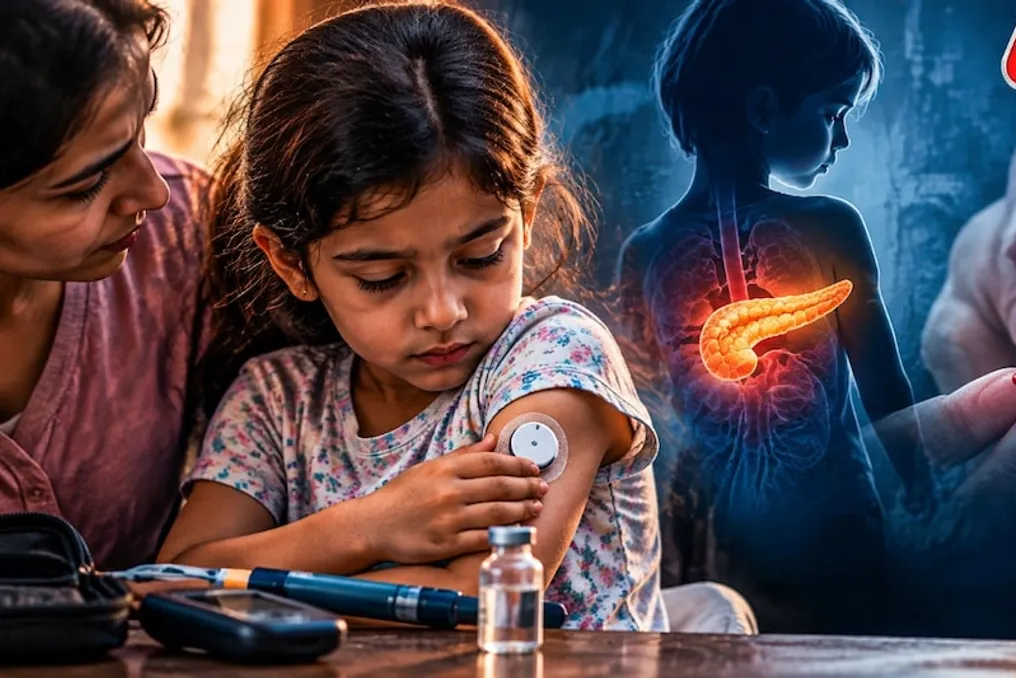
Previously, it was believed that Type 1 diabetes in children arose from heredity or genetic factors. However, a recent medical study has revealed another significant cause that can increase the risk of developing this disease in childhood threefold. This new cause is related to disturbances in the intestinal bacterial flora.
According to data from the Indian Council of Medical Research (ICMR) and the International Diabetes Federation (IDF), approximately 95,600 to 100,000 children under 14 years old in India suffer from Type 1 diabetes. The study, published in the journal 'Nature Metabolism', showed that an imbalance in the gut microbiome directly increases the probability of Type 1 diabetes by three times.
Researchers found that children whose microbiome stopped developing early had approximately three times higher risk of Type 1 diabetes compared to those whose microbiome continued to develop.
The gut microbiome is a collection of bacteria and viruses living in the intestines that help digest complex carbohydrates and fiber that the body cannot break down on its own. Furthermore, these microorganisms synthesize Vitamin K and some B vitamins, and they strengthen the body's immunity. It is noteworthy that about 70% of the human immune system is formed in the gastrointestinal tract.
As the child grows up, these bacteria teach their immune system how to resist external viruses and bacteria, as well as how to protect their own organs. If for any reason the number of beneficial bacteria decreases and the number of harmful ones increases, this entire training of the immune system is disrupted, leading to an increased risk of developing Type 2 diabetes.
The study showed that when the number of beneficial bacteria decreases, the intestinal wall weakens. This condition is called 'leaky gut'. As a result, toxins and incompletely digested proteins can leak from the intestine into the bloodstream. This triggers an alarm reaction in the body's defense system. The immune system, trying to fight these toxins, may mistake them for an enemy and begin attacking its own pancreatic beta cells, destroying them. The consequence of this is a complete cessation of insulin production by the pancreas, leading to the development of Type 2 diabetes.
Several factors contribute to the deterioration of the microbiome: excessive use of antibiotics, consumption of a large amount of ultra-processed foods, distance from nature, and lack of breastfeeding in early life.
Although genetics plays a role in Type 1 diabetes, the risk of its development can be significantly controlled by improving gut health. Parents are advised to feed children homemade fresh buttermilk, idli, and seasonal green vegetables, as this promotes an increase in beneficial bacteria in the gut. The importance of never giving antibiotics without a doctor's prescription is also emphasized. A doctor should be consulted if a child suddenly starts drinking a lot of water, urinating frequently at night, losing weight despite having an appetite, or becoming very lethargic.