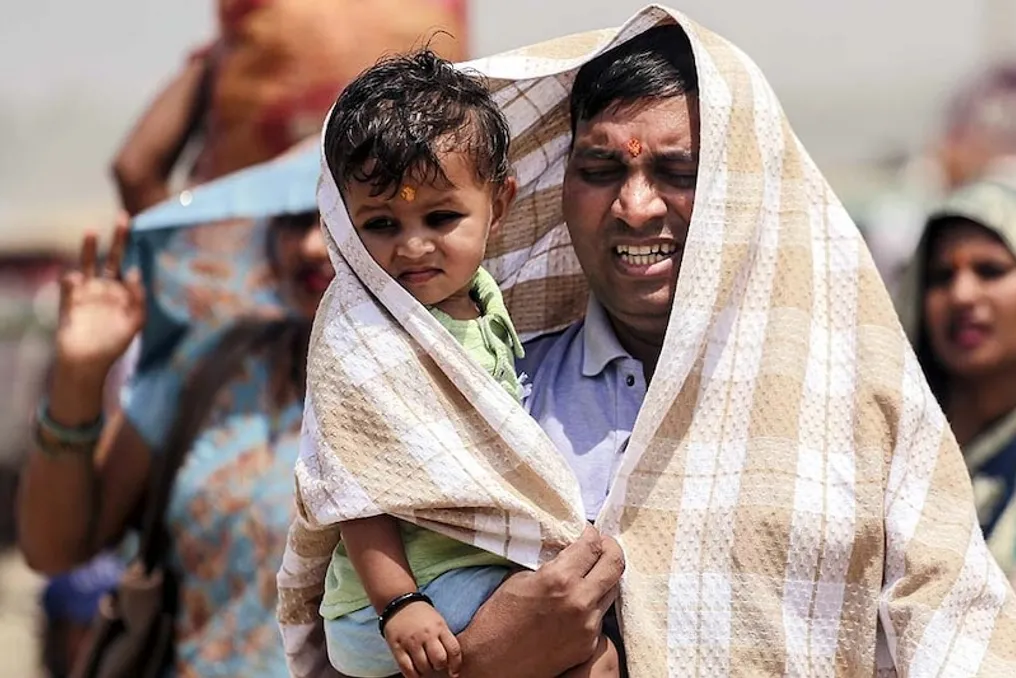
According to a new study of global climate data from 1979 to 2023, heatwaves in many parts of the world are now starting earlier and ending later. Researchers found that over 45 years, the dry season for heatwaves has lengthened by an average of about 39 days.
This study was conducted by scientists from the South China Botanical Garden (SCBG) and the Chinese Academy of Sciences (CAS). The team analyzed data from 1979 to 2023, examining when the first heatwaves began, when the last ones ended, the overall season duration, and the speed at which the first wave reached peak temperature.
The study found that every ten years, the first heatwave started, on average, 3.29 days earlier. At the same time, the last heatwave ended approximately 5.41 days later. Thus, per decade, the heatwave season lengthened by an average of 8.71 days. Between 1979 and 2023, the first heatwave appeared about two weeks earlier, and the last one ended about 24 days later.
Researchers analyzed heatwave patterns in various terrestrial regions worldwide. They identified a trend toward an earlier start of the first heatwave in 72% of land areas and a later end of the last heatwave in 79.6% of areas. The most significant changes were observed in the duration of the heatwave season: a trend toward an increase in the season's length was recorded in 92.1% of the world's land areas. These changes were particularly pronounced in arid regions.
This means that the threat associated with heat can persist for a longer period in many places. If heatwaves used to arrive around a certain time, their season now starts earlier and lasts longer in many regions.
The team also studied how quickly the maximum temperature is reached in the first wave of the season. For this, the first wave was classified as fast, moderate, or slow onset. Between 2001 and 2023, the proportion of first heatwaves with a fast onset increased in areas affected by heatwaves. This indicates that in some places, the first heatwave is now growing faster and reaching its maximum temperature in less time.
Such heatwaves may give people and other systems less time to prepare. According to the researchers, simply looking at temperature increase or heat duration is not enough to understand the danger of heatwaves; it is also important to consider when the wave started and how quickly it intensified.
The lengthening of heatwave seasons also affects agriculture. The study examined the impact of heatwaves on agricultural crops between 2001 and 2023. Special attention was paid to critical phases such as flowering and grain filling, during which the impact of heatwaves on many major crops increased. Crop exposure during these important stages increased from 1.6% to 13.3% in the 2001–2023 period compared to 1979–2000. The impact of heatwaves also increased before and after these crop development phases.
The researchers emphasize that when assessing heatwave risk, it is insufficient to consider only temperature and its duration. It is also necessary to consider when the wave started and ended, as well as the speed at which it reached its maximum temperature. According to the study, incorporating these changes into heat monitoring and early warning systems can help better understand and prepare for threats related to people, agriculture, ecosystem management, and energy supply.