Many Indian film stars, both past and present, have changed their names for filming, and some have achieved great success as a result. The reasons for these changes are diverse, including religious prejudices and superstitions.
The situation began with the emergence of the film industry in the 1930s and 1940s, when Indian cinema transitioned from silent films to sound films. At that time, acting was not considered a respected profession; it was viewed as low-grade entertainment or street theatre compared to more professional dramatic artists.
For women, entering cinema was often equated with a loss of modesty. Men who abandoned traditional professions or respected civil services for acting were considered a disgrace to their families. Although this stigmatization crossed religious boundaries, causing both orthodox Hindu and Muslim families to reject relatives who entered the film industry, for Muslim artists in India before and after independence, the social tension was doubled, as conservative households considered theatrical performance contrary to traditional values.
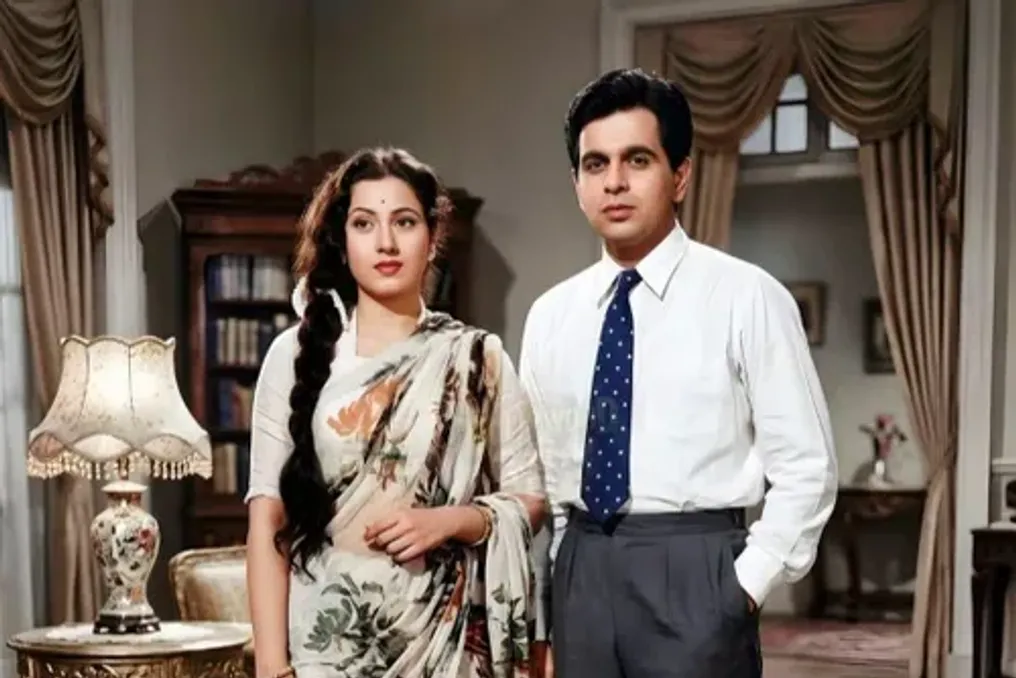
Studio heads, fearing that using their real Muslim names on screen might alienate audiences, encouraged actors to change their stage names. For instance, Mohammed Yusuf Khan adopted the name Dilip Kumar, becoming a legendary actor whom some still consider unparalleled in this industry.
The influential actress and studio head of Bombay Talkies, Devika Rani, suggested three names to Kumar, from which he chose Dilip Kumar, partly to protect his identity from his conservative father, who deeply despised the world of cinema. The name change allowed him to balance private life and burgeoning fame while creating a stage persona that seemed universal for the emerging independent nation.
Around the same time, actress Mumtaz Jahan Dehlavi adopted the stage name Madhubala, also at Rani's suggestion, becoming known as the Venus of Indian cinema. The name Madhubala (meaning 'honeyed child') eliminated the immediate religious marker of her birth name, aligning with the studio's strategy to promote her as an ideal, ethereal beauty to a wide audience.
Another 'drama queen,' Meena Kumari, was born Majhabin Bano. Veteran screen villain Ajit chose one stage name instead of appearing as Hamid Ali Khan. Similarly, actor Zakaria Khan took the stage name Jayant. However, his son Amjad Khan, who became famous for his iconic role as Gabbar Singh in the film Sholay, was among the first in the next generation to retain his real name, as social restrictions and disapproval lessened. His compatriot Feroz Khan did the same as his brothers Sanjay Khan and Akbar Khan.
By the 1980s, the situation had changed so much that many members of the Khan family began appearing before the camera with their real names, achieving great success. The most notable of them were the trio of Khans—Shah Rukh, Salman, and Aamir—who, although not related, created an almost dynastic legacy for the real Khans in the industry.
In the comedy genre, Badruddin Jamaluddin Qazi, a devout Muslim, challenged the Muslim tradition of avoiding alcohol, achieving screen fame under the name Johnny Walker. Director Guru Dutt renamed him Johnny Walker after the famous Scottish whisky due to his convincing portrayal of a drunkard in the film Baazi in 1951. He continued to play similar roles in numerous films with his squeaky voice and drunken mannerisms as comic relief in sometimes even tragic plots.
Another comedian, who was renamed Jagdeep in over 400 films, was born Syed Istiak Ahmed Jaffri. His son Javed Jaffri decided to keep the family surname, bringing his own distinct style of comedy compared to his father.
However, although religious identity was a driving force behind name changes in the early decades, the practice of adopting pseudonyms extended far beyond the dynamics of Hindus and Muslims. Actors with long or regional names adopted more concise pseudonyms.
In South Indian cinema, a bus driver who became a superstar, Rajinikanth, bore the real name Shivaji Rao Gaikwad, while Diana Mariam Kurian became Nayanthara, which translates to 'starry eyes.' In 2011, she officially adopted Nayanthara as her legal name.
One of the few instances where a name change was not inspired by religion or astrology is the case of Akshay Kumar, who was born Rajiv Hari Om Bhatia. After a short scene in the film Aaj Kumar, he discovered that the protagonist's name in the film was Akshay. Driven by a pure impulse in his desire to become a big star, he soon after filming approached the Bandra East court in Mumbai to legally change his stage moniker to Akshay Kumar.
Ajay Devgn was born Vishal Veeru Devgan. In modern Hindi cinema, name changes are sometimes also influenced by superstitions, numerology, or astrology. Actors alter the spelling (for example, by adding extra letters) to attract luck in box office collections. This was the case with Ajay Devgn, who was born Vishal Veeru Devgan and changed his name from Vishal to Ajay for his debut leading role in the film Full Aur Kaante, because three other actors named Vishal were debuting at the same time. Later, at his mother Veena's request and guided by numerologists, he removed the 'a' from his surname to write it as Devgn.
There are many other examples where the story of name changes in Indian cinema reflects the broader journey of Indian society itself. What started as a defensive necessity against social stigma and commercial caution has evolved into a creative choice. Today, although pseudonyms are still created for style or elegance, the era of concealing one's origins to come into the light remains a poignant chapter in the cinematic history of India.