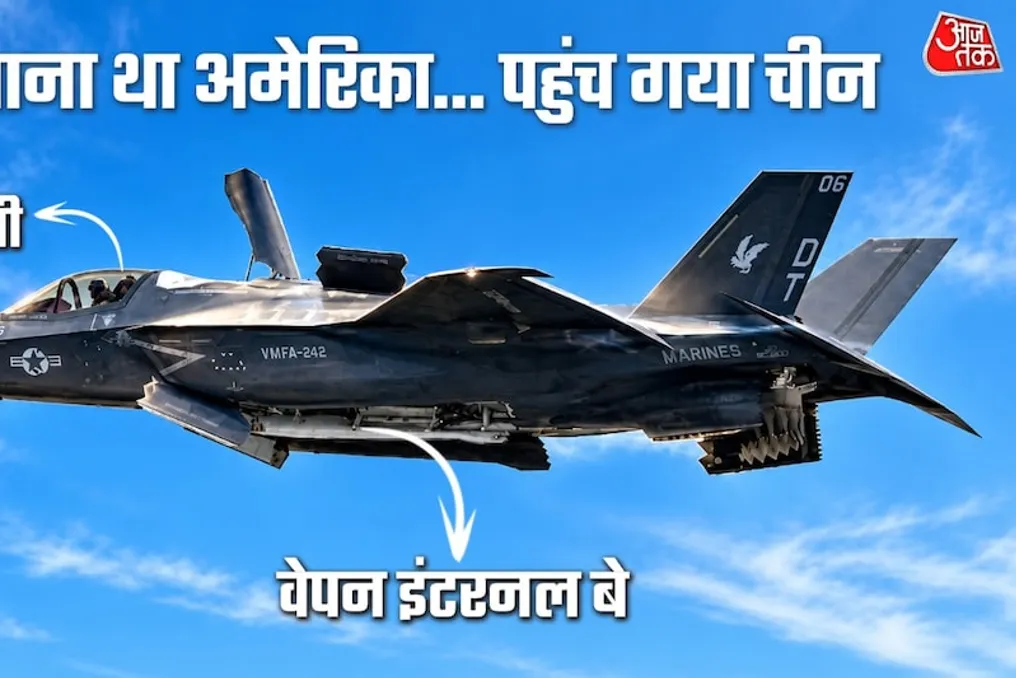
It recently became known that some components of the modern F35 stealth fighter arrived in Hong Kong. The U.S. Department of Defense (Pentagon) and the F35 Joint Program Office acknowledged a shipping issue. They are currently working with American officials and industry partners to recover these parts, investigate the incident, and develop measures to prevent similar errors in the future.
Australian Defence Minister Richard Marles confirmed the arrival of the parts in Hong Kong on Tuesday but stressed that they are non-critical elements. Australia is one of the countries using this aircraft. Marles specified that Lockheed Martin is collaborating on this matter and will primarily handle it themselves.
According to a Bloomberg report, two key F35 components—the canopy and a weapons bay door—were reportedly in China's possession. These parts were originally destined from Australia to the U.S. for repair or disposal but deviated toward Hong Kong for unknown reasons. The cause of this deviation remains unclear.
Previously, Politico reported that this incident prompted Congressional inquiries due to concerns that China might have gained access to critical parts of highly classified technology.
The F35 Lightning II is classified as a fifth-generation fighter. The first unit rolled off the assembly line in Texas about twenty years ago, and over 1,200 such aircraft have been built to date, ordered by 19 nations. This aircraft is equipped with advanced radars, sensors, network integration systems, and stealth coatings, allowing it to better identify adversaries and maintain communication with allied aircraft and ground forces.
Bradley Bowman of the Foundation for Defense of Democracies considers the F35 to be America's best and most advanced fighter. Since U.S. military systems are constantly being updated, old stolen information may not be entirely current.
Nevertheless, experts express concern over the tight control Beijing exerts over Hong Kong. Since its return from British rule in 1997, Hong Kong has no standing army or diplomatic corps, making the arrival of parts there appear almost like direct access for China.
China may have possessed some information previously. A 2013 report by the Council on Defense Science stated that Chinese cyberattacks had stolen data from dozens of Pentagon programs, including the Joint Strike Fighter, although this information pertains to the past.
The current case involves physical components. The cockpit canopy relates to pilot safety and stealth technology, while the weapons bay door is part of the weapon carriage and release system. Even if officials do not deem them 'sensitive,' any part of an advanced aircraft can be valuable for analysis. China could use this data to improve its own aircraft or develop countermeasures.
The question of how the parts could have deviated from their route remains the most significant. Military equipment supply chains are usually under very strict control. The route from Australia to the U.S. is extensive and passes through many points. Errors, mislabeling, or deliberate interference are possible, requiring verification. Lockheed Martin has not yet commented.
No response has been received from the Chinese embassy or the trade representation office in Hong Kong. Interestingly, this news emerged while Chinese President Xi Jinping was visiting Washington on a state visit with President Donald Trump.
This incident not only heightens tensions between the U.S. and China but also calls into question the security of allied supply chains, such as Australia's. The F35 is a joint program of many countries. If parts can easily end up in the wrong place, it could undermine trust among other partners.
The Pentagon now states its intention to strengthen security measures. In the future, improved supply tracking systems, double-checking, and separate protocols for sensitive components may be implemented. Analysts believe that obtaining physical parts could help China study the design, research materials, or discover weaknesses.
Although modern aircraft rely on software, sensor fusion, and continuous updates—which are not revealed by just two parts—any leak is taken seriously as it gives the adversary an opportunity to learn. Overall, this case highlights the security challenges of military hardware, the vulnerabilities of global supply chains, and the rivalry between the U.S. and China. While the investigation is ongoing, the full picture is unclear, but the Pentagon and allies are focused on minimizing damage and preventing future incidents. The balance between transparency and security in programs like the F35 has become even more crucial.