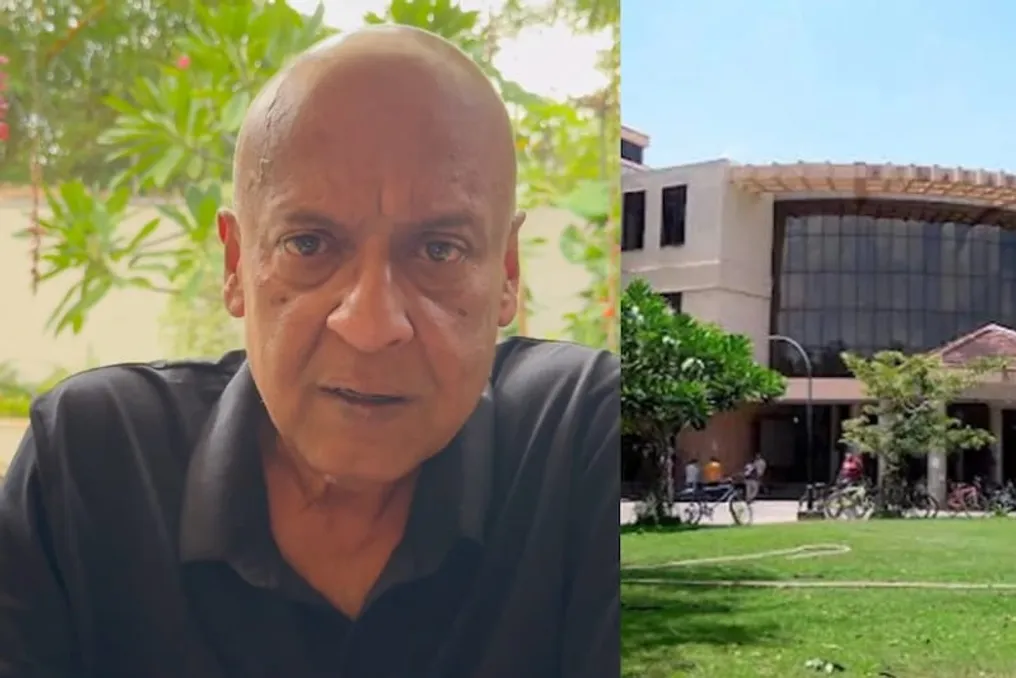
A former IIT Madras student, Ramesh Srivastava, shared his experience and described the reality of campus life in the 80s, revealing the existence of an implicit caste system.
His statement, recently made on the social platform X, attracted attention, especially against the backdrop of recent unrest at IIT Bombay following the suicide of student Sahil Wakode, whose relatives filed a police complaint alleging caste harassment against Professor Suryanarayan Dulla. In this context, Srivastava explained how an 'invisible caste system' (hierarchy) functions within the institutes, which, although not social, can cause severe stress to students.
Srivastava noted that when he enrolled at IIT Madras in the 80s, social or family background was not discussed; however, there were unspoken levels of competition and discrimination. Immediately upon arrival, the 'caste' was determined by JEE exam results: students with single-digit and high ranks were considered representatives of the 'upper caste,' while others were 'lower.'
Six months after admission, the influence of 'department pride' began. The ranking of departments was as follows: Computer Science (CSE) was at the top, followed by Electronics, Electrical, Mechanical, and the rest of the specialties were at the bottom.
Srivastava recalled an instance where he failed physics in his first year and sought consultation from a professor during the summer course with a friend. The professor asked him about his department, to which Srivastava replied that he was studying Computer Science. The professor expressed surprise, asking what he was doing there. Then the professor asked the friend, who replied that he was studying metallurgy. The professor immediately joked: 'Well! Then you have a good reason to be here!'
By the second and third years, the hierarchy became more complex and intertwined with the GPA system. According to Srivastava, this was assessed not just by the number of points obtained but in two categories. The 'Genius' group consisted of those who achieved high GPAs without putting in much effort or studying at all, and they were considered the 'supercaste.' Another group, the 'Cash Cow,' comprised those who achieved high GPAs through diligent cramming and studying. Meanwhile, there were those who received low grades despite hard work, and at the very bottom were those who engaged in neither studying nor scoring. Srivastava humorously placed himself in this last group.
By the fourth year, neither the ranking nor the GPA mattered. The real 'caste' was determined by where the student planned to go: to a university in America, to receive an invitation to IIM, or to join a major tech company. Srivastava remembers how one of his classmates, who enrolled in an American university, threw a party, and they joked that he had acquired an 'American accent' as soon as he left the limits of Madras.
He concludes his story with a profound observation: the worst aspect of this 'invisible caste system' of his time was that people ignored this hierarchy. However, a positive aspect was that it changed annually and was not predetermined by family or birth. Nevertheless, the current grim reality is that this unspoken race, based on 'rank, GPA, and department' from the 80s, has reached a fatal threshold of social recognition and mental distress, where young people are ready to commit suicide. The question arises: when will this suffocating competitive culture in IIT end?