India achieves historic victory over Pakistan in the final of the first ICC World Twenty20
Read more
Aaj Tak
www.aajtak.in

India achieves historic victory over Pakistan in the final of the first ICC World Twenty20

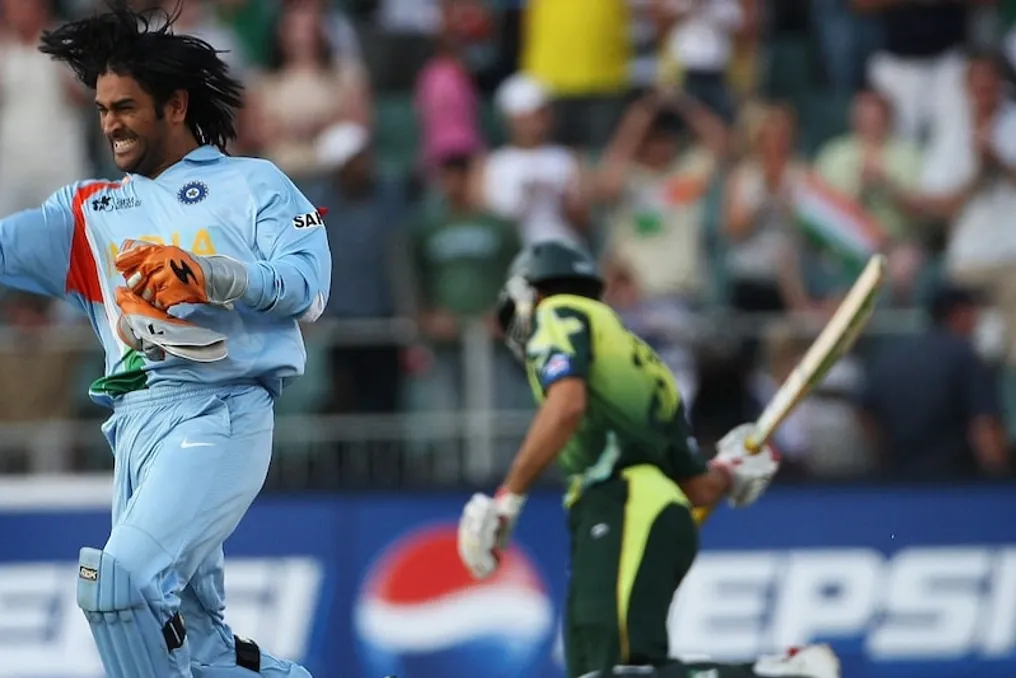
September 24, 2007, became an unforgettable day in the history of Indian cricket. It was on this day, 19 years ago, that India and Pakistan met face to face in the final of the first ICC World Twenty20, held in South Africa. The match was extremely tense, and ultimately India defeated Pakistan, winning the T20 World Cup title for the first time.

At the Wanderers Stadium in Johannesburg, the Indian team, having won the toss, started the game. Although the beginning was not the most successful, Gautam Gambhir demonstrated brilliant play, scoring 75 runs off 54 balls. Rohit Sharma also played quietly, scoring 30* runs without getting out. India scored a total of 157/5 runs in 20 overs, setting a target of 158 runs for Pakistan. On the Pakistani side, Umar Gul took the most wickets, claiming 3 wickets.

When Pakistan came out to chase the victory, they began losing batsmen against the Indian bowling. Pakistan's first wicket fell at 2 runs when Mohammad Hafeez was dismissed, having scored only 1 run. Imran Nazir showed powerful batting, scoring 33 runs off 14 balls. After Nazir's innings, Pakistan's game faltered; at one point, the team's score was 77 runs with 6 wickets down, and India's victory seemed almost inevitable. However, Misbah-ul-Haq did not give up and managed to boost Pakistan's hopes by hitting 3 sixes off Harbhajan Singh's over.

The situation changed drastically in the last over of the match. Pakistan needed only 13 runs to win. Joginder Sharma was given the responsibility for bowling. Joginder's first delivery was a wide. Misbah played defensively to the second delivery. But on the very next ball, Misbah hit a six off a full toss. Now Pakistan needed to score 6 runs from 4 balls. Then Misbah decided to play a scoop shot. The ball went into the air, and Shrisant caught it. The Indian team rejoiced, and Pakistan's innings ended at 152 runs.

India defeated Pakistan by a margin of 5 runs, starting a new era for Indian cricket. The young team, led by captain Mahendra Singh Dhoni, made history in their first T20 World Cup. The last ball and Shrisant's catch are still considered one of the most memorable moments in Indian cricket. For India, Ar P Singh and Irfan Pathan took 3 wickets each, and Joginder Sharma took 2 wickets. Irfan Pathan was named 'Player of the Match' for his performance, and Shahid Afridi was awarded 'Player of the Tournament'. After winning the 1983 World Cup under Kapil Dev, India won its second World Cup 24 years later under Dhoni.
Similar stories

Test match between India and Australia in Chennai in 1986 ended in a draw after dramatic final moments
Read more
www.aajtak.in

Test match between India and Australia in Chennai in 1986 ended in a draw after dramatic final moments

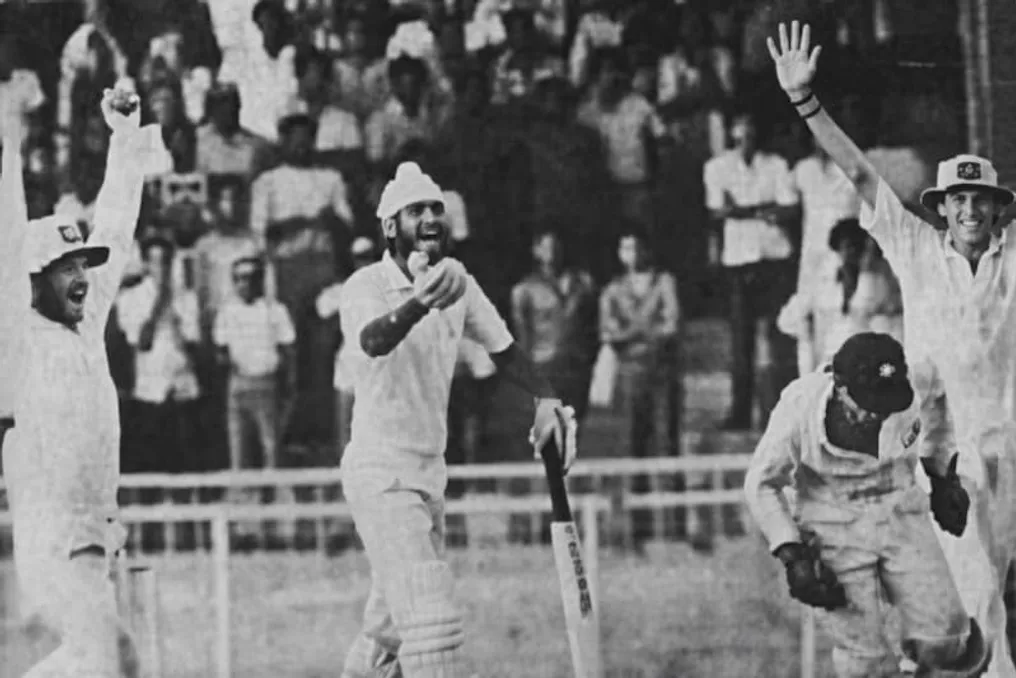
There are matches in cricket whose tension lasts until the very last ball. One such moment occurred 40 years ago, on September 22, 1986, when the second Test match of the series between India and Australia, held in Chennai (then Madras), ended in a draw, and the drama of the final days is still vivid in the memories of cricket fans.

Australia took the initiative first by winning the toss and secured a substantial victory in the first innings, scoring 574/7 runs. Among the Australian players, David Boon stood out with 122 runs, Dean Jones with 210 runs, and Allan Border with 106 runs. In response, the Indian team managed to score only 397 runs in the first innings. The best player for India in this innings was Kapil Dev, who scored 119 runs. Additionally, Mohammad Azharuddin (50 runs) and Krishnamachari Srikkanth (53 runs) reached half-centuries.

In the second innings, Australian captain Allan Border declared the innings closed, adding another 170 runs, setting a target of 348 runs for India. India needed to reach this target in 87 overs.

Initially, the Indian team pursued the target confidently. At tea, India's score was 190 runs for the loss of two batsmen. After that, the team approached victory. India lost 6 batsmen at a score of 330 runs, and only 18 runs were needed for victory.

At that moment, it seemed that India would easily win. However, Australian bowler Ray Bright drastically changed the course of the match. In the next over, Bright dismissed two batsmen, and suddenly the possibility of all possible outcomes arose: victory, defeat, a draw, or a tie.

After this, Shivlal Yadav helped India get closer to victory by hitting a powerful six off Greg Matthews' bowling. But Bright got him out. India's score reached 344/9. Only 4 runs remained, and there were 8 overs left.

Ravi Shastri and Maninder Singh were on the field. Maninder Singh was the last batsman in India's batting order. He faced Bright's over, and the right to bat passed to Ravi Shastri in the final over.

India needed 4 runs to win. Ravi Shastri scored 2 runs off the second delivery of the final over. Then, on the third delivery, he scored one run and passed the strike to Maninder Singh. With this single run, the possibility of India losing disappeared, but 3 more runs were still needed for victory. Greg Matthews was bowling, and Maninder Singh was on strike. Matthews had three deliveries to finish the match.

Matthews dismissed Maninder Singh. Matthews got him out LBW on the penultimate delivery of the match. India's hope of victory faded, and the match ended in a draw. In the second innings, the Indian team showed better play, with Sunil Gavaskar scoring the most runs—90.

Players from both teams were awarded 'Player of the Match' awards. Kapil Dev received this award for scoring 119 runs for India, while Dean Jones from the Australian team received it for his double century in the match.

Thus, in the history of Test cricket, a match was recorded where the scores of both teams were absolutely equal. This thrilling finale in Chennai is still considered one of the most memorable moments in cricket.

Abhishek Sharma scores a hundred in match against Afghanistan; father speaks about his meditative celebrations
Read more
www.aajtak.in

Abhishek Sharma scores a hundred in match against Afghanistan; father speaks about his meditative celebrations

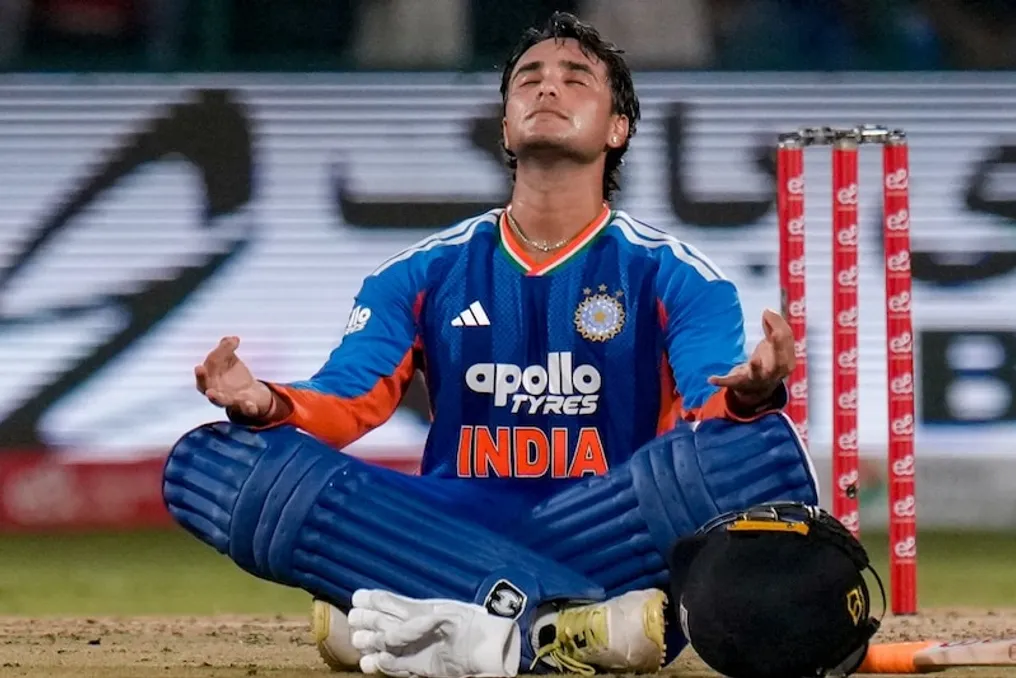
In the third T20 International match between India (IND) and Afghanistan (AFG) in Delhi, at Arun Jaitley Stadium, India secured a convincing victory with a score of 127 runs. This win allowed India to sweep the three-match series 3-0. The main hero of this match was Abhishek Sharma, who achieved a historic feat by reaching a century in just 30 balls.

India started the game by scoring 221 runs in 20 overs. Abhishek Sharma demonstrated incredible batting, scoring 108 runs off just 34 balls. His performance was supported by Sanju Samson, who also scored 50 runs, helping the team build a strong foundation. Following this, Indian bowlers restricted Afghanistan to only 94 runs in 14.1 overs.

This triumph marked Abhishek's third century in T20 Internationals. It was the fastest century among Indian players in T20 Internationals, as well as the fastest century among full member players in T20 Internationals. Overall, it is his third fastest century in the history of T20 International cricket.

During the celebration of the victory, Afghanistan captain Ibrahim Zadran joined the Indian team and captain Shreyas Iyer. In the match, Afghanistan managed to score only 94 runs, with Ibrahim Zadran scoring the most points—25. Indian bowlers, such as Nitish Kumar Reddy and Ravi Bishnoi, showed outstanding play, each taking three wickets, while Axar Patel also added two wickets.

The victory by 127 runs concluded the series, which India won 3-0. Earlier, India had won the first two matches of the series, achieving a major victory in the third match.

After the game, Abhishek's father, Rajkumar Sharma, told PTI in an interview that his son possesses a huge passion for training, which prevents him from paying attention to anything else. He noted that he invited his son home, but he did not come because his achievements are the result of diligent training and hard work.

Rajkumar expressed hope that Abhishek will continue to play in the same spirit and maintain this energy to keep winning matches. He also mentioned that his son meditates a lot, waking up at 4 am, which helps him maintain high concentration. Regarding the viral celebration, he said that if he did it on premises that are a temple or gurdwara, then it is very good, and he wishes that God continues to bless him and help him deliver similar performances in the future.

India defeats Pakistan 19-0 in Women's U-17 Asian Championship quarter-final
Read more
www.aajtak.in

India defeats Pakistan 19-0 in Women's U-17 Asian Championship quarter-final

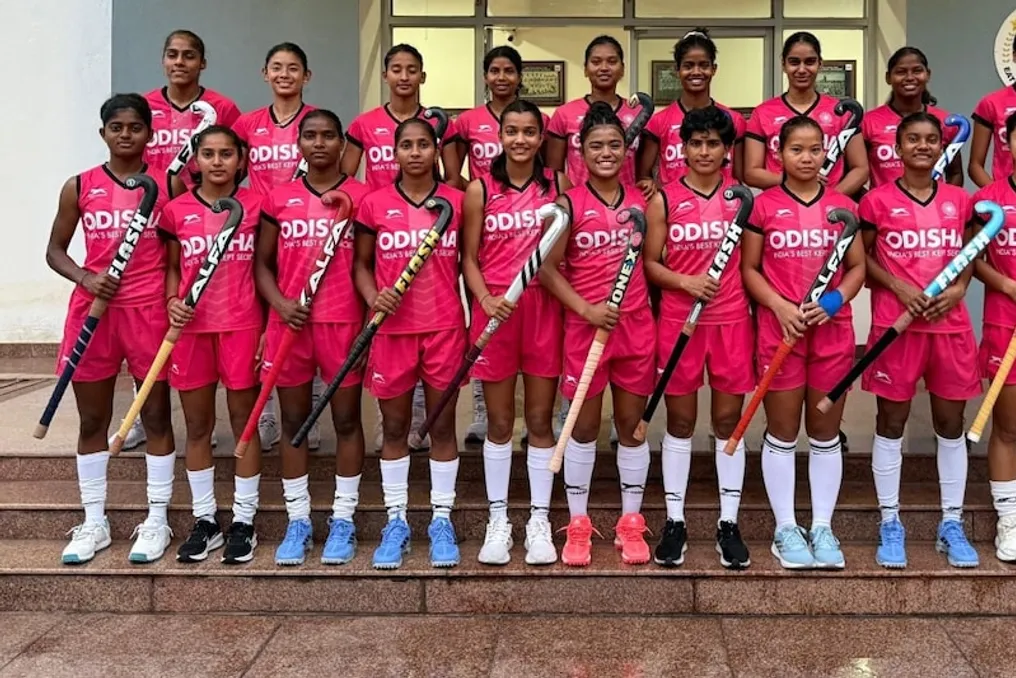
The Indian team continues to demonstrate impressive play at the 2026 Women's U-17 Asian Championship. In the quarter-final held in Moji, China, on Thursday (September 10), the Indian squad secured a convincing victory over their long-time rival Pakistan with a score of 19-0.

Pooja Malik scored the most goals in the match with three goals (in the 27th, 49th, and 51st minutes). Other players also contributed: Chandrakant Sanika Mane scored twice (in the 13th and 23rd minutes), Madhu Sidar (in the 16th and 39th minutes), Supriya (in the 40th and 54th minutes), and End Roshni (in the 9th and 60th minutes).

Additionally, Pooja Sahu (in the 7th minute), Dinesh Tunshri Kadu (in the 11th minute), Sukhvir Kaur (in the 13th minute), Gita Yadav (in the 18th minute), Tanuja Toppo (in the 25th minute), Purnima Yadav (in the 33rd minute), Krishna Sharma (in the 48th minute), and Bimina Dhan (in the 55th minute) each scored one goal.

In the semi-finals, India will face the winner of the fourth quarter-final between Malaysia and Korea. These semi-final matches are scheduled for September 12.

During this match, India's dominance was absolute, while the Pakistani athletes were unable to offer any resistance. In the first two quarters, India scored 10 goals, allowing them to go into halftime with a 10-0 lead. In the third quarter, Pakistan managed to ease the pressure slightly, but India only scored three goals. The final quarter was even more prolific for India, as the team netted six goals. Of these seven goals scored from penalties, seven were converted from corners, and two from free kicks. India scored the remaining 11 goals through open play.

India and China finished the elite pool stage with an equal number of points—10 points. However, due to a better goal difference, India ranked first in the elite pool. The Indian team won against Japan, Korea, and Malaysia, while the match against China ended in a draw. As for the Pakistan team, they earned seven points after playing four matches in the challenger pool, finishing in third place. In the challenger pool, Bangladesh took first place, and Kazakhstan took second.

This tournament is the tenth edition of the Women's U-17 Asian Championship. The Indian squad is the reigning champion. In 2024, at the competition held in Muscat, India won the title for the second consecutive time, defeating China. South Korea is the most successful team in this tournament, having won it four times (in 1992, 1996, 2000, and 2008). China has also achieved success, winning the title three times (in 2004, 2012, and 2015).

Popular