Zoho Co-founder Sridhar Vembu Discusses 'Ubiquitous Intelligence' Concept at TechSparks 2026 Event
Read more
YourStory [india, en]
yourstory.com

Zoho Co-founder Sridhar Vembu Discusses 'Ubiquitous Intelligence' Concept at TechSparks 2026 Event

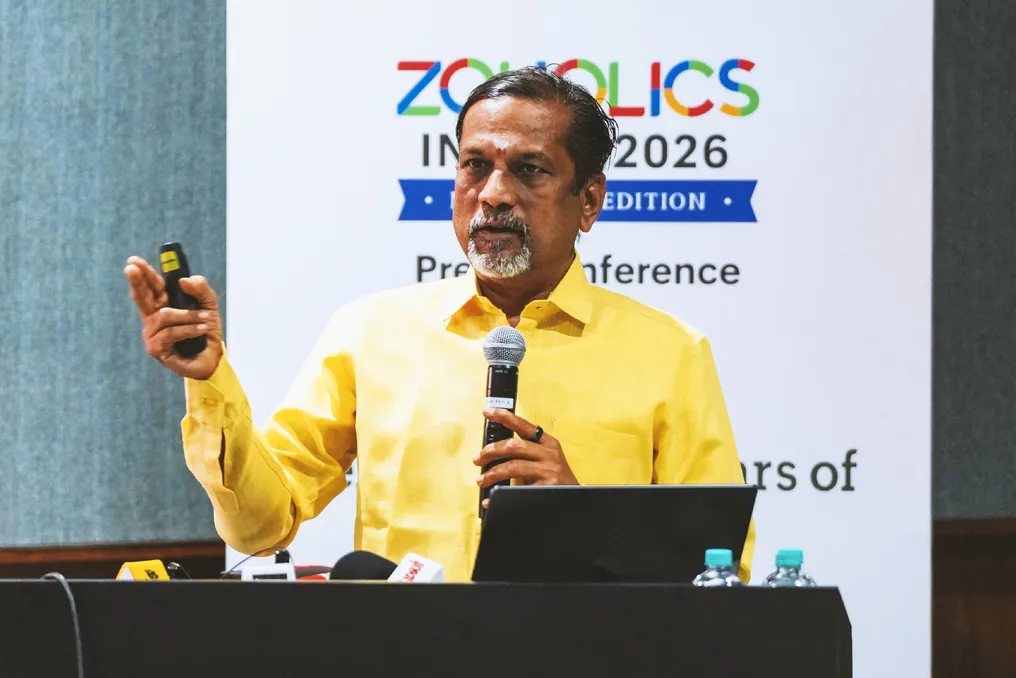
At the annual Zoho Zoholics event in Chennai, Zoho co-founder Sridhar Vembu shared his vision of 'ubiquitous intelligence.' He emphasized that instead of viewing artificial intelligence solely as a separate interface or 'superintelligence,' one should consider that 'the user interface is the new AI.'

According to him, embedded intelligence must seamlessly integrate into various workflows, applications, and business contexts while adhering to strict privacy rules. During the event, Zoho introduced the Zia Chat interface, which unifies data across systems and optimizes token efficiency to maintain affordable costs.

Furthermore, Zoho announced an expansion into the vertical SaaS sector, offering seven solutions tailored to the specific operational and regulatory requirements of different industries.

Discussion on AI and Technological Regulation

Vembu expressed skepticism regarding calls from global tech companies to slow down AI development. He stated that these companies have the freedom to reduce the pace but cannot demand it from the entire industry. In his view, global AI companies seek for others to slow down so they can grow faster and monopolize the market.

Concurrently, US President Donald Trump opposed international efforts to introduce stricter controls over technology. During his speech at the United Nations General Assembly in New York, the US President also stated that the country would refer to artificial intelligence as 'Superintelligence,' because the word 'artificial' makes this technology seem less real than it actually is.

Information on TechSparks 2026

The TechSparks 2026 conference, a flagship event by YourStory, will take place in Bangalore from October 13 to 15 under the theme 'The New Technological Order.' The event focuses on how artificial intelligence, deep technologies, and next-generation infrastructure are transforming technology development, market speed, enterprise scaling, and public administration.

Speakers from various sectors—government, academia, technology, finance, space exploration, clean energy, and venture capital—will gather at the conference to explore the future of India's entrepreneurial ecosystem.
Similar stories

When and how to use new Gen Z slang words: From Rizz to Mogging
Read more
www.aajtak.in

When and how to use new Gen Z slang words: From Rizz to Mogging

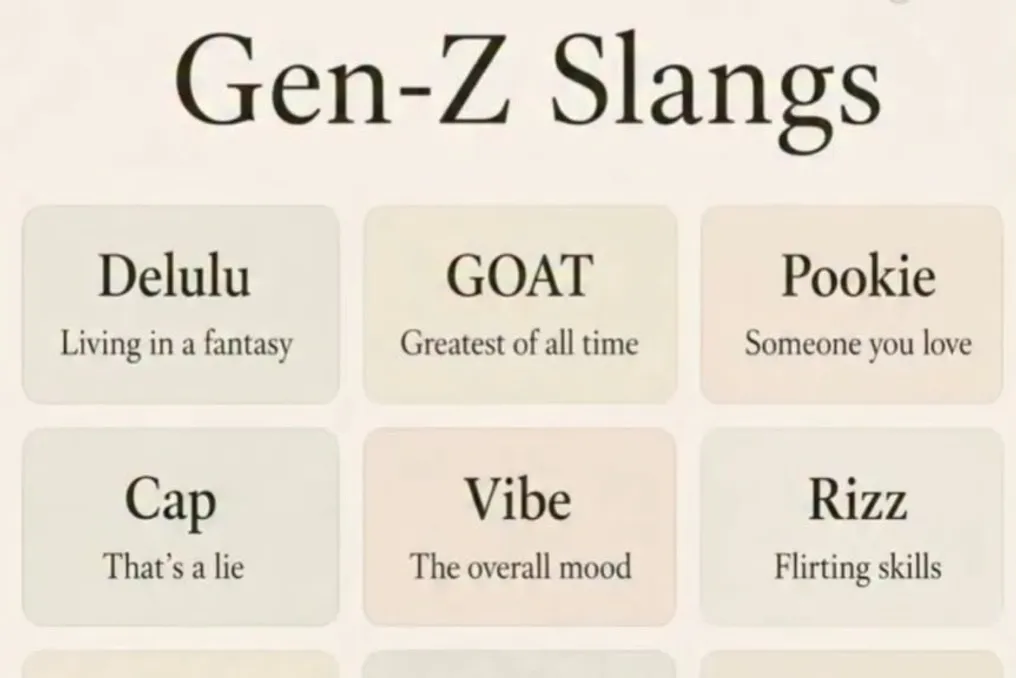
The communication of Generation Z features numerous new words that may be unfamiliar to those hearing them for the first time. Internet culture, memes, music, and social media have significantly altered the language of this generation. Slang expressions such as Rizz, Drip, No Cap, Ate, and Left No Crumbs have moved beyond being purely online terms and have become part of casual conversations among friends. These words are characterized by their ability to convey a complete reaction using just a few words instead of long explanations.

Rizz: When it comes to charm

The word Rizz is used to describe someone's ability to flirt or attract attention. If a person can impress a conversational partner without much effort, they are said to have 'Rizz'. For example, the phrase 'He made her laugh in two minutes, he has Rizz' means it applies to charisma, confidence, or flirting skills.

Drip: When the look is flawless

Drip is used to describe stylish and fashionable clothing or a person's overall appearance. If an outfit looks very impressive, one might say: 'Look at his Drip.' This expression is primarily used in the context of fashion, clothing, and personal style, for instance: 'His Drip today is fire.'

No Cap means absolute truth, stated without hesitation or embellishment. When Gen Z says 'No Cap,' it implies that what is being said is sincere, without lies, doubt, or exaggeration. It is used to emphasize the truthfulness of one's statement or to present something completely openly. For example: 'No Cap, I saw the best movie of my life.'

Ate: When someone exceeded expectations

If someone performs, showcases an outfit, gives a speech, or accomplishes something exceptionally brilliantly, Gen Z might say: 'She ate.' Here, 'Ate' does not mean 'to eat,' but rather signifies performing something at the highest level. Example: 'She performed so well on stage, she ate!'

Left No Crumbs is a stronger form of 'Ate.' It means that a person handled something so wonderfully that there were no flaws in their work. (In other words, they succeeded completely). Example: 'Her look on the red carpet? She ate and left no crumbs.'

Mogging: When someone overshadows everyone else

The word Mogging is used when one person significantly surpasses another in comparison regarding appearance, physique, style, or overall charisma. In social media, this is often seen in internet battles and comparisons based on looks. For example: 'He outshines everyone in this photo.'

Skibidi: Random internet atmosphere

Skibidi does not have one fixed meaning. It became popular through internet memes and is most often used to humorously describe some random, strange, or chaotic situation. If a friend suddenly behaves very unusually, you might ask: 'What was that Skibidi moment?' This sounds more natural in informal, meme-style conversations.

The main rule of slang is context

The enjoyment of Gen Z slang lies not only in memorizing these words but also in knowing how to apply them in the appropriate context. It is not necessary to insert Rizz, Drip, or Ate into every conversation. Although the popularity of these words originated from internet culture, their correct usage is only possible when they organically fit the situation. Thus, Gen Z is not just changing its vocabulary; it is transforming the very approach to expressing thoughts.

Uzbekistan Telecommunications Center and Azerbaijan's IDDA Discuss Digital Cooperation
Read more
uzdaily.uz

Uzbekistan Telecommunications Center and Azerbaijan's IDDA Discuss Digital Cooperation

The Uzbekistan Telecommunication Network Management Center and the Agency for Innovation and Digital Development of Azerbaijan (IDDA) held discussions on prospects for interaction in the field of digital technologies, as reported by the central structure itself.

The meeting took place on September 9, 2026, as part of the GITEX AI 2026 event. The parties focused their discussion on cooperation in the area of digital transformation of the telecommunications sector, the application of artificial intelligence and data analysis, the creation of digital platforms, as well as on training and professional development of specialists.

Particular attention was paid to the use of artificial intelligence and data analytics solutions for monitoring telecommunication networks, detecting deviations, analyzing information, and forecasting. Participants also exchanged experience in developing digital government platforms and discussed possibilities for implementing joint technological projects.

Javidan Feyziev, Director of the Business and Trade Development Department of IDDA, and Taleh Karimli, Director of the agency's Innovation Ecosystem Department, participated in the negotiations. Following the talks, the parties confirmed their interest in further experience exchange and the development of partnerships in the fields of artificial intelligence, digital technologies, and telecommunications infrastructure.

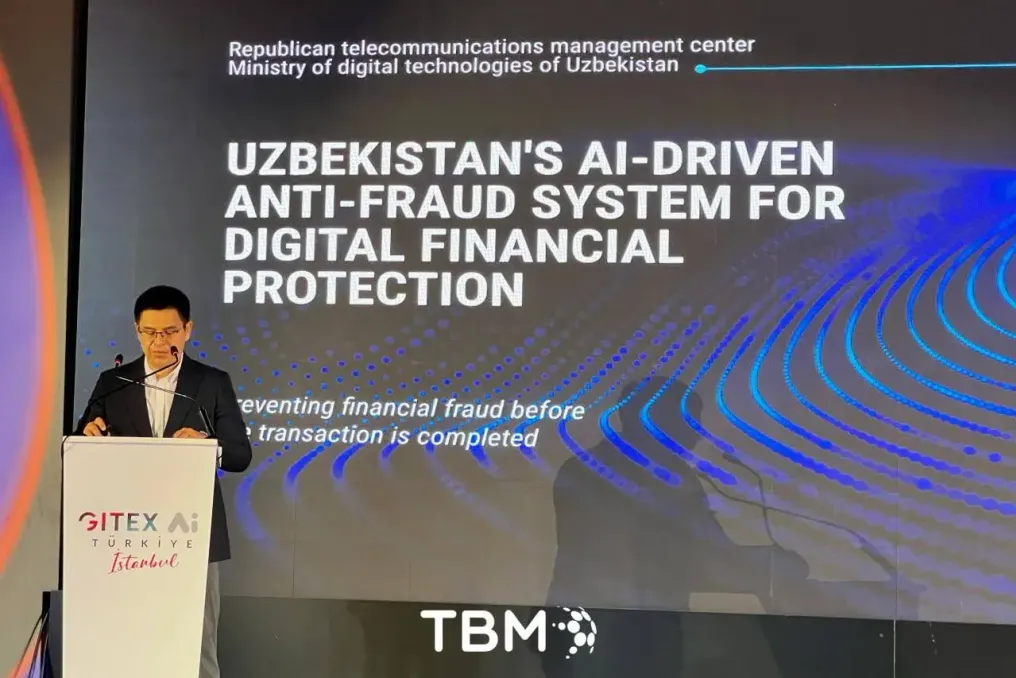
As part of the business program of GITEX AI 2026, specialists from the Uzbekistan Telecommunication Network Management Center also participated in the forum's events. Aziz Kayumov, Head of the Department of Fraud Prevention in Banks and Payment Organizations, presented a report on practical methods and technological solutions for combating fraud.

Popular