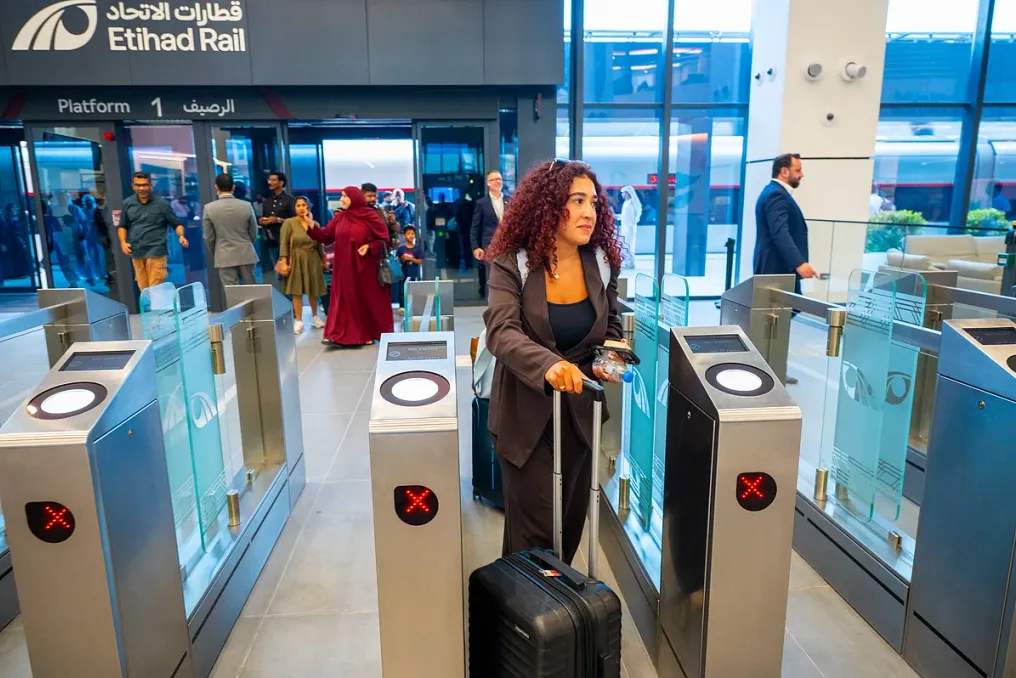
How Etihad Rail integrates with the Dubai Metro Red Line
Read more
Khaleej Times
www.khaleejtimes.com

How Etihad Rail integrates with the Dubai Metro Red Line

A unique connection has been established between Etihad Rail and the Dubai Metro, allowing passengers to combine trips on inter-emirate trains with the use of Dubai's Red Line network. Starting September 30th, Etihad Rail will begin operations from Dubai, and passengers arriving at the Dubai Al Yalayis station can transfer to the Red Line metro in the Jumeirah Golf Estates area. From this station, they can travel around the city to various destinations without using a private car.

Dubai residents can take the metro to Jumeirah Golf Estates and then transfer to Al Yalayis station to board a train heading to Abu Dhabi or Fujairah. A check conducted by Khaleej Times using Google Maps showed that these two stations are approximately 1 km apart.

Dedicated Pedestrian Walkway

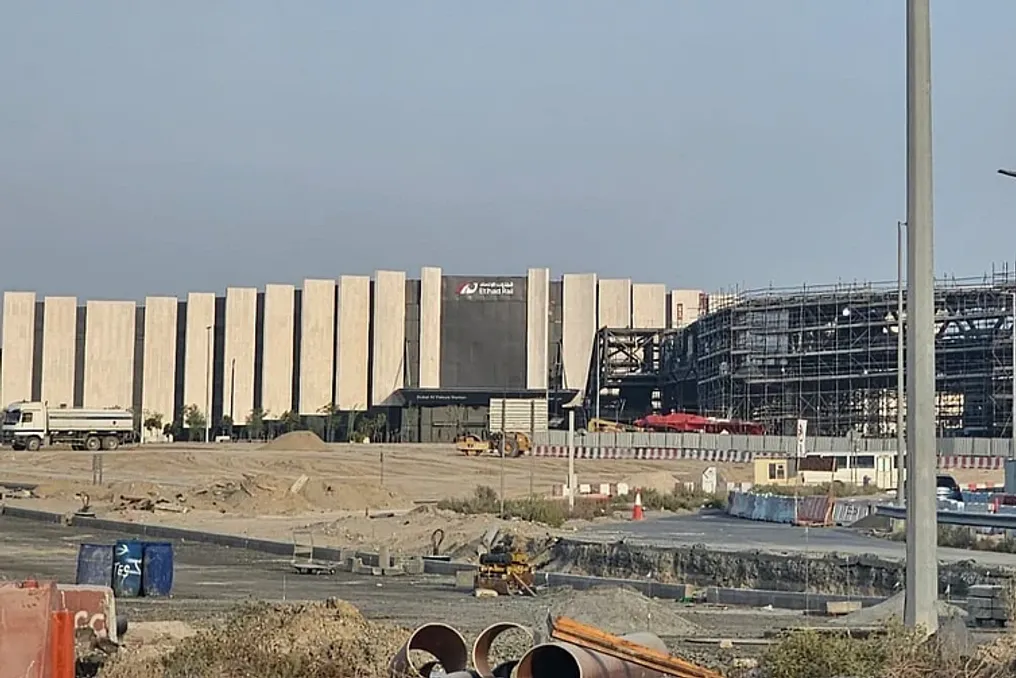
This was recently announced by Mattar Al Tayyar, CEO and Chairman of the Executive Council of the Roads and Transport Authority (RTA) of Dubai. He confirmed that a special pedestrian bridge is being constructed to directly connect Al Yalayis with the Jumeirah Golf Estates metro station. Al Tayyar noted that the authority is working jointly with Etihad Rail to simplify the transfer process as the national railway integrates with the Dubai metro network.

When Khaleej Times visited the site previously, a long steel pedestrian structure leading from the Etihad Rail station to the underground metro station could be seen. At the time of the visit, work was ongoing on building the pedestrian crossing, station access zones, and landscaping.

Where Does the Metro Connection Lead for Passengers?

The Jumeirah Golf Estates station is located on the Dubai Metro Red Line, providing passengers transferring from Etihad Rail access to some of the city's most well-known business, tourist, and residential areas. From Jumeirah Golf Estates, passengers can move towards stations serving locations such as Dubai Marina, Dubai Internet City, Mall of the Emirates, Burj Khalifa/Dubai Mall, Business Bay, Dubai World Trade Centre, and Dubai International Airport Terminals 1 and 3. In the opposite direction, the line continues towards Dubai Investment Park and Expo 2020.

Travel options extend beyond just the Red Line. At the Union and BurJuman stations, passengers can transfer to the Green Line, allowing them to reach areas like Gold Souq, Al Ghubaiba, Dubai Healthcare City, and Creek. Furthermore, from the Red Line, one can connect to the Dubai Tram, which serves areas including Dubai Marina, Jumeirah Beach Residence, Media City, and Al Sufouh, as well as the Palm Jumeirah tram stop. According to the RTA rail map, Metro-Tram interchange hubs are located at Sobha Realty and DMCC.

Thus, for someone arriving in Dubai via Etihad Rail, the journey does not necessarily end at Al Yalayis. After transferring at Jumeirah Golf Estates, they can continue traveling across much of the city by train, avoiding the need for a private car.

Station Designed for High Passenger Flow

Jumeirah Golf Estates is not just a small metro stop in a quiet area. When RTA opened it in September 2021, the authority described it as the largest underground station in the Dubai Metro network. The station covers an area of 28,700 square meters and is designed to handle 11,555 passengers per hour during peak times and about 250,000 passengers daily. It is also equipped with four bus stops, 20 taxi stands, 400 public parking spaces, and 20 accessible spots for people with disabilities.

More Integration in the Future

The physical metro connection is part of a broader plan to ensure seamless journeys on Etihad Rail from start to finish. Etihad Rail is working on ways to allow passengers to plan routes combining the national railway with the metro, buses, taxis, ride-hailing services, and other first and last-mile transport modes. Ultimately, this could lead to fewer individual steps when planning and undertaking journeys across different transport networks.

Integration may also affect ticketing. In 2024, RTA and Etihad Rail signed an agreement whereby RTA will develop solutions for purchasing tickets and paying fares through its nol system. This agreement was presented as the first step in a joint venture between the two entities. The announcement did not specify a concrete date for implementing nol payments on Etihad Rail.
Similar stories

Etihad Rail Network Updates: Dubai Station Opening, Metro and Abu Dhabi Airport Connectivity
Read more
www.khaleejtimes.com

Etihad Rail Network Updates: Dubai Station Opening, Metro and Abu Dhabi Airport Connectivity

With the upcoming opening of the Etihad Rail station in Dubai in a few weeks, numerous updates have emerged regarding the country's national railway network. The long-awaited station, located in Al Yaylais, will connect the emirate with stations in Abu Dhabi and Fujairah, which began operating earlier this year.

Five key changes concerning the development of rail transport have been revealed. The Roads and Transport Authority (RTA) of Dubai confirmed the possibility of a second Etihad Rail station in the emirate, adding to the already confirmed 11 stations. Although the location of this potential station has not yet been announced, the Dubai railway network map for 2032, published in April, indicates its placement in Meydan. This station will be integrated with the future Dubai Gold Line Metro, which is planned for completion in 2032.

Additional details were presented this week about the planned high-speed train between Dubai and Abu Dhabi. According to RTA data, this high-speed service will have two stations in Dubai: one at Al Maktoum International Airport and another at Al Jaddafah. While exact launch dates are not available, it will reduce travel time from Dubai to Abu Dhabi to 30 minutes. Whereas regular Etihad Rail trains operate at a speed of 200 km/h, the high-speed service will run at 350 km/h.

Dubai is working to ensure seamless connectivity between Etihad Rail and metro stations. At a press briefing, Mattar Al Tayyar, Director-General and Chairman of the RTA Executive Council, explained how the agency is collaborating with Etihad Rail to simplify passenger movement. A special pedestrian bridge is being constructed that will directly connect the Etihad Rail station to the Jumeirah Golf Estates Metro station on the Red Line, ensuring smooth transfers.

On Wednesday, Dubai approved a new 80-kilometer Fourth Corridor, which will run from Al Faya Road in Abu Dhabi to Al Shanouf Road in Sharjah. This highway will be connected to Etihad Rail and is expected to reduce travel time by up to 60%, serving over 3.1 million people.

The railway network has entered into an agreement with Etihad Airways to integrate services. Both entities will study the feasibility of dedicated shuttle services between Mohammed Bin Zayed Passenger Station and Zayed International Airport. This will facilitate convenient transfers for passengers between the airport and Etihad Rail. The Memorandum of Understanding signed during the Arabian Travel Market also covers integrated booking options for air and rail tickets.

The Dubai station is scheduled to open on September 30, alongside the Al Daid station in Sharjah. The journey between Abu Dhabi and Dubai will take approximately 57 minutes, reducing travel time by 40%. Passengers will be able to use their existing Nol cards to pay for travel across the entire rail network following the agreement signed between RTA and Etihad Rail in February 2024.

Head of RTA announced plans for Dubai to create a second Etihad Rail station in addition to Al-Yalayis
Read more
www.khaleejtimes.com

Head of RTA announced plans for Dubai to create a second Etihad Rail station in addition to Al-Yalayis

The Head of the Roads and Transport Authority (RTA) stated Dubai's plans to integrate the Etihad Rail network and the future Dubai-Abu Dhabi high-speed train with the city's metro network. These connections will allow passengers arriving in Dubai by train to continue their journey using various metro lines across the city.

Matar Al Tayer, CEO and Chairman of the RTA Executive Council, emphasized that the railway projects will be linked to the city's metro lines. He noted that 'these lines will be connected through these stations to various areas of Dubai.'

Al Tayer added that within the national passenger route, Etihad Rail may have two stations in Dubai. One is Al Yalayis, and the second has not yet been disclosed. Furthermore, Etihad Rail is developing a separate high-speed train between Dubai and Abu Dhabi.

According to Al Tayer, this high-speed service will have two stations in Dubai: one located at Murtahum International Airport, and the other at Al Jaddaf. He also specified that Etihad Rail will play a key role in connecting Dubai with other cities across the UAE.

RTA is collaborating with the railway company to ensure support for the national infrastructure with Dubai's local transport network. Al Tayer believes that the plans of the two structures complement each other, as the metro connections will facilitate passenger movement between Etihad Rail stations, residential areas, business centers, and other destinations without complete reliance on cars or taxis.

These statements were made by Matar Al Tayer during a press conference dedicated to the RailX Dubai conference and exhibition. The event is scheduled to take place at the Dubai World Trade Centre from May 31 to June 2, 2027.

Popular