Sebi plans to balance the derivatives market, emphasizing the complementarity of banks and capital markets
Read more
Business Standard
business-standard.com

Sebi plans to balance the derivatives market, emphasizing the complementarity of banks and capital markets

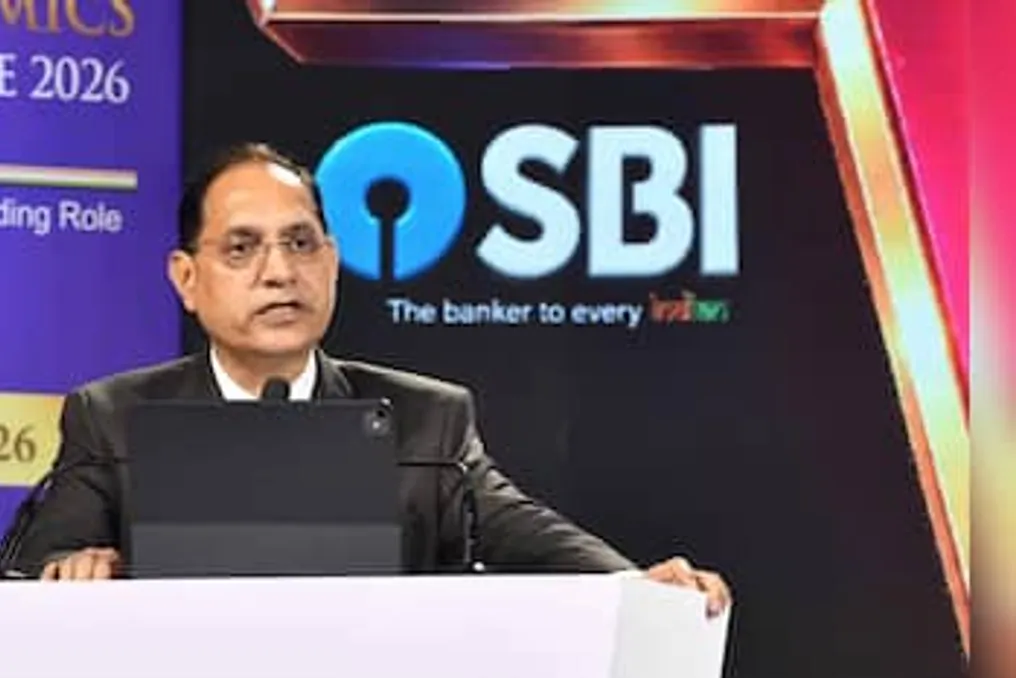
The Chairman of Sebi, Tuhin Kanta Pandey, stated on Wednesday that the Securities and Exchange Board of India (Sebi) is working to make the derivatives market more balanced. These measures are aimed at positive development of the segment while avoiding unnecessary shocks.

These comments came amid persistently high investor losses in the futures and options segment, despite several measures introduced by the market regulator since 2024.

Pandey noted that the derivatives market is extremely important as it serves as a link between the money market and futures. He emphasized that the problem is not that the derivative has only one product, but that there are complexities, especially concerning short-term index options approaching their expiration date. Unfortunately, the market is skewed towards options trading.

He added that the regulator needs to focus on long-term derivatives, futures, and longer-dated stock options. The Chairman also reported that they are considering changes regarding margin requirements and other issues related to long-term products.

Banks and Capital Markets: Complementary Parts of the Ecosystem

During his address at the SBI Banking and Economy Conclave, Pandey highlighted that while banks played a central role in India's development by providing credit, controlling borrowers, building relationships, and financing projects, the economic needs have become more diverse as the economy grows and becomes more complex.

He stated that the question is not whether banks or markets should finance India's growth, but that both elements are needed, and both must be strong. Banks and capital markets are not competing areas; they represent complementary components of a single financial ecosystem. The role of securities markets in this ecosystem has significantly increased over the last decade.

The Sebi Chairman also noted that policymakers will need to consider simplifying the taxation of debt instruments, as they play an important role for investors.

Pandey also highlighted the steps taken to deepen India's corporate bond market, which currently stands at about 61 trillion rupees, equivalent to approximately 55 percent of the total banking credit to industry and services.

Sebi has already taken several measures: reducing the mandatory threshold for using the Electronic Book Provider platform from 50 crore to 20 crore, shortening the listing period for public debt issuances from T+6 to T+3 business days, and decreasing the minimum nominal value of private debt securities from 1 lakh to 10 thousand rupees.

The regulator has also introduced liquidity windows for non-convertible securities and launched a pilot project for tokenization of corporate bonds under Demat 2.0. Regarding equities, Pandey announced the reduction of timelines for IPOs and additional offerings, as well as the rationalization of listing norms for large issuers, and a proposed revision of the Accredited Investor Framework.

Similar stories

Sebi plans to simplify access for foreign investors, says Tuhin Kanta Pande
Read more
business-standard.com

Sebi plans to simplify access for foreign investors, says Tuhin Kanta Pande

Sebi Chairman Tuhin Kanta Pande announced on Monday that the regulatory body is working to simplify the digital registration process for residents outside India, expand the participation of Foreign Portfolio Investors (FPIs) in non-agricultural commodity derivatives, and introduce depository receipts for Real Estate Investment Trusts (REITs) and publicly traded Infrastructure Investment Trusts (InvITs).

Pande noted that the approach towards foreign investors aims to reduce hurdles throughout the investment journey. He emphasized that the registration process is becoming faster, more digital, and proportional to the level of risk. The SWAGAT-FI framework reflects this approach for low-risk, reliable investors, and as of June 1, 2026, about 205 FPIs are already using this system.

He added that the regulator's future strategy will focus on easing access, deepening markets, and enhancing resilience. Pande mentioned that appointed depository participants are already employing digital workflows and Application Programming Interface (API)-based integration to shorten FPI registration times, and the regulator aims for such technological solutions to be adopted more widely, turning 'ease of access' into a systemic feature rather than an exception.

Regarding market structure, Pande stated that Sebi is consulting on the net settlement calculation for money market mutual fund schemes. Following the establishment of the Closed Auction Session, the regulator will now address issues related to derivative settlement pricing on expiry days, for which a consultation document has already been released.

Furthermore, the regulator will continue to expand participation in the money market, improve securities lending and borrowing, and support hedging and arbitrage to strengthen the price discovery process.

On corporate bonds, Pande stated that work is underway on a market-making system covering liquidity, infrastructure, and repo access, alongside consultations on fixed-income channel partners to expand distribution through regulated online bond platforms, and it is proposed to introduce a 'Credit Risk-o-Meter' to simplify credit risk understanding for investors.

He also reported that the framework program for accredited investors is under review, and portfolio management proposals include permission to invest in foreign securities and the creation of a mechanism to support global fund management activities from India.

In conclusion, Pande summarized: 'Our goal is clear: to reduce unnecessary friction, deepen markets, and strengthen safeguards where risks are real.'

Sebi Chairman reports liquidity issues in global markets following the introduction of closed auction
Read more
business-standard.com

Sebi Chairman reports liquidity issues in global markets following the introduction of closed auction

The Chairman of the Securities and Exchange Board of India (Sebi), Tuhin Kanta Pandey, stated on Thursday that reduced liquidity was observed during the initial stages of implementing the Closed Auction Session (CAS) across various global jurisdictions. This mechanism was adopted by India starting August 3rd.

Speaking at the Global Fintech Fest (GFF), the Sebi chairman emphasized that although the regulator will soon publish a consultative document with proposals for changes within CAS, the CAS mechanism itself remains in effect. Pandey noted that many participants highly appreciated the introduction of CAS, including the MSCI rebalancing, and technically everything proceeded successfully.

However, he pointed to a market segment experiencing difficulties because the settlement price was entirely tied to a specific method. The market regulator announced last week the preparation of a consultative document regarding changes in the methodology for determining settlement prices for derivatives contracts, based on feedback received. These proposals are expected this week.

The Chairman added that CAS will continue to operate, and the only issue is liquidity. He reported that many market participants discussed the launch in different jurisdictions, including the US, Japan, and Hong Kong, and noted that initially, wherever CAS was introduced, liquidity was always a problem, but it improves over time. He questioned whether they should just wait or if there are temporary solutions for this problem.

As an example, he mentioned that Hong Kong launched a closed auction in 2008 but withdrew it in 2009 due to end-of-day price fluctuations; however, it was later reinstated in 2016 with the introduction of price limits and other modifications. Some brokerage firms anticipate stricter auction price ranges, expansion, or the imposition of a trading session, or the calculation of index derivatives based on volume-weighted average price.

Addressing the panel at GFF, Pandey elaborated on the regulator's use of Artificial Intelligence (AI) tools for supervision and assurance. He explained that AI can help regulators identify risks earlier, but it must complement, not replace, regulatory judgment. With AI, monitoring can shift from periodic to proactive. Supervision can become more remote than direct and occur almost in real-time rather than periodically.

The Chairman also presented Sebi's initiatives and tools, such as Sudarsan, R(AI)DAR, and the Cybersecurity Audit Compliance Portal (C-SAC), which help the regulator monitor social media and intermediaries' advertisements, as well as analyze cybersecurity measures. He concluded that supervision must be competent, empowered, and accountable, and safeguards must surround the model. He also noted that agent AI requires strict boundaries on its actions, as AI has the potential to create its own concentration risk, and general models and providers' cloud infrastructure can become single points of failure. Predictive supervision should not create new systemic vulnerabilities when detecting old ones, and capability is a control that needs to be developed among supervisors.

Popular